The world does not wait. And neither does technology.
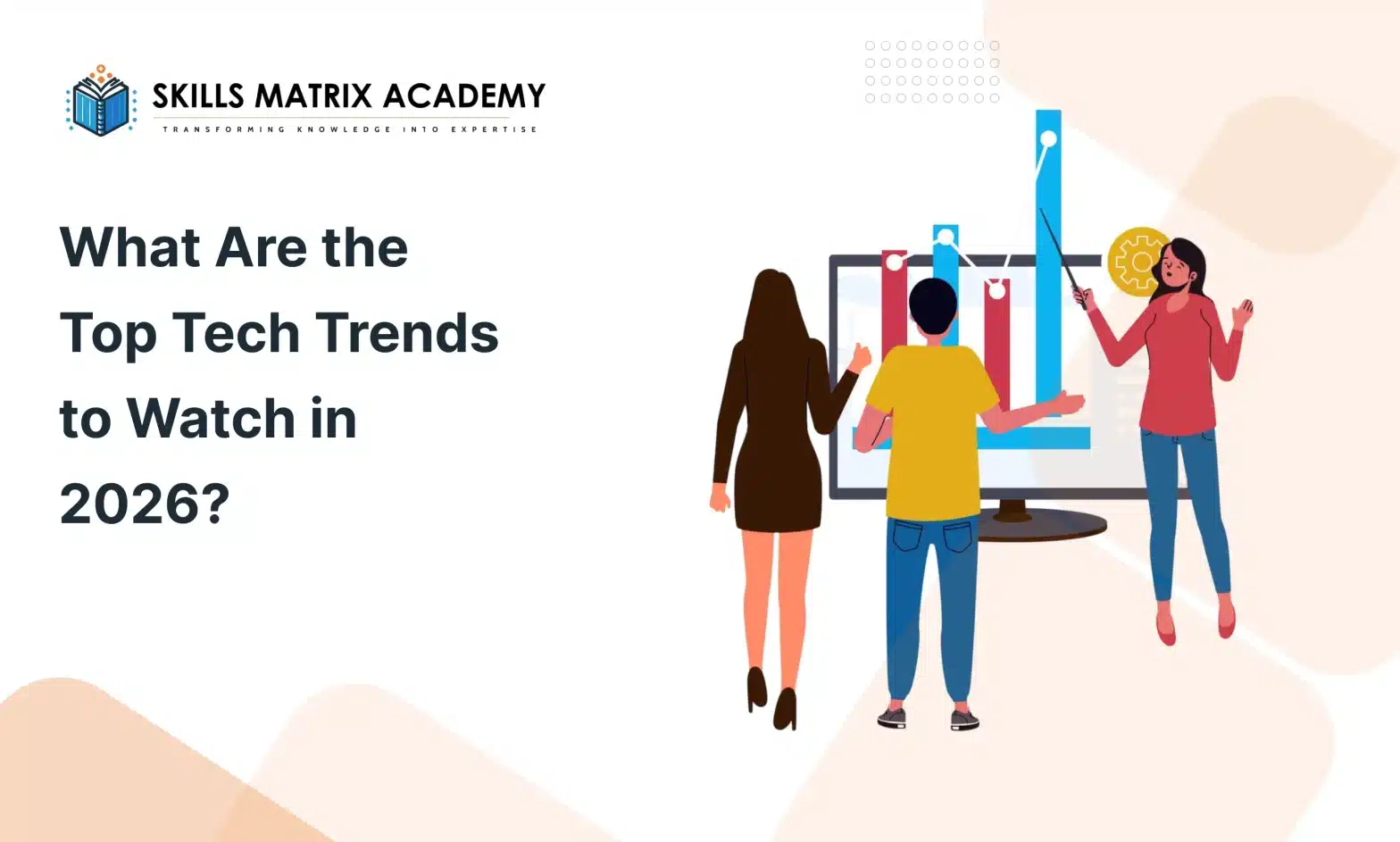
If you have been watching the tech space closely, you already know something big is shifting. It is not just about the next shiny tool or a new app that promises to change everything. What is happening in 2026 is different. Deeper. More structural. AI is no longer in pilot mode — it is moving into the engine room of how businesses actually run.
This piece is for business leaders, tech teams, and curious minds who want to understand where things are really headed — not in buzzword language, but in plain, practical terms. Whether you are tracking emerging technologies for strategy in 2026 or just trying to make sense of the noise, this guide is for you. So let us get into it.
Why 2026 Will Be a Game-Changing Year for Technology
For years, companies have been “experimenting with AI.” That phase is over.
In 2026, the technology trends are not about testing ideas in small sandboxes. They are about building real, lasting systems that run businesses smarter. The emerging technologies 2026 brings to the table are not experiments — they are foundations. The focus shifts from trying things out to putting them into action, from interest to infrastructure.
And that changes everything — how decisions are made, how work gets done, how companies stay secure, and how humans and machines work side by side.
Let us break down the top tech trends 2026 that every forward-thinking organization needs to understand.
- AI TRiSM — Because Trust Is the New Currency
Growth only happens when people trust you. AI TRiSM — which stands for AI Trust, Risk and Security Management — is one of the most important ideas in enterprise technology right now. Among all the emerging technologies pushing into the mainstream in 2026, this one is often overlooked — but it should not be. As AI systems grow more powerful, so do the risks. A biased model here. A data leak there. A decision made without anyone really understanding why.
AI trust, risk, and security management is the framework that helps organizations catch these problems before they spiral out of control. It covers monitoring AI models, protecting data, and managing risks across the full AI lifecycle. By 2026, companies that build strong TRiSM practices are expected to see significantly better decision accuracy — and far fewer embarrassing (or dangerous) AI failures.
Think of it this way: AI without trust is just expensive guesswork.
- Agentic AI — When AI Starts Acting Like a Colleague
Here is where things get genuinely exciting — and a little humbling. Agentic AI refers to AI systems that can operate autonomously, make decisions, learn from experience, and adapt on the fly. This is more than just a chatbot that answers questions. This is an AI that can manage a workflow, respond to new information, and complete multi-step tasks without a human checking in at every stage.
The implications for AI in business in 2026 are enormous. In healthcare, autonomous AI systems can monitor patient data and flag concerns in real time. In finance, they can detect unusual activity and act on it instantly. In customer service, they can resolve issues end-to-end without escalating to a human agent.
But with great power comes real responsibility. Companies adopting agentic AI need clear governance frameworks — rules for what the AI can and cannot do on its own. The goal is not to remove humans from the picture, but to make human oversight smarter and more strategic.
- AI Governance Platforms — Keeping AI Honest
As more decisions get handed to algorithms, one question keeps coming up: Who is responsible when something goes wrong?
AI governance platforms are the answer. These tools help companies manage how their AI systems behave — making sure they follow ethical standards, internal policies, and external regulations. They create transparency. They create accountability. And they give leadership the visibility they need to trust the AI.
AI compliance and ethics are no longer just a nice-to-have. It is a business requirement. Regulators are watching. Customers are watching. And the companies that lead on responsible AI will build the kind of trust that is very hard to earn back once it is lost.
- Intelligent Automation — Smarter Than RPA Ever Was
If you have heard of robotic process automation, think of intelligent automation as its far more capable sibling.
Robotic process automation AI could follow rules. Intelligent automation can think. It combines AI with automation to handle repetitive tasks — but it also makes judgment calls, handles exceptions, and improves over time. That means fewer errors, faster processes, and employees who get to spend their time on work that actually requires a human brain.
The business efficiency that intelligent automation delivers with AI is measurable and real. Industries from insurance to logistics to HR are already seeing the difference. The organizations that get this right will run leaner, faster, and with far less friction.
- Multifunctional Bots — One Bot, Many Jobs
Remember when chatbots could only answer FAQs? Those days feel like ancient history.
Multifunctional bots are AI-powered systems that can handle customer support, gather analytics, assist with operations, and learn from every interaction. They are not single-purpose tools. They are flexible, adaptive, and surprisingly good at understanding what users actually need.
For businesses, AI-powered customer support through multifunctional bots means faster response times, lower support costs, and better customer experiences. And because they keep learning, they get better the longer they are deployed. That is a compounding return on a smart investment.
- Cryptography and Post-Quantum Security — Protecting What Matters
Here is one that does not get enough attention in mainstream tech conversations: cryptography.
Data has never been more valuable. And threats have never been more sophisticated. Cryptography is one of the emerging technologies of 2026 that quietly underpins everything else — and cryptography trends 2026 are evolving fast, especially as quantum computing moves from theory to practice.
Post-quantum cryptography is about building encryption that can withstand the power of quantum computers. That might sound far away, but the time to modernize security systems is now—not after a breach. Organizations that wait will find themselves scrambling to catch up while others have already built their defences.
Advanced encryption technologies are no longer just for governments and banks. Any business that handles sensitive customer data needs to stay up to date on cybersecurity trends in 2026 and make smart moves today.
- Hybrid Computing —Combining the Power of Cloud and On-Premise
Not everything belongs in the cloud. Not everything belongs on-premise. Hybrid computing recognizes that the smarter answer is usually a combination of both.
Cloud and on-premise computing coexisting in a well-designed architecture gives businesses the flexibility to keep sensitive data where it is safest while using the cloud’s scalability for everything else. Enterprise cloud solutions built on a hybrid model also tend to perform better and cost less over time — because resources are matched to the right environment for each workload.
IT infrastructure trends in 2026 are pointing strongly toward this hybrid model as the new standard for mature enterprise architecture.
- Disinformation Security — Fighting the Information War
This one might surprise you on a list of tech trends. But it is very real. The spread of false information — whether through fake news, deepfakes, or coordinated campaigns — is now a genuine business risk. Disinformation security is the discipline of detecting, monitoring, and responding to these threats before they damage your brand, your stakeholders, or your customers.
Fake news detection AI tools are becoming more sophisticated, and proactive monitoring is quickly becoming a standard part of digital risk management. Businesses that ignore this risk will fall behind.
- Energy-Efficient Computing — Going Green Without Going Slow
Sustainability is no longer just a PR story. It is a strategic business priority.
Energy-efficient computing is about running powerful technology systems without unnecessarily burning through power and money. Green computing technologies — from optimized data centers to more efficient chips and software architectures — are reducing the environmental footprint of digital operations while also cutting costs.
Sustainable IT solutions matter to employees, customers, investors, and regulators. Companies that build sustainability into their technology strategy are not just doing good — they are doing smart business.
- Augmented Connected Workforce — People Plus Technology
The final trend is perhaps the most human one on this list. The augmented connected workforce is about using technology to make people more capable — not to replace them. AR and VR tools, IoT devices, and smarter collaboration platforms are helping teams work together across distances and access real-time information in the flow of work.
AR VR in workplace environments is enabling training, remote assistance, and collaborative problem-solving in ways that were not practical just a few years ago. IoT workforce solutions are connecting physical and digital environments in factories, hospitals, and field operations.
The future of work technology is not humans versus machines. It is humans and machines, better together.
What These Trends Mean for Your Business
Looking at all ten trends together, a clear picture emerges. The emerging technologies of 2026 are not isolated innovations — they are connected pieces of a larger puzzle.
Digital transformation 2026 is not about adding technology on top of existing operations. It is about rebuilding operations around technology — intelligently, responsibly, and sustainably.
The companies that will win are not the ones with the biggest tech budgets. They are the ones that:
- Build trust into their AI systems from the start
- Automate intelligently and govern carefully
- Secure their data with modern cryptography
- Use a hybrid infrastructure to balance performance and control
- Invest in their people alongside their platforms
Scalable technology solutions do not happen by accident. They are the result of deliberate strategy, strong leadership, and a willingness to move from experimentation to execution.
Final Thoughts
The AI trends 2026 are not predictions for a distant future. They are happening now, in real organizations, with real outcomes. The emerging technologies introduced in 2026 are already being adopted by early movers, and the gap between leaders and laggards is growing fast.
The question is not whether these technologies will reshape business. They already are. The question is whether your organization will be among those that shape how that transformation happens — or among those that scramble to catch up later.
The foundation you build today is the competitive advantage you will have tomorrow.
So start building.

Bharat Arora
12+ years as a web developer, Bharat has worked in the biggest IT companies in the world. He loves to share his experience in web development.

Bharat Arora
12+ years as a web developer, Bharat has worked in the biggest IT companies in the world. He loves to share his experience in web development.