Data is everywhere today. It flows through every part of a modern company. Every click, sale, and email creates a footprint. But raw data is like crude oil. It has value, but you can’t use it until you refine it. This is where data science for organizations comes into play. It takes that messy pile of information and turns it into gold. By using innovative tools, businesses can make better choices and grow faster.
Most companies generate massive amounts of information every single day. Without a plan, this data sits there. It takes up space and costs money. However, the advantages of data science change the game. It reveals hidden patterns that are hard to notice on your own. It helps you truly understand what your customers want. Most importantly, it gives you a clear path forward in a crowded market.
This guide is for leaders and managers who want to win. It is for anyone who wants to turn organizational data insights into real profit. We will look at how data science works. We will explore the benefits it brings to different teams. By the end, you will know exactly how to use business analytics with data science to transform your business.
What Is Data Science?
Let’s keep it simple. Data science is the art of finding “the why” in your numbers. It uses a mix of math, artificial intelligence in business, and computer science. Think of it as a super-powered flashlight. It shines a light on the hidden parts of your business. It helps you move away from “gut feelings” and toward data-driven decision-making.
Organizations deal with three main types of data. First, there is structured data. These are clean tables and numbers. Next is unstructured data. This includes emails, videos, and social media posts. Finally, there is real-time data. This is info that flows in right now, like live stock prices. This is why many professionals enrol in a Data Science course to master these complex streams. Data science brings all of these together to provide real-time business insights.
When you use machine learning applications, the computer learns from this data. It gets smarter over time. It starts to recognize what a “good” customer looks like. It can spot a failing machine before it even breaks. This process turns raw, messy files into actionable knowledge. This is the core of modern organizational data management.
Why Data Science Matters for Organizations
Why is everyone talking about this right now? Because the world is faster than ever. If you wait a week to make a decision, you might lose to a competitor. Data science for organizations allows you to move at the speed of light. It gives you the confidence to take risks because the numbers back you up. It is the foundation of modern data-driven strategies.
One primary reason it matters is predictive analytics for businesses. In the past, we only looked at what happened yesterday. Now, we look at what will happen tomorrow. Data science allows you to forecast sales and predict trends. This specific Data Science benefit will enable you to see a market crash or a shopping boom before it hits. This foresight is a massive power for any leader.
Also, it helps you save money. Efficiency is the name of the game. Operational efficiency with data science means you stop wasting time on things that don’t work. You can optimize your supply chain or find more efficient ways to ship products. When you reduce waste, your profits go up. To stay ahead, many employees take a Data Science course to learn these optimization tricks. This is one of the most significant benefits of data science for companies today.
Top Advantages of Data Science for Organizations
-
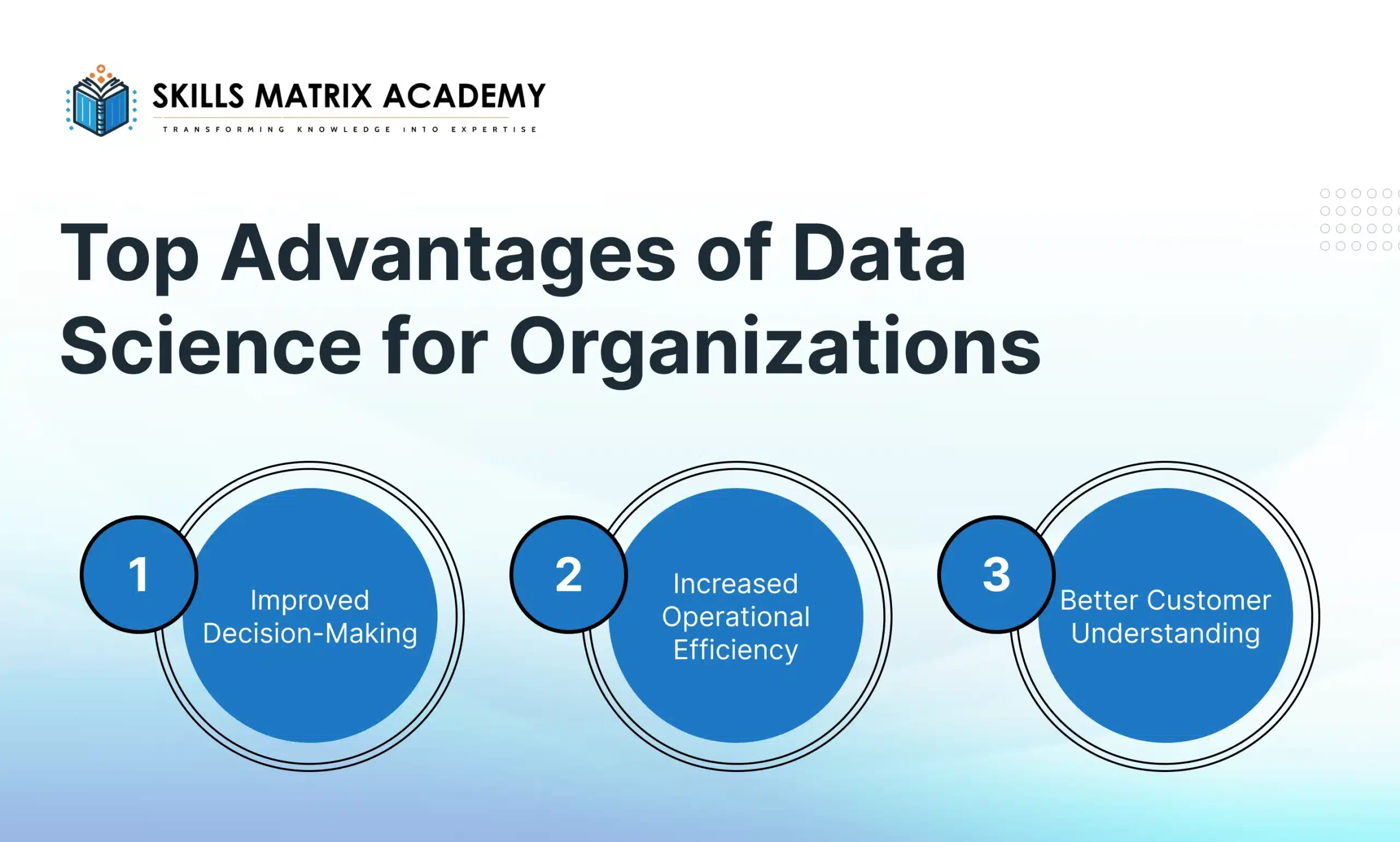
Improved Decision-Making
This is the biggest win. Every day, managers have to make tough calls. Should we launch this product? Should we enter this market? In the old days, people guessed. Today, we use data-driven decision-making. Data science provides clear visuals and dashboards. These data visualization tools make complex numbers easy to read for everyone.
When you have the correct info, you make fewer mistakes. You can see which marketing campaigns are actually making money. This clear Data Science benefit helps managers spot trends instantly. This leads to business analytics that actually drive results. You no longer have to wonder if a plan is working. You will have the proof right in front of you.
-
Increased Operational Efficiency
Efficiency is about doing more with less. Data science looks at your workflows. It finds where things are slowing down. Your warehouse layout may be wrong. Your delivery routes may be too long. Operational efficiency with data science fixes these issues. It uses big data analytics to find the shortest path to success.
Automation is a big part of this, too. Many manual tasks are tedious and slow. Innovative tools can take over these jobs. For example, in a factory, predictive modelling in organizations can tell you when a machine part is about to fail. Fixing it early is another key benefit of Data Science. This saves hours of downtime and thousands of dollars.
-
Better Customer Understanding
Your customers are constantly telling you what they want. They tell you through their clicks and their reviews. Customer behaviour analysis helps you listen to them. Data science tracks these movements across the web. It enables you to treat every customer as an individual. When a customer feels like you “get” them, they stay loyal.
Organizations can use these insights to tailor their services. If you know a customer loves blue shoes, you show them blue shoes. This is a must-have, not an extra. It is a core part of finance and marketing analytics. It boosts your sales and makes your marketing budget go much further. Understanding these patterns is a significant goal of any modern Data Science course.
Real-World Examples of Data Science in Organisations
Let’s look at who is doing this well. E-commerce giants like Amazon are the masters of this. AI-powered business insights power their recommendation engines. They understand your needs even before you realize them. It is a perfect example of data science in action for organizations.
In the banking world, it’s all about security. Every time you swipe your card, a data science model checks the transaction. It looks at the location, the amount, and your past habits. If something looks wrong, it blocks the sale. This is a top-tier use of fraud detection and prevention. It protects both the bank and the customer.
Healthcare is another excellent example. Doctors use predictive modelling in organizations to plan treatments. They can look at thousands of past cases to see what worked best. This improves patient outcomes and saves lives. To build such systems, specialized training from a Data Science course is often required. Even retail stores use it to manage their shelves so they never run out of popular items.
Challenges Organizations Face with Data Science
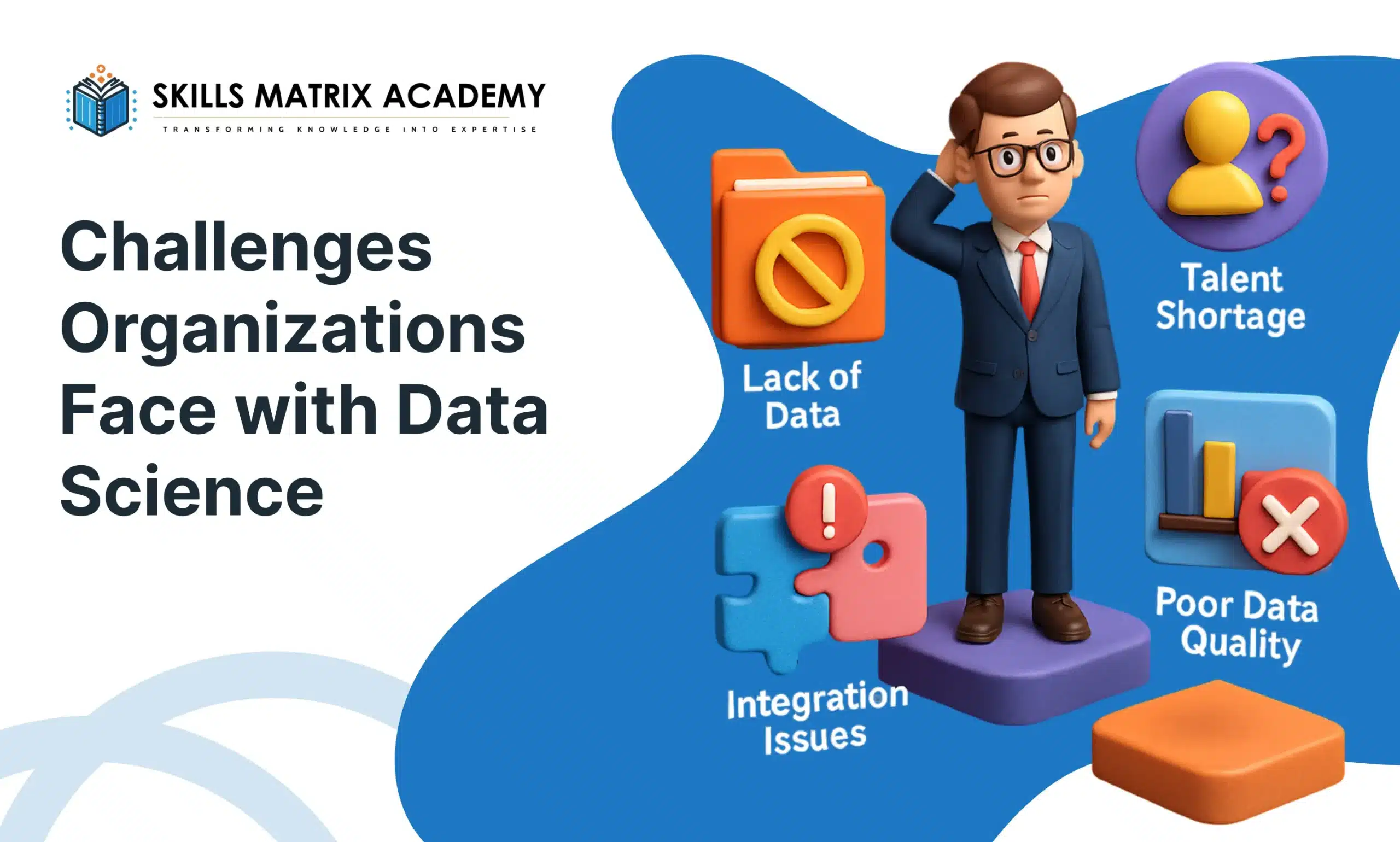
It isn’t all easy. There are hurdles to clear. The first is data quality. If your data is messy or incomplete, your results will be wrong. That’s why managing data quality matters so much. You have to clean your data before you can use it. Insufficient data always leads to bad results.
Another challenge is finding the right people. Skilled data scientists are in short supply. Organizations often struggle to build a team that understands both tech and business. Also, integrating these tools into old systems can be a nightmare. It requires a clear organizational data management plan to work.
Finally, there is privacy. Laws like GDPR are stringent. You must protect customer info at all costs. If you have a data breach, your reputation is ruined. Using cloud-based analytics platforms can help, but you still need a strong security plan. Compliance is not optional; it is a requirement for survival.
How Organisations Can Leverage Data Science Effectively
So, how do you start? First, don’t try to do everything at once. Start with a small pilot project. Focus on one problem, like reducing shipping costs. Use business analytics with data science to solve that specific issue. Once you see a win, move on to the next one. This builds confidence in the team.
- Hire the Right Talent: You need people who can bridge the gap between numbers and business goals.
- Invest in Tools: Use modern cloud-based analytics platforms for faster processing.
- Clean Your Data: Focus on data quality management from day one.
- Focus on Goals: Always align your data projects with your primary business objectives.
- Build a Culture: Encourage everyone to use organizational data insights in their daily work.
Building a data-driven culture is the secret sauce. It shouldn’t just be the IT team using these tools. Sales, marketing, and HR should all have access to real-time business insights. When everyone uses data, the whole company moves in the same direction. It turns a group of people into a well-oiled machine.
Conclusion
The advantages of data science are no longer a secret. It is the fuel that drives the modern economy. By using data science for organizations, you can stop guessing and start knowing. You can improve your decisions, boost your efficiency, and keep your customers happy. It is the best way to ensure your business stays relevant in 2026.
Start by looking at your current data. What message is the data revealing? Use business analytics with data science to find those answers. Whether you are a small startup or a giant corporation, the path is the same. Build a strong data-driven strategy, hire great people, and stay focused on the numbers. Data-driven organizations will lead the future. Don’t get left behind.
FAQs
Q1: What is the central role of data science in organizations?
It helps businesses analyze their data to make better decisions. It reduces risks and finds new ways to generate revenue using organizational data insights.
Q2: How does data science help with decision-making?
It provides clear proof. Instead of guessing, you use data-driven decision-making. Tools like data visualization tools make it easy to see what is happening.
Q3: Which industries get the most from these tools?
Banking, retail, healthcare, and e-commerce are the big winners. However, any company with data can find data science benefits.
Q4: What is the biggest challenge in starting?
Most companies struggle with poor data quality. You need a solid data quality management plan before you can get good results.
Q5: Can small businesses afford data science?
Yes! Many cloud-based analytics platforms are affordable. Start small, focus on key metrics, and grow as you see results.

Bharat Arora
12+ years as a web developer, Bharat has worked in the biggest IT companies in the world. He loves to share his experience in web development.


Bharat Arora
12+ years as a web developer, Bharat has worked in the biggest IT companies in the world. He loves to share his experience in web development.