
The way we work has changed forever. What started as a temporary fix during the COVID-19 pandemic has become a permanent shift. Today, the remote work economy is the new normal. Research from Stanford showed that by 2020, 42% of the U.S. labour force worked from home full-time. Before this, many bosses were nervous about letting people work from their living rooms. They worried about focus and results. But things changed quickly.
Business owners soon realized that a remote workforce management strategy actually works. In fact, many companies found that they saved money and kept people happy. Now, many firms expect the work-from-home economy to triple in the next few years. This is because nearly 40% of all U.S. jobs can be done entirely online. Transitioning to a digital work environment is no longer a luxury. It is a survival skill for modern companies.
To make this work, you need the right remote business operations. You cannot run a modern company on old habits. You need cloud marketplaces where your team can find and manage digital tools. You also need digital commerce platforms to host your services and subscriptions. Most importantly, you need collaboration tools for remote teams that keep everyone on the same page. Without these, your team will feel lost and disconnected.
Of course, safety is a huge part of this shift. Cybersecurity for remote work is the foundation of everything. You must protect your data while people access it from different locations. The “backbone” of these new systems is SaaS platforms. These software-as-a-service systems are replacing old, clunky legacy software. As more people work from home, the SaaS industry growth continues to skyrocket.
The Massive Growth of the SaaS Industry

The numbers behind the SaaS industry are staggering. Experts project the global software as a service market will hit $307.3 billion by 2026. Back in 2020, it was only around $158.2 billion. That is a massive jump in a very short time. But what is driving this SaaS market growth statistics? It is not just one thing. It is a mix of better tech and changing work habits.
First, let’s talk about AI-powered SaaS tools. We are seeing a huge convergence of Artificial Intelligence and software. This helps businesses automate boring tasks and make smarter choices. Then there is the rise of mobile-compatible SaaS tools. People want to work from their phones while travelling or sitting in a cafe. Cloud service adoption has also become much easier for the average small business owner.
Another factor is the 5G impact on SaaS. Faster internet means cloud apps run smoother than ever. Plus, the gig economy software tools are helping freelancers manage their own micro-businesses. Industries like retail, hospitality, and healthcare are also jumping in. They need to update their IT systems without spending a fortune on hardware. This is where SaaS for digital transformation comes into play.
Many companies are now looking for specific SaaS solutions for their companies. They need help with SaaS for human capital management to track their staff. They also use SaaS for CRM systems to keep customers happy. Others focus on SaaS for supply chain management to move products faster. Even SaaS for HR management is changing how we hire and pay people. It is a total overhaul of the business world.
Why SaaS Adoption in Businesses is Winning
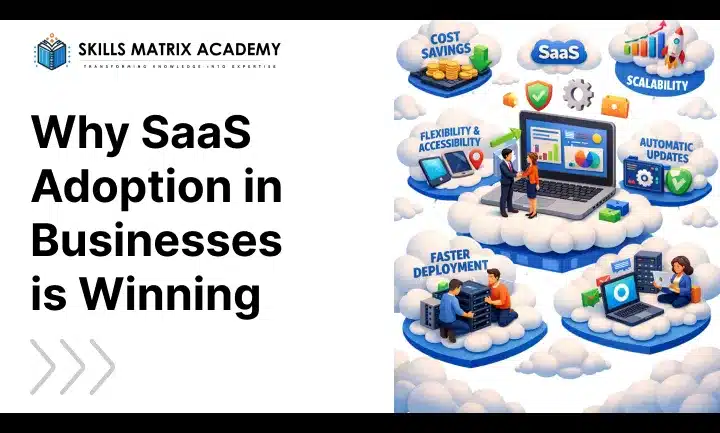
The SaaS adoption in businesses offers a win-win for everyone involved. For employees, it makes life much easier. Most SaaS apps for productivity are very easy to learn. You don’t need a computer science degree to use these tools. Many SaaS marketplaces even offer free training to help you get started. This lowers the stress of learning new technology.
Another big plus is flexibility. Since these are cloud software solutions, you can work from anywhere with an internet connection. This reduces commuting time and gives you more hours in your day. These communication tools for remote work also keep you connected to your friends at work. You don’t have to feel lonely just because you are at home. SaaS remote collaboration tools bridge the gap perfectly.
For employers, the SaaS benefits are even bigger. You don’t have to buy expensive servers or hire a huge IT team. Many cloud-based business tools, like Google Apps, are even free to start. You can scale your SaaS subscription software as your company grows. If you hire five more people, you just add five more seats. It is that simple and cost-effective.
SaaS for business operations also handles the boring stuff. Think about SaaS data privacy tools and SaaS automatic updates. You don’t have to update your software every week manually. The system does it for you in the cloud. Your data stays secure without any extra work. It also helps with SaaS cost-saving solutions by cutting down on office rent and utility bills.
5 SaaS Tools for Remote Teams with Income Potential
If you are a freelancer or a small business, some tools are better than others. These SaaS workplace solutions can actually help you make money.
1. HubSpot — CRM and Marketing Automation: This is a top choice for SaaS platforms for marketing teams. You can earn money by helping businesses with CRM setup. This often pays between $300 and $2,000 per client. You can also build email funnels or offer SaaS tools for CRM automation.
2. Zoho One — The Business Suite: Zoho is perfect for SaaS for digital transformation. It covers everything from finance to email. You can charge $500 to $3,000 to help a small business move its operations to Zoho. Learning “Deluge” scripting can help you build custom apps inside the platform.
3. Notion — Internal Systems: Notion is one of the best SaaS productivity tools today. It is more than just a note app; it is a business infrastructure. You can earn by selling templates or building SaaS tools for project management for other teams. Custom workspace setups can pay up to $600.
4. Make.com — The Automation Layer: This is the king of SaaS tools for workflow automation. It connects different apps so they talk to each other. You can start a no-code agency and build business process automation SaaS solutions. Many clients pay a monthly retainer of $100 to $700 for maintenance.
5. Shopify App Ecosystem: E-commerce is huge in the remote work economy. Stores always need SaaS apps for productivity to help with sales. You can offer store optimization or even build your own micro-SaaS plugin. This can create a steady stream of passive income through monthly subscriptions.
Using SaaS for Remote Work Transformation
How do you actually start a SaaS for remote work transformation? Many teams are already doing it successfully. They use SaaS business software tools to stay organized. For example, chat apps like Slack make communication tools for remote work instant and fun. You can share files and schedule meetings without sending 50 emails. It keeps the energy high and the work moving.
Project management is also easier with SaaS tools for team collaboration. Many apps use “Kanban boards.” These boards help you see what tasks are “to-do,” “doing,” or “done.” It gives everyone a clear view of the project’s health. It becomes easy to track who is working on what. This type of SaaS for business automation saves hours every week.
We also have to talk about security. SaaS security solutions and encryption tools are vital. They allow your remote workforce management to stay tight. Employees can use their own devices without risking a data leak. Also, SaaS tools for remote communication, like Zoom or Meet, make video calls easy. They create a “face-to-face” feel that helps teams bond and collaborate better.
Tips for SaaS Productivity Solutions
To get the most out of SaaS productivity solutions, you need a plan. Don’t just buy every tool you see. First, choose the right SaaS ecosystem tools for your specific needs. Ask your team about the problems they face. Do they need better chat? Better file sharing? Use a simple survey to find out. This ensures you spend money on SaaS tools for business management that actually help.
Next, focus on onboarding. Even the best SaaS tools for business efficiency are useless if no one knows how to use them. Spend time training your team. Show them the shortcuts and the best features. A little training goes a long way in making SaaS integration solutions successful. If people feel comfortable with the tech, they will be more productive.
Finally, keep it simple. It is easy to get overwhelmed by too many SaaS applications for remote teams. Stick to the essentials. Make sure your tools work together. Use SaaS tools for workflow automation to link your apps. This reduces “app fatigue” and keeps your digital workplace solutions clean. The aim is to simplify work, not complicate it.
The Future of SaaS and Remote Work Trends
Looking ahead, SaaS industry trends 2026 look very exciting. We are going to see more AI-driven SaaS tools. These will give teams “smart” insights that we can’t even imagine yet. The future of remote work tools is all about working smarter, not harder. We will see more SaaS tools for secure remote work that use advanced tech like blockchain.
Blockchain SaaS technology will make data even more private and secure. We might even see quantum computing as a SaaS future option. This would make data processing incredibly fast. If you are building a business, you should include these in your SaaS technology future trends research. Staying updated helps you “future-proof” your company and your career.
In the end, the future of SaaS platforms is bright. They quietly support the modern office. Whether you are a freelancer or a CEO, these tools support you. They keep us connected, safe, and productive. The remote work economy is here to stay, and SaaS is the engine driving it forward. Embrace these tools now to simplify your life and grow your business.

Bharat Arora
12+ years as a web developer, Bharat has worked in the biggest IT companies in the world. He loves to share his experience in web development.


Bharat Arora
12+ years as a web developer, Bharat has worked in the biggest IT companies in the world. He loves to share his experience in web development.