The internet has changed the way we learn.Today, anyone can learn Java online from anywhere in the world. You can watch YouTube videos, read blogs, join Java online classes, and even complete free coding tutorials without paying anything.
Sounds amazing, right?
Well, yes… but there’s a catch.
Free learning is great in the beginning. But many people get stuck after learning the basics. They jump from tutorial to tutorial, lose motivation, and struggle to build real coding skills.
That’s why the debate around free Java courses vs paid Java courses is more important than ever.
So, what’s actually worth it?
Should you start with free resources?
Or should you invest in a structured Java programming course?
In this guide, you’ll learn:
- The real difference between free and paid Java courses
- When free learning works best
- When it’s time to switch to paid learning
- The biggest mistakes beginners make
- The best way to learn Java effectively
Let’s dive in.
Why So Many People Want to Learn Java Online
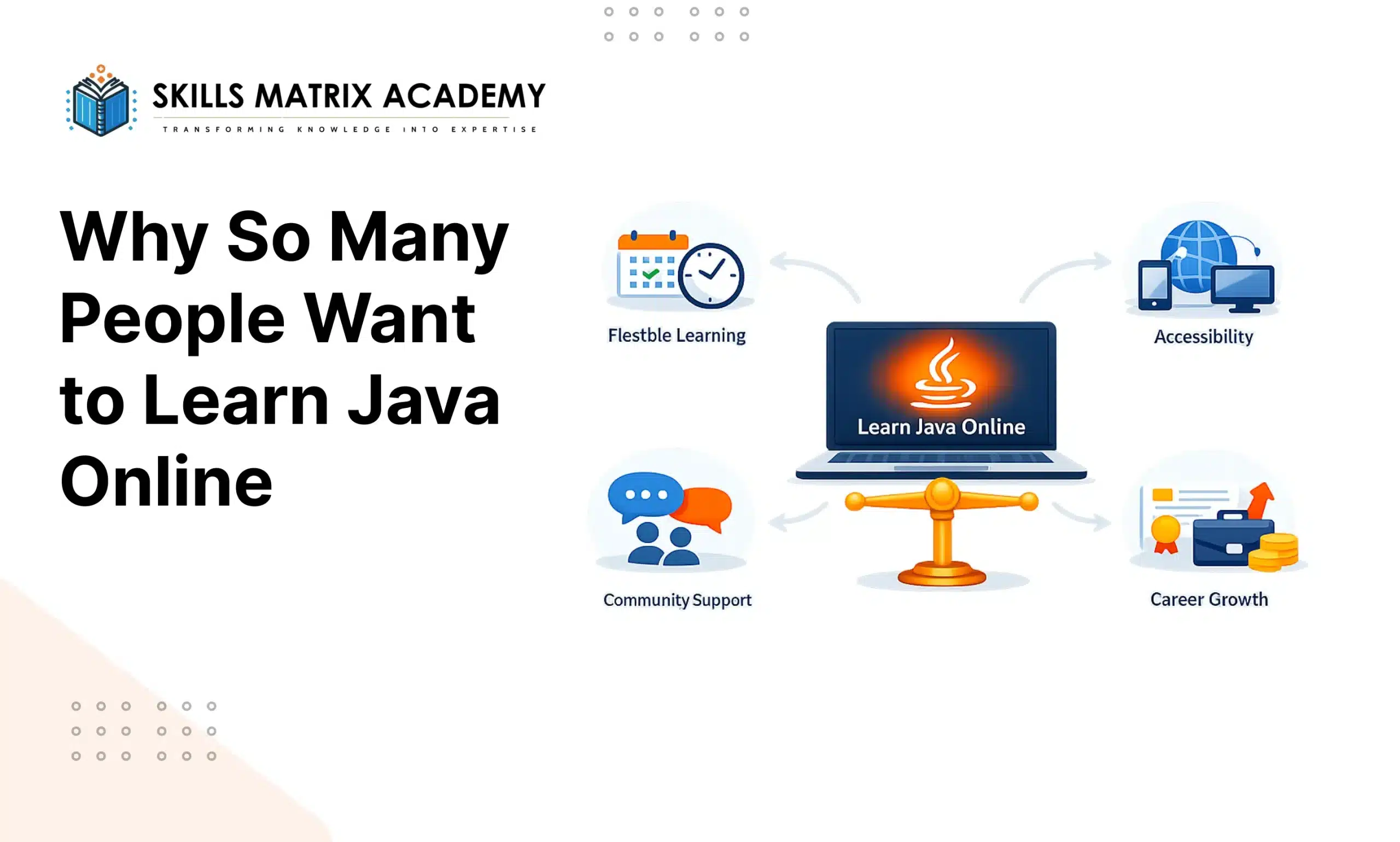
Java is still one of the world’s most popular programming languages.
Companies use it for:
- Android app development
- Enterprise software
- Web applications
- Cloud computing
- Backend systems
That’s why thousands of beginners start their Java developer career path every year.
The good news is: There are endless online resources for learning programming.
You can find:
- Free Java tutorials
- Coding blogs
- YouTube lessons
- Java coding exercises
- Interactive coding platforms
- Online coding classes
In simple terms, learning Java from scratch has never been easier. But having free resources does not always make learning easier.
The Biggest Problem With Free Java Courses
Free resources can teach you the basics of Java. But most beginners face the same issue. They lack direction. One day, they watch YouTube tutorials. The next day, they read blogs. Then they switch to another platform.
Soon, learning starts feeling confusing. Instead of following a roadmap, they collect random information. This is one of the biggest problems with free online programming courses.
Free Learning Often Feels Unstructured
Here’s the deal: Programming is not just theory. You need:
- Practice
- Projects
- Feedback
- Consistency
- Problem-solving skills
Most free tutorials only explain concepts. Very few guide you step by step. As a result, many beginners know syntax but cannot build real applications.
That becomes frustrating.
Another Problem: Content Quality
Not every online tutorial is reliable. Anyone can upload coding content online. Some tutorials are outdated. Others skip important concepts. And some explain things poorly. This creates confusion for beginners trying to learn Java programming properly.
For example:
You may learn one coding style from YouTube and another from a blog. Now you don’t know which approach is correct. That slows your progress.
Free Java Courses Are Still Useful
Now, this does not mean free learning is bad. Far from it. In fact, free resources are a great starting point.
Especially if you are:
- Exploring programming for the first time
- Unsure about becoming a developer
- Learning slowly in your free time
- Testing your interest in Java
If you have enough time and strong self-discipline, free learning can work very well. Many successful developers started with free tutorials.The real key is learning how to use them properly.Best Ways to Learn Java for FreeIf you want to start with free learning, use trusted resources. This saves time and reduces confusion.
Best Ways to Learn Java for Free
If you want to start with free learning, use trusted resources. This saves time and reduces confusion.
01. YouTube Java Tutorials
YouTube is one of the best places for beginner-friendly Java tutorials. You can learn:
- Java syntax
- JDK installation
- IDE setup
- Variables and loops
- Object-oriented programming
The biggest advantage is visual learning. Many videos explain coding step by step. That makes concepts easier to understand.
02. TutorialsPoint
TutorialsPoint is a popular Java education platform for beginners. It covers:
- Java programming basics
- Classes and objects
- Methods
- Arrays
- File handling
- Advanced Java concepts
The platform also includes many coding examples. That helps beginners practice more effectively.
03. W3Schools
W3Schools is another beginner-friendly option. It explains concepts in simple language.
You can also:
- Take quizzes
- Solve exercises
- Practice syntax
- Earn certificates
This makes it useful for beginners learning Java.
04. University of Helsinki Free Java Course
This course is highly respected in the programming community. It focuses heavily on practice. Students complete coding exercises throughout the course.
That practical approach improves coding confidence faster.
Tips for Self-Studying Java Successfully
Self-paced learning sounds flexible. But it requires discipline. Without structure, many learners quit halfway.
Here are some practical Java study tips that actually help.
Study Consistently
Coding once a week is not enough. Try studying every day. Even one hour daily works better than long weekend sessions. Consistency builds momentum.
Focus More on Coding Than Theory
Reading tutorials feels productive. But coding is what improves your skills. Spend more time solving problems. Write code regularly. Break things. Fix errors. That is how real learning happens.
Build Small Projects
Projects improve confidence quickly. Try creating:
- Calculator apps
- Quiz games
- Student management systems
- Banking apps
- To-do lists
These projects improve practical programming experience. They also strengthen your portfolio.
Follow a Learning Roadmap
Do not jump randomly between tutorials. Follow a clear Java learning roadmap.
Start with:
- Java basics
- Object-oriented programming
- Data structures
- File handling
- APIs
- Databases
- Frameworks like Spring Boot
A roadmap keeps learning organized.
When Free Learning Stops Working
After a certain point, free resources may no longer be enough. This happens to many learners. And honestly, that’s normal.
Here are some common signs.
You Want Faster Results
Maybe you want a developer job quickly. Or maybe you are changing careers. In that case, structured learning becomes more valuable. Paid courses often accelerate progress by removing confusion.
You Feel Lost
Many beginners complete multiple tutorials but still cannot build projects on their own. That usually means they need better guidance. This is where paid programming courses help. They provide structure, direction, and accountability.
You Keep Losing Motivation
Self-learning sounds exciting at first. But motivation drops over time. Without deadlines or mentors, many learners stop studying. Paid courses solve this problem through schedules, assignments, and support systems.
Advantages of Paid Java Courses
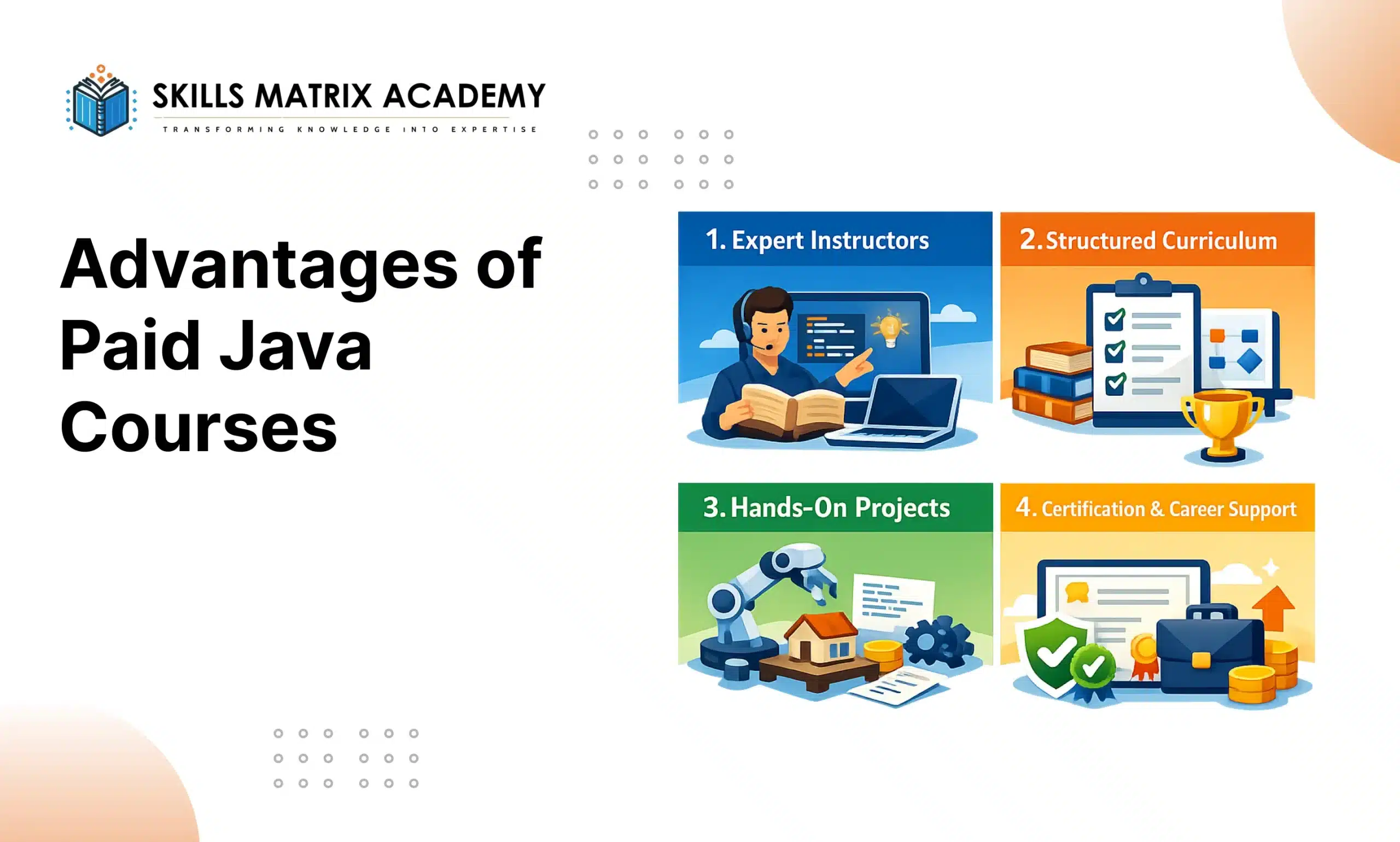
Now let’s talk about the biggest benefits of paid learning.
01. Structured Learning
This is the biggest advantage. A paid Java programming training course follows a clear path. You learn concepts in the correct order. This reduces confusion and saves time.
02. Better Accountability
When people pay for a course, they usually take it more seriously. Deadlines create discipline. And discipline leads to consistency. That matters a lot in coding.
03. Updated Content
Technology changes quickly. Good paid platforms regularly update lessons. This helps students learn modern tools and coding practices. That is important for real job preparation.
04. Mentorship and Support
Many paid platforms offer:
- Mentors
- Coding reviews
- Live doubt sessions
- Student communities
This support helps learners fix mistakes faster. And it improves confidence.
05. More Practical Training
The best-paid courses focus heavily on coding practice. That includes:
- Java practice projects
- Coding challenges
- Real-world assignments
- Portfolio projects
This hands-on approach improves job readiness.
Best Paid Java Learning Platforms
Let’s look at some popular platforms beginners often choose.
CodeGym
CodeGym focuses heavily on gamified learning. Students solve more than 1,000 coding tasks. The platform feels interactive and practical. One major benefit is instant code validation. If your code contains errors, the system gives hints immediately. This improves learning speed.
The biggest drawback? There are fewer strict deadlines. So self-discipline still matters.
Codecademy
Codecademy offers courses in multiple programming languages. The lessons are interactive and beginner-friendly. Students write code directly inside the browser. This makes learning convenient. However, some advanced theoretical explanations are limited.
Skills Matrix Java Courses
Skills Matrix offers university-style Java developer training. Many courses come from well-known institutions.
These programs often include:
- Projects
- Assignments
- Certificates
- Structured learning paths
They work well for learners who prefer academic-style teaching. The challenge is staying motivated long-term.
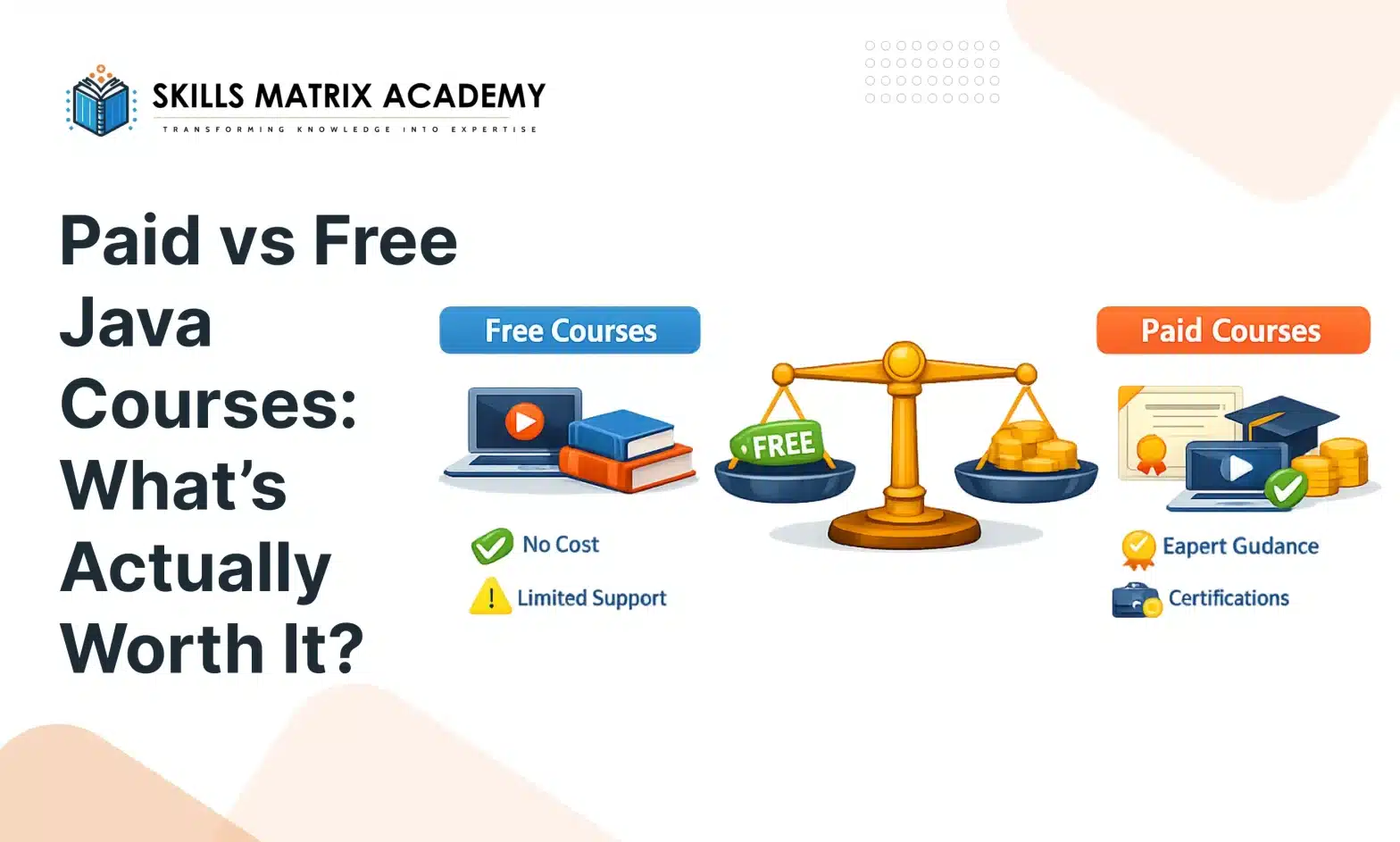
So… Paid vs Free Java Courses: Which Is Better?
Here’s the honest answer: Both can work. It depends on your goals.
Free Java Courses Are Best If:
- You are exploring programming
- You have plenty of time
- You enjoy self-paced Java learning
- You are highly disciplined
- You want to learn coding online for free
Paid Java Courses Are Best If:
- You want faster results
- You need structure
- You struggle with motivation
- You want mentorship
- You need career-focused programming courses
- You want job-ready skills
The smartest approach is often a mix of both. Many successful developers start with free tutorials and later join paid courses for advanced training.
Final Thoughts
Learning Java online has never been easier. Today, there are endless tutorials, coding platforms, and Java online classes available for beginners.
Free resources are a fantastic starting point. They help you explore programming without financial pressure.
But free learning also has limits.
Without structure, many learners struggle to stay consistent and build practical coding skills. That is where paid Java courses make a real difference.
They provide:
- Clear learning paths
- Better discipline
- Practical projects
- Mentorship
- Career guidance
At the end of the day, the best Java course online is the one that matches your goals, learning style, and schedule. So start where you are. Keep coding regularly. Build projects. Stay curious. And most importantly, do not stop learning.
Your future as a Java developer may be nearer than you think.
FAQs
01. Can I learn Java online for free?
Yes. You can learn Java online using YouTube tutorials, blogs, free coding platforms, and online programming education websites.
02. Are paid Java courses worth it?
Paid Java courses are worth it for learners who want structure, mentorship, faster progress, and career-focused training.
03. What is the best way to learn Java?
The best way to learn Java is through consistent coding practice, projects, structured learning, and problem-solving exercises.
04. How long does it take to learn Java programming?
It depends on your schedule and learning style. Beginners usually need several months to build a solid foundation in Java programming.
05. Which platform is best for Java learning for beginners?
Popular beginner-friendly platforms include YouTube, W3Schools, TutorialsPoint, CodeGym, Codecademy, and Skills matrix academy.

Bharat Arora
12+ years as a web developer, Bharat has worked in the biggest IT companies in the world. He loves to share his experience in web development.

Bharat Arora
12+ years as a web developer, Bharat has worked in the biggest IT companies in the world. He loves to share his experience in web development.