If you’ve ever felt like your college or university is running on outdated systems that don’t talk to each other, you’re not alone. Most institutions today are dealing with exactly that problem. Data sits in different places. Staff waste hours pulling reports. Students feel like just another number. And somehow, decisions still get made without the full picture.
That’s where CRM for higher education steps in — and honestly, it changes everything.
What Is a CRM in Higher Education, and Why Should You Care?
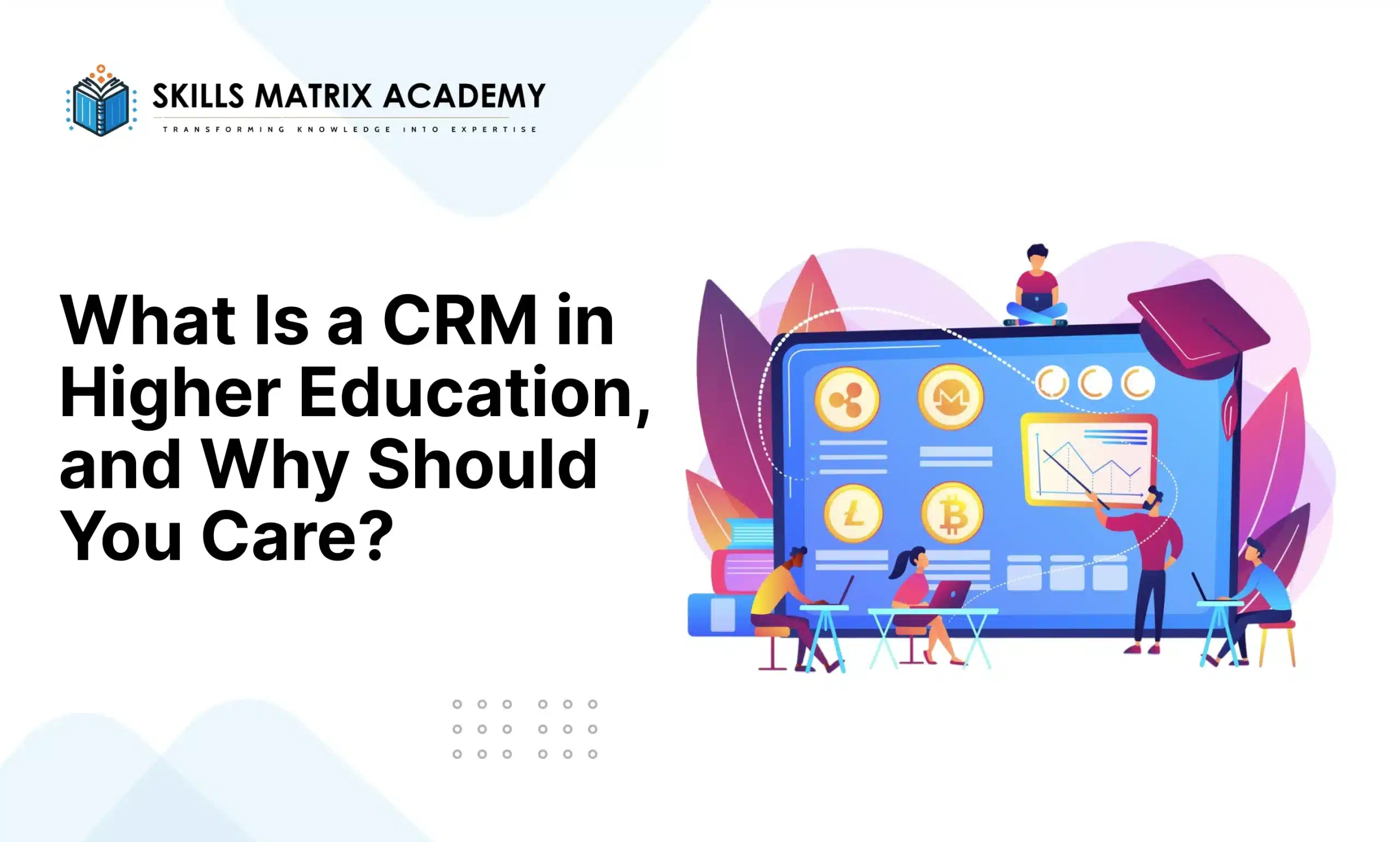
CRM stands for Customer Relationship Management. But in the education world, “customer” means something much deeper — it means students, alumni, faculty, staff, donors, and corporate partners. A higher education CRM brings all of those relationships under one roof, in one system, with one clear view.
Think of it this way. Instead of jumping between 10 different software tools just to check a student’s enrollment status and advising history, your team opens one platform and sees everything. That’s not just convenient — it can truly change the way you work.
Today’s students expect more. They want fast answers, personalized support, and a smooth digital experience. If your institution can’t deliver that, they’ll find one that can. This is exactly why education CRM software has become one of the most talked-about investments in campus leadership meetings across the country.
The Real Benefits of a CRM System for Universities
-
It Brings All Your Data Into One Place
One of the biggest pain points in higher education is disconnected data. The average university runs on 35 different applications — and nearly one-fifth of institutions use 70 or more. A CRM system for universities solves this by creating what’s called a 360-degree view of every student. From the first inquiry call to graduation day — and even after as an alumnus — everything is tracked, organized, and instantly accessible.
No more waiting weeks just to get a report. No more emailing five departments to find one answer. With a student relationship management system, staff can pull the data they need, right when they need it. That kind of connected visibility changes how decisions get made — and how students get supported.
-
It Actually Saves Your Institution Real Money
Here’s something that might surprise you. Switching to a CRM in the education sector doesn’t just save time — it saves serious money. According to a Forrester Total Impact Study, institutions using Salesforce for higher education saw $2.4 million in total legacy cost savings and a 195% ROI over three years, with a payback period of just seven months.
When you stop paying for five separate systems, cut training costs, and eliminate hours of manual data entry, the savings add up fast. CRM ROI in education is real, it’s documented, and it’s hard to ignore once you see the numbers laid out.
-
It Improves the Student Experience in Ways That Actually Matter
Students notice when things work smoothly. They also notice when they don’t. A student experience CRM allows advisors to be proactive instead of reactive. Automated alerts can flag at-risk students before they slip through the cracks. Chatbots can answer common questions at 2 am when no one is in the office.
Central New Mexico Community College used a university CRM platform to unify its advising records, enable mobile appointment booking, and give students the ability to choose their preferred advisor. The result? A 6.8% increase in student retention. That number represents real people staying in school who might have otherwise left.
-
It Empowers Your Faculty and Staff to Do Better Work
When your team isn’t buried in paperwork or toggling between outdated systems, they do better work. CRM for faculty and staff delivers a 12% productivity increase across departments — which, over three years, translates to roughly $6.7 million for an average institution.
The University of Massachusetts is a perfect example. They used college CRM software to streamline collaboration across administrative divisions and reduce reliance on paper-based processes. The goal was simple: make work easier, faster, and smarter. And it worked — across every department.
-
It Prepares Your Institution for Whatever Comes Next
Higher education digital transformation isn’t coming — it’s already here. A flexible CRM for higher education institutions gives your campus the agility to pivot fast when things change. Whether that means launching hybrid learning programs, building new revenue streams, or responding to a global crisis — the right platform makes all of it possible without starting from scratch.
The University of Kentucky proved this during the pandemic. Using CRM for campus management, they contacted 30,000 students through a newly built virtual call centre and used integrated dashboards to identify and support students in need — all within weeks.
Key Challenges Faced by Educational Institutions (And How CRM Fixes Them)
Let’s be honest. Running a college or university today is not easy. You’re managing thousands of students, dozens of departments, and more data than any one team can handle. And somewhere in the middle of all that, students are slipping through the cracks, staff are burning out, and nobody has the full picture.
These aren’t small problems. They’re the kind of challenges that quietly hurt enrollment, retention, and reputation over time. The good news? Most of them have one common solution.
-
Fragmented Data Silos Across Departments
Data silos are one of the oldest problems in higher education. Admissions runs on one system. Finance lives in another. Academic records sit somewhere completely different. None of these systems talk to each other — and the result is poor coordination, outdated information, and teams constantly playing catch-up.
Without an integrated CRM platform education approach, departments can’t access real-time student data when they need it most. A good student management system brings all of that scattered information into one place, so every team works from the same unified view.
Why This Matters More Than Most Leaders Realize
When data is fragmented, decision-making suffers. CRM for student support services becomes nearly impossible when nobody has access to the complete picture. Fixing the data problem is always the first step toward fixing everything else.
-
Communication Gaps With Students
Today’s prospective students are comparing institutions side by side. If your outreach is slow or generic, they’ll choose somewhere that feels more attentive. CRM for prospective students solves this by automating personalized outreach at every stage of the recruitment funnel. Marketing automation for education takes the manual pressure off admissions teams, so they spend more time on meaningful conversations and less time chasing follow-ups.
-
Difficulty Delivering a Personalized Student Experience
One-size-fits-all communication stopped working a long time ago. CRM for personalized student experience makes individual attention possible even at scale. By capturing student interactions and tracking behaviour, education CRM software gives advisors the context they need to have conversations that actually land.
Personalization That Goes Beyond a First Name
CRM for student lifecycle management tracks every stage from inquiry to graduation, making it possible to deliver the right message at the right time. That’s what builds genuine trust between students and institutions.
-
Low Student Retention and Engagement
Every student who drops out represents lost potential — and often a signal that the support system broke down long before the withdrawal form was signed. CRM for student retention helps institutions catch warning signs early. With predictive analytics in education CRM, advisors can identify at-risk students before a small struggle becomes a decision to leave. When students feel seen and supported, they stay.
-
Weak Alumni Relations and Missed Opportunities
Most institutions go almost completely silent the moment a student graduates. That silence is a missed opportunity every single time. CRM for alumni management helps institutions stay meaningfully connected with graduates long after commencement day — supporting CRM for fundraising education, mentorship pipelines, and CRM for donor engagement that keeps relationships genuinely productive for years.
-
Manual Processes Slowing Everyone Down
When staff are buried in data entry and manual record updates, student support suffers. CRM workflow automation education handles repetitive tasks automatically, so your team focuses on work that actually makes a difference. Here’s what CRM for administrative processes delivers:
- Automated workflows that eliminate repetitive manual tasks
- Synced student records that reduce human error
- Faster document management for financial aid and enrollment
- More staff time for real student support
-
Limited Reporting and Weak Institutional Insights
You can’t improve what you can’t measure. CRM reporting tools, education, and real-time CRM dashboards give leadership the visibility they’ve been missing — enrollment trends, engagement patterns, and recruitment performance, all in one place. CRM analytics for universities supports smarter decisions and stronger outcomes across the board.
How Education CRM Solutions Bring It All Together
Every challenge above gets significantly better with the right education CRM solutions in place. CRM for educational institutions is the connective tissue that holds modern campus operations together — fixing broken communication, automating admin work, and building stronger relationships with students, staff, and alumni alike.
The right higher education CRM doesn’t just solve today’s problems. It builds the foundation your institution needs to grow confidently into whatever comes next.
How to Pick the Right CRM for Your Educational Institution
Choosing the right CRM is important because it directly impacts how your team works and how students experience your institution. Not every CRM is built for education, so picking the right one really matters.
Start by being clear about your goals. Do you want to increase student enrollment, improve student support, or build better alumni relationships? When you know your priorities, it becomes much easier to choose the right platform.
Here are a few things to look for:
- Features like automation, email communication, and student data tracking
- Easy integration with your student information system and other tools
- Mobile access so your team can work from anywhere
Also, keep it simple and practical. Choose a CRM that is easy to use and fits your budget. A complicated or expensive tool can slow your team down instead of helping them. Make sure the provider offers proper training and reliable support.
Finally, go for a CRM that is designed for educational institutions or can be customized for your needs. This ensures better support for admissions, communication, and overall student success.
Conclusion
If you’ve made it this far, it shows you want to improve—not just work faster, but work smarter. Choosing a CRM isn’t just about picking software; it’s about building a better system for your team and your students.
You can take it one step at a time. Start small, ask the right questions, and involve the right people in the process.
But one thing is clear—don’t stay stuck. The institutions that grow and succeed are the ones that take action today.

Bharat Arora
12+ years as a web developer, Bharat has worked in the biggest IT companies in the world. He loves to share his experience in web development.

Bharat Arora
12+ years as a web developer, Bharat has worked in the biggest IT companies in the world. He loves to share his experience in web development.