
Today, we live in a digital-first world. Almost everything happens online. And content is what keeps your marketing together. It could be a short:
TikTok video.
A helpful blog post.
A LinkedIn article.
Or even a simple email newsletter.
Content is how people discover your brand. It explains what you do. It shows your value. And it helps people decide if they can trust you.
Good content makes your brand feel human. It shares stories. It solves problems. It answers questions. Over time, this builds trust and strong relationships.
That’s why content marketing skills are so powerful. If you know how to create clear, helpful, and engaging content, you can grow any brand online.
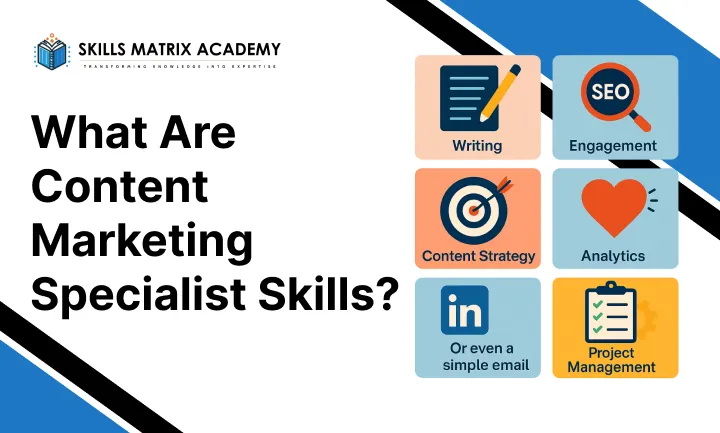
What Are Content Marketing Specialist Skills?
Content marketing specialist skills are the core abilities you need to grow a brand with content. These skills help you plan, create, optimise, and promote content that drives real results. If you want a long-term career in content marketing, you must master both strategy and execution.
A strong professional has a mix of content marketing hard skills and content marketing soft skills. Hard skills include SEO, editing, analytics, and tools. Soft skills include teamwork, flexibility, and communication. Together, these are the true skills required for content marketing specialist roles today.
In simple words, content marketing specialist skills help you attract traffic, build trust, and generate leads. They sit at the heart of all modern digital marketing content skills.
Essential Content Creation Skills for Modern Marketers
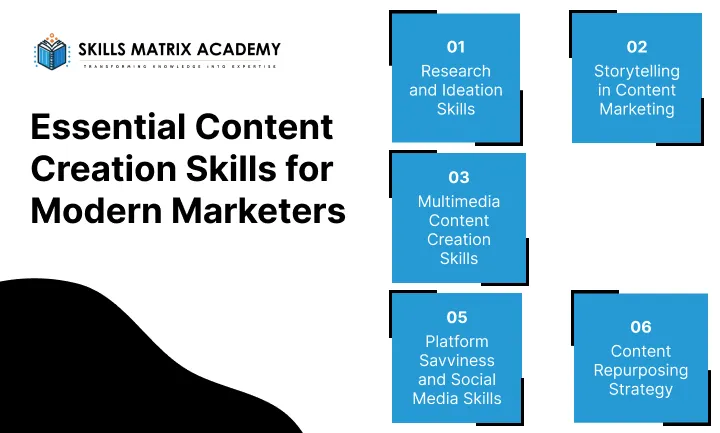
At the centre of all content marketing skills is one thing: creation. Strong content-creation skills enable you to turn ideas into valuable assets. These assets can be blogs, emails, videos, podcasts, or social posts.
But modern marketing demands more. You need digital content creation skills that blend creativity, SEO, analytics, and technology. These are now the essential skills for content marketers who want to stand out.
Let’s break them down step by step.
1. Research and Ideation Skills
Great content starts with strong research and ideation skills. Without research, your content is guesswork.
You can use secondary research methods like reading reports, industry blogs, and competitor websites. But today, primary research in content marketing has a greater impact. It gives you original insights that no one else has.
Primary research includes surveys, polls, interviews, and data analysis. It also includes competitor content research and content gap analysis. These methods help you find what others missed.
For B2B teams, strong B2B content marketing skills matter even more. You may need client interviews or expert input. This improves your audience research skills and supports better customer persona development.
Today, AI in content marketing speeds up research. You can use AI tools like ChatGPT for content ideation. These are powerful content brainstorming tools. But always verify facts. Smart marketers follow AI ethical content-use guidelines to protect their credibility.
2. Storytelling in Content Marketing
Facts inform. Stories sell. That’s why storytelling in content marketing is critical. It transforms raw data into emotional impact. Strong brand storytelling techniques help your message stick.
Use the 5 P’s:
- People
- Place
- Plot
- Purpose
- Promotion/Performance
These guide your narrative. They improve emotional storytelling, marketing, and boost engagement. Strong storytelling also improves professional writing, blogging, and copywriting skills. Instead of listing features, you show transformation. Instead of selling, you connect.
Look at brands known for powerful stories. They align emotion with purpose. That is not luck. It is strategic content strategy skills in action.
When you understand your audience deeply, your stories become sharper. That is why audience research skills connect directly to storytelling in content marketing.
3. Multimedia Content Creation Skills
Modern marketers cannot rely solely on text. You need strong multimedia content creation abilities.
This includes:
- Video editing skills for marketers
- Photo editing skills
- Visual storytelling
- Layout design
Tools make this easier. Canva for content creation helps beginners design fast. The Adobe Suite for marketers gives advanced control. Both improve your overall digital content creation skills.
You also need CMS management skills. Uploading, formatting, and structuring content inside your website matters. Clean formatting supports better on-page SEO and stronger content optimisation.
When creating email campaigns, sharp email marketing content skills are essential. When publishing blogs, strong keyword research skills matter. These are critical SEO skills for content marketers. Always use a checklist. Check headlines. Check structure. Check visuals. This improves content performance optimisation over time.
4. Editing and Proofreading Skills
Clean content builds trust. Messy content destroys it. Strong editing and proofreading skills show authority. They improve user experience and boost rankings. Search engines reward clarity and accuracy.
Use trusted proofreading tools for writers. Many marketers rely on Grammarly for content editing to quickly catch grammar errors. But tools are not enough. Manual review still matters.
Polished content strengthens your professional content writing skills. It also enhances SEO skills for content marketers, as search engines value accuracy.
If you use AI drafts, double-check everything. Follow strict ethical practices for AI-generated content. One mistake can damage your brand reputation.
5. Platform Savviness and Social Media Skills
Each platform works differently. That’s why strong social media content skills are key.
You need:
- Deep social media algorithms knowledge
- Clear platform-specific content strategy
- Smart format selection
LinkedIn favours thought leadership. Instagram favours visuals. YouTube rewards watch time. This knowledge improves your content marketing specialist skills in real time. Certifications and practice help. The more you experiment, the better your modern marketing skills become.
6. Content Repurposing Strategy
Smart marketers never waste content. A strong content repurposing strategy multiplies results. One webinar can turn into many assets. This saves time and increases reach.
For example:
- Webinar to blog repurposing
- Blog into LinkedIn carousel content
- Research report into infographic content creation
- Blog insights into email sequences
This improves your overall content creation skills while strengthening your long-term content strategy. Repurposing also strengthens content performance optimisation by enabling you to test formats across platforms.
How to Develop Strong Content Strategy Skills
Great content alone is not enough. If you do not have a plan, your content will fail. That is why content strategy skills are so important. They help you plan, create, promote, and improve content the right way.
If you want to grow in marketing, you must learn how to develop content strategy skills step by step.
Let’s make it simple.
1. Start With Your Brand
Before you create content, know your brand. Your brand development strategy defines:
- Your voice
- Your tone
- Your style
- Your position in the market
This builds brand voice consistency. It also improves your brand positioning strategy. When your message is clear everywhere — website, email, social media — you build a strong brand identity development and a better online presence.
Strong branding supports brand building through content. Even if you are not in the branding team, protect the brand in every post you create. That is part of real content strategy development.
2. Understand Your Audience Deeply
You cannot create a strategy without knowing your audience. Strong audience analysis skills help you understand:
- What people want
- What problems do they face
- What stops them from buying
Start with first-party data analysis. Look at your website, email, and social media data. Then do secondary market research. Study reports and industry trends.
After that, create clear profiles using:
- Target audience analysis
- Buyer persona development
- Customer persona creation
This helps both the B2B and B2C content strategies. If you work globally, follow a smart global content strategy. Different countries may respond differently. That is where cultural content marketing becomes important. Good research builds strong content strategy skills.
3. Study Your Competitors
You must improve your research on competitors. Visit competitor websites. Do a deep competitor website analysis. Study their blogs, videos, and emails through competitor content analysis and competitor email analysis.
Look at:
- What topics do they cover
- What performs well
- How do they write CTAs
This is called content performance benchmarking. You can also use tools like:
- SEMrush SEO analysis
- Ahrefs SEO tool
This improves your overall content marketing strategy and strengthens your strategic content planning.
4. Find Content Gaps
This is where growth happens. Do proper content and keyword gap analyses. This is also known as SEO content gap analysis.
Tools like:
- Semrush content gap tool
- Ahrefs content gap tool
help you see what competitors rank for, but you do not. But do not just copy others. Look for emerging content trends. Think about what your audience will need tomorrow.
For example, a smart fintech content strategy may cover AI-powered finance content early. That helps in topical authority building. This highlights your strong content strategy skills.
5. Build Authority and Expertise
Trust matters more than ever. Search engines prefer experts. That is why subject matter expertise in content marketing is powerful.
Follow E-E-A-T content strategy principles:
- Experience
- Expertise
- Authority
- Trust
Encourage:
- Expert-led content marketing
- Strong thought leadership content
- Data-backed original research content marketing
This supports a long-term authority-building content strategy. The more expert your content looks, the stronger your content marketing strategy becomes.
6. Plan and Promote Smartly
Good strategic content planning connects content with business goals.If your product takes time to sell, focus on educational content marketing.
If it is a quick purchase, use impulse buy marketing content.
This is part of a smart content marketing funnel strategy. But creation is only half the job. You also need:
- Strong strategic content promotion
- Clear content distribution strategy
- Multiple content promotion channels
- Smart multichannel content distribution
- Balanced SEO and content promotion
- Active social media content distribution
Use a proper content scheduling strategy. You can also use reactive content marketing and trend-based content creation when relevant. Always be careful with sensitive events. Follow a crisis-sensitive marketing strategy mindset.
7. Manage Projects Properly
Without planning, strategy fails. Strong project management for content marketing keeps everything organised.
Focus on:
- Clear content workflow management
- Smart content production planning
- Easy freelance content management
- Proper content calendar planning
- Better time management for marketers
Tools like Jira for content teams can help. Good systems improve your content strategy development.
8. Use Data to Improve
Always measure results. A strong data-driven content strategy helps you improve faster. Use powerful content analytics tools like:
- Google Analytics GA4 for website traffic analysis
- Google Search Console GSC
- Social media analytics dashboard
- LinkedIn analytics insights
- Meta business analytics
- TikTok analytics tools
- Tableau data visualisation
- Looker Studio dashboards
Track key content marketing metrics such as:
- Engagement rate metrics
- Conversion rate tracking
- Brand mention tracking
- Bounce rate analysis
- Click-through rate optimisation
- Smart CTR improvement strategies
This improves content performance optimisation.
9. Use AI and Automation Wisely
Today, AI in content marketing strategy is powerful.
Use:
- Smart AI content ideation tools
- Fast AI for content repurposing
- Helpful AI email marketing automation
- Advanced content marketing automation tools
- Smart personalised content distribution
- Strong marketing automation strategy
But do not depend on AI fully. Real content strategy skills need human thinking.
What Are the Basic Tools for Content Marketers?
Strong content marketing skills need the right content marketing toolkit. Without proper content marketing tools, even great ideas fail. The right tools help you plan faster, create better content, and measure real results.
Let’s keep it simple.
1. Project Management & Collaboration
Good systems save time. Use project management tools for marketers, such as Jira for marketing teams, Trello for content planning, Asana for content marketing, Monday.com for project management, and Basecamp for collaboration to manage tasks and deadlines.
For teamwork, use collaboration tools such as Miro for brainstorming, Slack for marketing teams, Notion for content planning, Zoom for business meetings, Microsoft Teams for collaboration, and Google Meet for marketing teams. These tools keep your team aligned.
2. Research, SEO & Competitor Tools
Smart marketers use powerful content ideation tools like BuzzSumo content research, Google Trends for SEO, and the Exploding Topics tool.
For deeper research, try Reddit for content research, Quora marketing strategy, and SparkToro audience research. Top competitor research tools include Semrush SEO tool, Ahrefs SEO tool, Ubersuggest keyword research tool, SimilarWeb competitor analysis, and SpyFu competitor research tool.
For optimisation, rely on SEO tools for content marketers such as SurferSEO, KeywordsTool.io, and AlsoAsked keyword research.
3. Design, Publishing & Analytics
Design builds trust. Use design tools for marketers, such as Canva for content design, Adobe Creative Suite, TechSmith video editing, and Figma.
Schedule content using content planners and schedulers like Hootsuite social media scheduler, Buffer social media tool, Mailchimp email marketing, and WordPress content scheduler.
Host content on robust content management systems such as WordPress, Shopify, or HubSpot.
Track results with data analytics tools for marketers like Google Analytics GA4, Google Search Console SEO, Looker Studio dashboards, Hotjar user behaviour analytics, and Tableau data visualisation.
How to Improve Content Marketing Specialist Skills
To improve content marketing specialist skills, focus on learning.
- Take content marketing certification courses or online content marketing courses. Join practical digital marketing workshops to sharpen your skills.
- Attend SEO conferences for marketers and marketing networking events. These boost SEO skill development and support content marketing career growth.
- Join a professional association for marketers. Many offer training and digital marketing mentorship programs.
Frequently Asked Questions
What are the 4 C’s of content marketing?
Clarity, Consistency, Creativity, and Customer-centricity.
Keep your message clear, stay consistent, think creatively, and always focus on your audience.
What are the 4 E’s of content marketing?
Educate, Entertain, Engage, and Empower.
Your content should teach, inspire, involve, and add value.
What are the 7 steps of content marketing?
Research, Plan, Create, Optimise, Distribute, Engage, Measure.
Follow these steps to build and improve your strategy.
What is multimedia content?
Content that combines text, images, video, audio, and graphics to create better engagement.

Bharat Arora
12+ years as a web developer, Bharat has worked in the biggest IT companies in the world. He loves to share his experience in web development.


Bharat Arora
12+ years as a web developer, Bharat has worked in the biggest IT companies in the world. He loves to share his experience in web development.