Introduction
When people hear the term “blockchain,” they often immediately think of Bitcoin. That’s fair. Crypto made blockchain famous. But here’s something most people miss — blockchain is quietly working behind the scenes in hospitals, grocery stores, election booths, and real estate offices. It has moved far beyond digital coins.
So what exactly is blockchain? In simple words, it’s a digital record book that stores information in a way that can’t be changed or faked. No single entity has authority over it. Everyone on the network can see it. Once data is recorded, it cannot be changed or removed. That’s a powerful idea. And industries across the world are starting to realize it.
What Makes Blockchain So Powerful?
Think about why we need middlemen in everyday life. We use banks to confirm payments. We use notaries to verify documents. We use third-party platforms to build trust. Blockchain removes that need entirely.
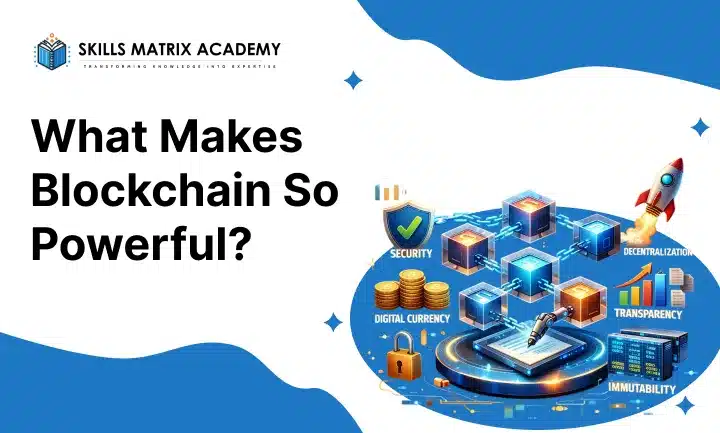
Here’s why blockchain technology works so well:
- It is decentralized, meaning no single authority runs it
- It is fully transparent — every record is open for verification
- It is tamper-proof, so old records can never be secretly changed
- It runs on smart contracts, which are self-executing agreements with no human interference
These qualities make it perfect for any field where trust, accuracy, and transparency matter. Let’s look at where it’s already making a difference.
Blockchain in Supply Chain — Knowing Where Your Product Came From
Have you ever wondered whether the “organic” label on your food is actually true? Most supply chains operate with limited transparency. Products pass through dozens of hands before reaching you, and tracking them is nearly impossible.
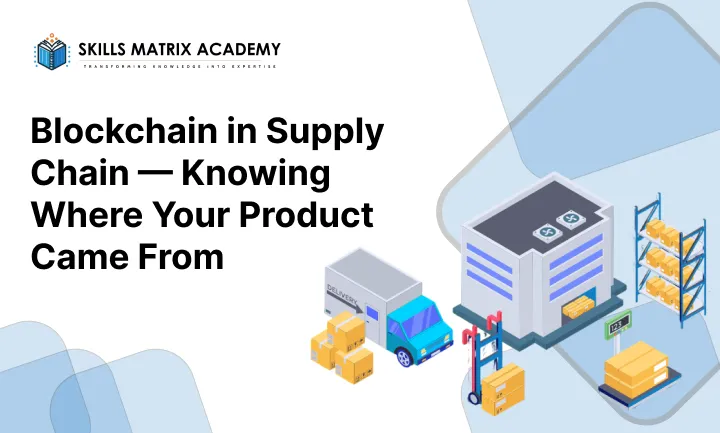
Blockchain applications in supply chain management change that completely. Every movement — from the farm to the truck to the store shelf — gets recorded on a shared digital ledger. It’s public, permanent, and verifiable.
Walmart already uses this system to trace food products within seconds. IBM has built blockchain applications that help shipping companies manage logistics more efficiently. This kind of real-time visibility reduces fraud, cuts down on counterfeit goods, and builds genuine trust between buyers and sellers.
When you can trace a mango back to the exact farm it came from, that’s not just cool — it’s a game-changer for food safety.
Blockchain in Healthcare — Putting Patients in Control
Healthcare is one of the most data-sensitive industries in the world. Yet medical records still get lost, hacked, or siloed in different hospital systems that don’t talk to each other.
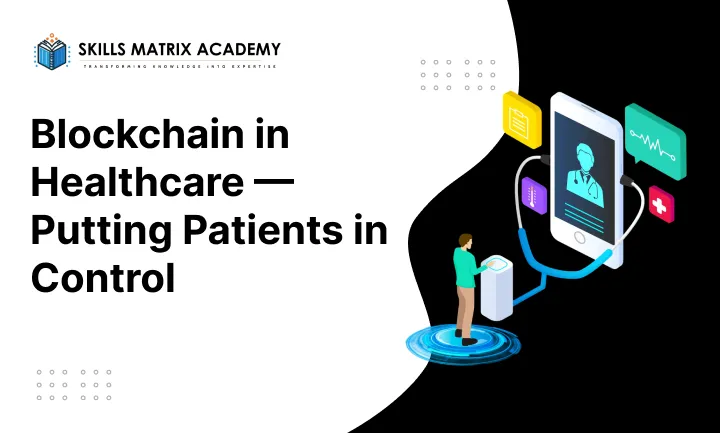
This is one of the most promising uses of blockchain technology today. With blockchain, a patient’s medical history can be stored securely and shared only with the right doctors at the right time. No more filling out the same forms at every new clinic. No more risks of a stranger accessing your private health data.
Beyond personal records, blockchain also helps with drug traceability. Fake medicines are a global crisis. By tracking pharmaceutical products from the factory to the pharmacy, blockchain helps ensure that what you’re taking is genuine.
Clinical trials also benefit. When trial data is recorded on a decentralized system, researchers can’t quietly alter results. That’s a big win for medical integrity.
Blockchain Applications in Finance — Faster, Cheaper, Smarter
Banks are expensive. International wire transfers can take days and cost significant fees. For businesses that deal globally, this is a constant headache.
Blockchain in finance is solving this by enabling direct peer-to-peer transactions without intermediaries. Ripple, as an example, enables cross-border transactions almost instantly. Smart contracts automatically execute financial agreements once conditions are met — no lawyers, no delays, no extra costs.
Decentralized Finance (DeFi) is taking this even further. It allows people to borrow, lend, and earn interest without ever stepping into a bank. That’s not just convenient — it’s financially empowering, especially for the billions of people who don’t have access to traditional banking.
Digital Identity — You Own Your Data
Every time you sign up for a website, you hand over personal information. That data gets stored in company servers — and those servers get hacked. It occurs more frequently than the news usually shows.
Blockchain benefits here are massive. With decentralized digital identity, you store your own information on a blockchain and choose who gets to see it. Microsoft is already working on this kind of system.
No more remembering dozens of passwords. No more worrying about your data being sold to advertisers. You become the owner of your digital identity — not a tech company.
Voting Systems — Restoring Trust in Democracy
Voter fraud and election tampering are serious global concerns. Paper ballots can go missing or be tampered with. Digital systems have been hacked. Neither feels fully safe anymore.
Blockchain-based voting creates a tamper-proof record of every vote. It can be verified in real time, and no one can alter the results after they’re cast. Voters can even confirm their own vote was counted — without revealing who they voted for.
That’s the kind of transparency that democracies desperately need.
Real Estate and Intellectual Property
Blockchain real world use cases extend into property too. Real estate deals are notoriously slow — paperwork, middlemen, title checks, and delays. Smart contract-based property transfers cut through all of that. Ownership gets recorded on a digital ledger that’s instant and public.
For creators, NFTs (Non-Fungible Tokens) are giving artists and musicians direct control over their work. Platforms like OpenSea let creators sell digital assets globally without handing 30–50% commissions to gatekeepers.
Challenges Worth Knowing
Blockchain real world use cases are growing, but the technology isn’t perfect yet. Energy consumption remains high for some networks. Regulations vary wildly by country. Scaling these systems for billions of users is still being worked on.
But the pace of innovation is fast. Many of these issues are already being addressed by newer blockchain designs.
The Road Ahead
Blockchain is still in its early chapters. But every year, more industries are quietly adopting it. Governments are testing it. Hospitals are piloting it. Banks are rebuilding themselves around it.
The real world examples of blockchain technology we see today — in supply chains, healthcare, finance, and identity — are just the beginning. The industries using blockchain technology will only grow wider.
Conclusion
Blockchain isn’t a buzzword anymore. It’s a working technology that’s already improving real lives in real ways. From tracking your groceries to protecting your vote, the benefits of blockchain beyond cryptocurrency are tangible, practical, and growing every day.
The businesses and governments that understand this early won’t just keep up — they’ll lead. And for the rest of us, it’s worth paying attention to how blockchain is used in real life, changing the world, one block at a time.
Frequently Asked Questions (FAQs)
1. What are blockchain real world use cases?
Blockchain real world use cases include applications in supply chain, healthcare, finance, voting systems, and digital identity. These systems use blockchain to improve transparency, security, and efficiency in real-life operations.
2. How does blockchain work in real-world situations?
Blockchain is used in real life to track goods, secure medical records, enable fast payments, and verify identities. It helps remove middlemen and builds trust through transparent data systems.
3. What industries are using blockchain technology?
Many industries are using blockchain technology, including healthcare, finance, logistics, real estate, and digital media. These industries benefit from better data security and faster processes.
4. What are the benefits of blockchain beyond cryptocurrency?
The benefits of blockchain beyond cryptocurrency include improved data security, transparency, reduced fraud, faster transactions, and better record management across industries.
5. Is blockchain only used for cryptocurrency?
It’s a misconception that blockchain is only used for crypto. While it powers digital currencies, it is also widely used in business operations, identity verification, and supply chain management.

Bharat Arora
12+ years as a web developer, Bharat has worked in the biggest IT companies in the world. He loves to share his experience in web development.


Bharat Arora
12+ years as a web developer, Bharat has worked in the biggest IT companies in the world. He loves to share his experience in web development.