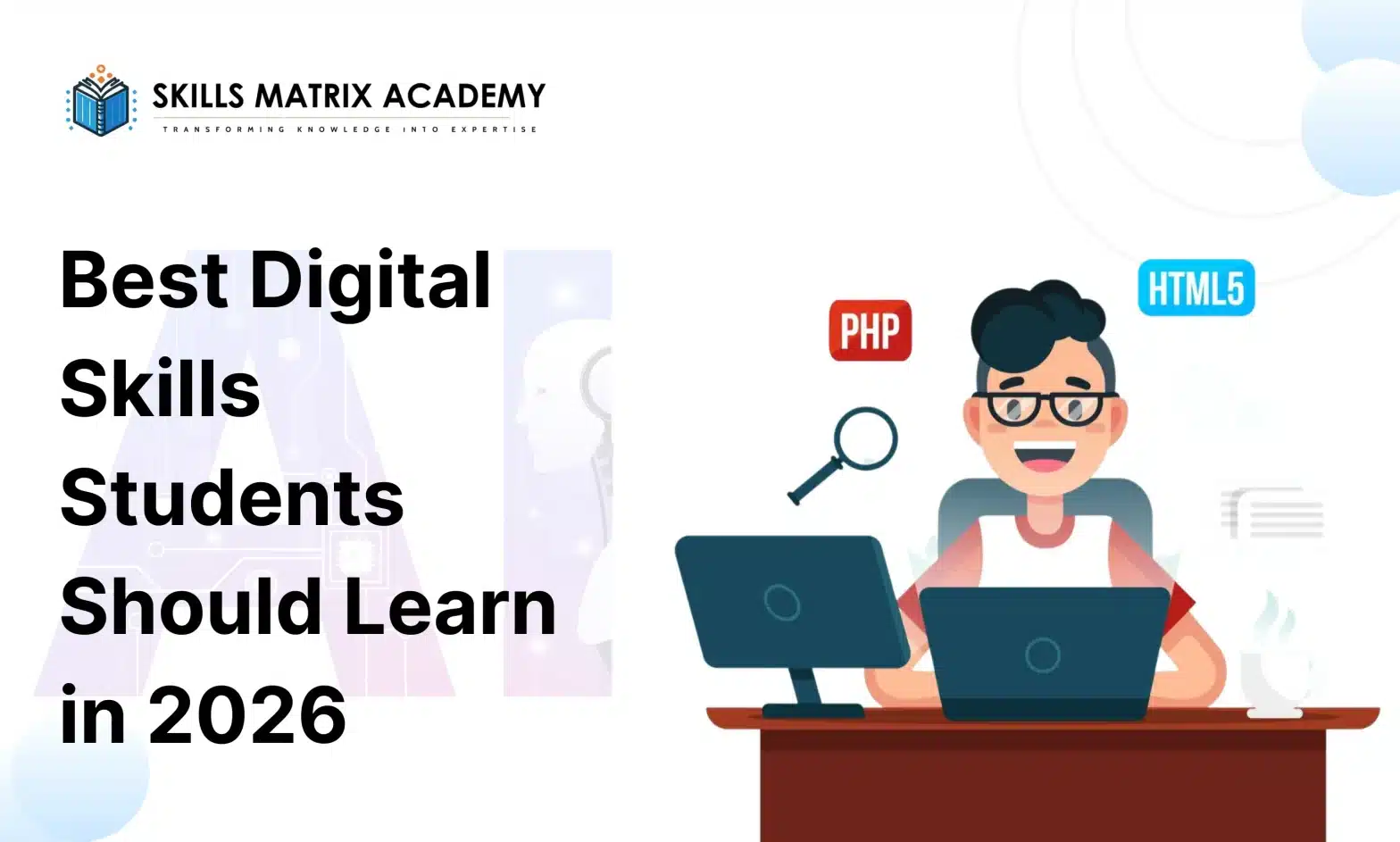
Think about the last five years. Jobs that did not exist in 2019 are now among the fastest-growing careers in the world. Companies are hiring people not because of their degrees, but because of what they can actually do. The world is going fully digital, and students who learn the right skills today will have a massive edge tomorrow.
Traditional education still matters. But it is no longer enough on its own. A student who knows how to run a data dashboard, build a website, or run a digital ad campaign is worth much more to an employer than someone who only has marks on paper. The gap between a job-ready student and an average one is often just a few months of focused skill-building.
This guide is written specifically for students who want to stay ahead. Whether you are in school, college, or just exploring options, this article will walk you through the most valuable digital skills for students in 2026 — and how to actually get started with each one.
Why Digital Skills Matter in 2026
The world of work has changed faster in the last three years than in the previous two decades. AI tools are doing tasks that once took full-time employees. Remote work is now normal. Freelancing has gone from a side hustle to a full career path for millions of people. In this world, high income skills 2026 are not optional extras — they are the main thing.
Here is the honest truth: employers are increasingly choosing candidates with proven, practical skills over those who only carry a degree. A study by LinkedIn found that skill-based hiring grew by over 90% in recent years. This shift is not slowing down. It is accelerating.
For students, this is actually great news. You do not need to wait until you graduate. You can start building real, marketable digital skills for career growth right now — from your phone or laptop, often for free. That is the real opportunity of 2026.
Top Digital Skills Students Must Learn
Before diving in, one thing to keep in mind: you do not need to learn everything on this list. Pick one or two that match your interest, go deep, and build real projects. Depth beats breadth every time. These are the top skills to learn in 2026 based on job demand, salary potential, and future relevance.
3.1 Artificial Intelligence & Machine Learning
AI is no longer just a buzzword. It is reshaping every industry — from healthcare to finance to marketing. As a student, you do not need to become an AI researcher. But understanding how AI works, and being able to use AI tools effectively, puts you miles ahead. Start with tools like ChatGPT and Google Gemini for practical use. Then explore basics of machine learning using beginner-friendly platforms like TensorFlow or Google Colab.
The career scope here is massive. AI engineers, prompt engineers, and AI product managers are among the highest-paid professionals in the world right now. Even if you do not go fully technical, combining AI knowledge with any other field gives you a serious edge. This is easily one of the most important in-demand skills for students going into 2026.
3.2 Data Analytics & Data Science
Every business decision today is backed by data. Companies need people who can collect, clean, and make sense of numbers. Data analytics is one of those digital skills for students 2026 that applies to almost every industry — retail, healthcare, sports, finance, you name it.
Start with Excel and Google Sheets for data basics. Then move to Python with libraries like Pandas and Matplotlib. Power BI and Tableau are great tools for making visual dashboards. Jobs like Data Analyst and Business Analyst are both well-paying and widely available globally — and many can be done remotely.
3.3 Digital Marketing
Every brand, business, and creator needs to be found online. That is where best digital skills for students in marketing become incredibly valuable. SEO helps websites rank on Google. Social media marketing builds communities and drives sales. Content marketing creates trust and long-term visibility. These skills can be used to get a job, start a freelance career, or build your own brand.
The best part? Digital marketing is one of the most accessible skills to learn. You can practise on your own social media, run a small test blog, or help a local business with their online presence. Real-world practice here is more valuable than any certificate.
3.4 Coding & Web Development
Web development remains one of the most in-demand skills for students you can build. If you can build websites and apps, opportunities are everywhere — full-time jobs, freelancing, or starting your own product. HTML, CSS, and JavaScript are the core foundation. Python is great for backend development and automation. Once you know the basics, frameworks like React or Django open even more doors.
Global companies hire remote developers from India, Eastern Europe, and Southeast Asia every day. This is genuinely a skill that can get you hired or help you earn from anywhere in the world.
3.5 Cybersecurity
Every time a company stores data, it needs to protect it. Cybersecurity professionals are among the most sought-after people in the world right now, and there is a massive talent shortage. For students interested in tech, learning the basics of ethical hacking and network security is a smart move. Platforms like TryHackMe and Hack The Box offer hands-on practice environments for beginners.
Entry-level certifications like CompTIA Security+ can be earned without a degree and open doors to well-paying jobs. This is one of the future skills for students with long-term demand regardless of what other technologies come and go.
3.6 UI/UX Design
UI/UX design sits at the intersection of creativity and technology. UI stands for User Interface — how something looks. UX stands for User Experience — how it feels to use. Together, they determine whether a product is a joy to use or a frustration. Companies invest heavily in good design because it directly affects sales and user retention.
Figma is the industry-standard tool and it is free for students. Adobe XD is another solid option. If you are creative but not into coding, UI/UX design is one of the best digital skills for career growth available today.
3.7 Cloud Computing
Almost every modern application runs on cloud infrastructure. AWS, Google Cloud, and Microsoft Azure are the three major platforms, and they offer free tiers and student credits. Cloud computing skills are foundational for any student aiming for a career in tech infrastructure, DevOps, or software development. It is also one of the highest-paying skill areas in the IT industry globally.
3.8 Video Editing & Content Creation
The creator economy is real, and it is massive. YouTube, Instagram Reels, and short-form video are not going anywhere — they are growing. If you enjoy storytelling and have even a basic interest in visuals, video editing is a highly monetisable skill. Tools like CapCut are free and beginner-friendly. Premiere Pro and DaVinci Resolve take things to a professional level.
Beyond personal branding, brands and businesses constantly hire video editors, content strategists, and social media managers. This makes it a practical and profitable entry point into the world of skills to learn for freelancing.
3.9 Blockchain Basics
Blockchain is still an evolving field, but it is finding real use in finance, supply chain management, healthcare records, and digital identity. You do not need to become a crypto trader. But understanding decentralised systems, smart contracts, and how Web3 works gives you a head start in what may be one of the defining technologies of the next decade.
How Students Can Start Learning These Skills
The good news is that the barrier to entry has never been lower. You can learn almost any of these best digital skills for students at home, at your own pace, and often for free. The most important mindset shift is moving from consumer to creator. Watching tutorials is fine, but the real learning happens when you start building, experimenting, and making mistakes on your own projects.
- Start with YouTube — it is the world’s biggest free learning library. Search for beginner tutorials in your chosen skill.
- Use structured platforms like Coursera, Udemy, or Google’s free certificate programs for guided learning paths.
- Build a real project within the first month. Nothing teaches better than actually doing something with what you learned.
- Join communities on Reddit, Discord, or LinkedIn where people share resources and give feedback.
- Commit to consistency — even 45 minutes daily beats a weekend binge every time.
Tips to Choose the Right Skill
With so many options available, it is easy to get overwhelmed and pick the wrong starting point. Here is a simple framework to choose wisely. First, ask yourself what genuinely interests you — skills you enjoy learning are skills you actually stick with. Second, look at market demand. Use LinkedIn job searches to see which skills appear most frequently in roles you find appealing.
Third, think about skill combinations. A designer who understands SEO is more valuable than a pure designer. A marketer who knows basic data analytics earns more than one who does not. The most powerful digital skills for career growth often come from combining two complementary skills — this is called a skill stack, and it is a proven career strategy. Pairing a technical skill with a communication or creativity skill is especially powerful for the current job market.
Common Mistakes Students Should Avoid
Most students who try to learn digital skills for students 2026 give up within the first few weeks — not because they are not capable, but because they fall into predictable traps. Being aware of these mistakes can save you months of wasted effort.
- Trying to learn five skills at once instead of mastering one first.
- Watching tutorials endlessly without ever building a real project.
- Skipping fundamentals and jumping to advanced topics too quickly.
- Chasing trending skills without considering long-term demand or personal interest.
The students who succeed are the ones who pick one skill, stay consistent for 90 days, build something real, and then move forward. Simple, but not easy. That is the real formula behind building strong high income skills 2026 as a student.
Future Trends in Digital Skills
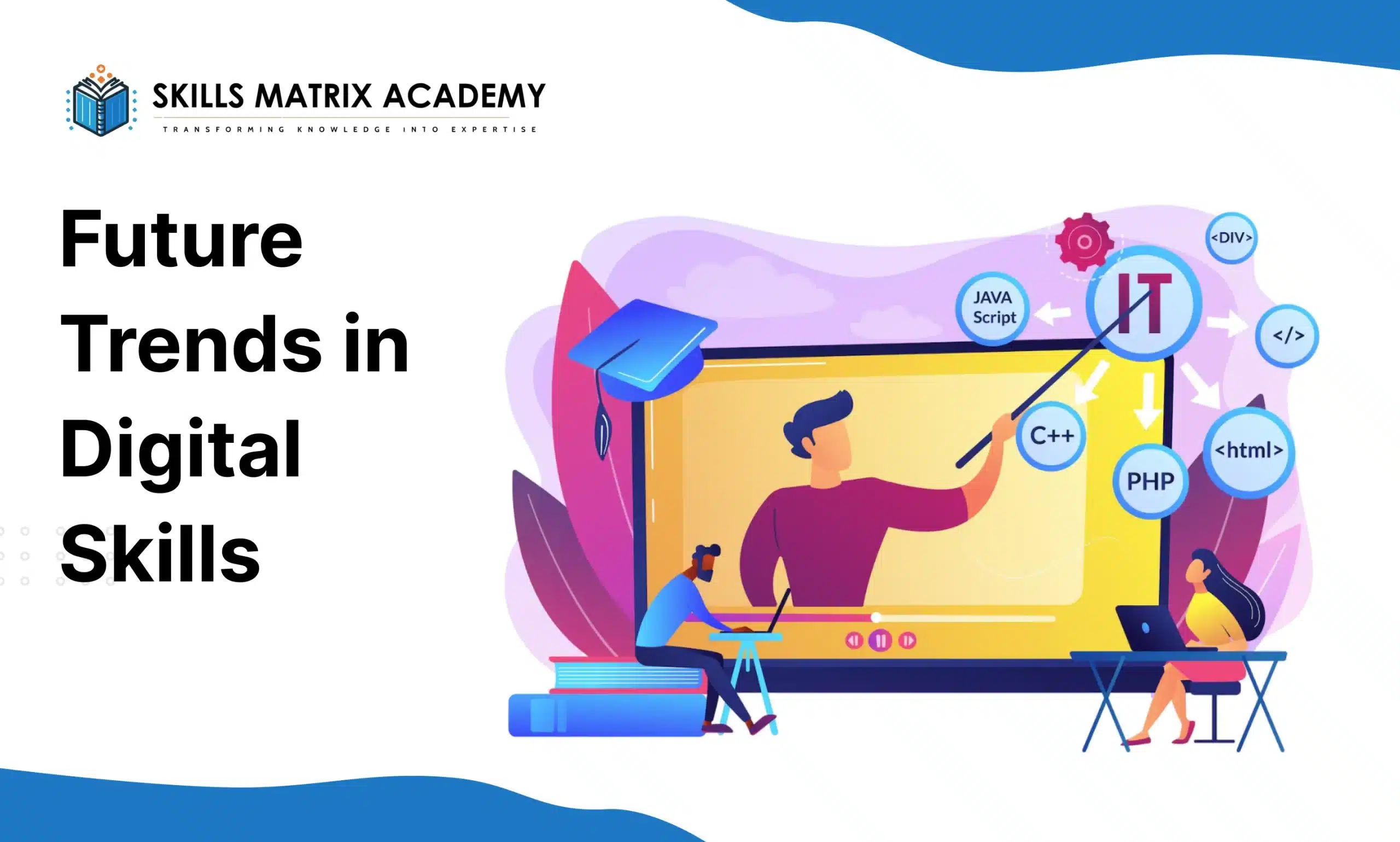
Looking ahead, a few patterns are very clear. AI will continue to automate repetitive and routine tasks — this is not scary, it is a signal to focus on skills that require creativity, judgment, and human connection. The rise of no-code and low-code tools means that even non-technical people can build apps and automate workflows, which is great news for students from non-engineering backgrounds.
The most future-proof professionals will be those who combine technical knowledge with soft skills like communication, critical thinking, and adaptability. Hybrid skills — the ability to work across both creative and technical domains — will be among the most valued attributes in the job market over the next decade. Students who build these skills for future jobs early will have a significant long-term advantage.
Conclusion
The digital world is not waiting for anyone to catch up. But the great thing is, you do not need years of preparation to get started. You need a direction, a plan, and the willingness to show up consistently.
Pick one skill from this list that genuinely excites you. Spend 30 days learning the basics. Build something small. Then keep going. The students who start today — even imperfectly — will be the professionals everyone else is trying to catch up with in 2027. Your future self will thank you for starting now.
FAQs
Q1. Which digital skill is best for students in 2026? It depends on your interests, but AI & Machine Learning, Digital Marketing, and Data Analytics are among the highest-demand and best-paying options. If you enjoy creativity, UI/UX design and content creation are excellent choices too. The best skill is always the one you will actually stick with long enough to get good at.
Q2. Can I learn digital skills without coding? Absolutely. Skills like Digital Marketing, UI/UX Design, Video Editing, and Content Creation require very little to no coding. There are plenty of strong, well-paying career paths that do not need you to write a single line of code.
Q3. How long does it take to learn a digital skill? With focused practice of 45–60 minutes daily, most students can gain job-ready basics in 2–4 months. Mastery takes longer, but you can start landing freelance work or internships within 3 months of consistent, project-based effort.
Q4. Are digital skills better than a degree? They are different things that work best together. A degree provides foundational knowledge and credibility, while digital skills make you immediately employable. In many fields today, proven skills carry equal or more weight than a degree alone. The combination of both is the strongest position to be in.
Q5. Which skill has the highest salary potential? Cybersecurity, AI/ML Engineering, and Cloud Computing consistently rank among the highest-paying digital skills globally. Data Science and Full-Stack Web Development are also strong options. These are the digital skills for students that offer both strong starting salaries and excellent long-term growth.

Bharat Arora
12+ years as a web developer, Bharat has worked in the biggest IT companies in the world. He loves to share his experience in web development.

Bharat Arora
12+ years as a web developer, Bharat has worked in the biggest IT companies in the world. He loves to share his experience in web development.