Two years ago, if you told me a solo marketer could run campaigns that used to need a team of five, I’d have laughed. Today, that’s not just possible — it’s happening every single day, across thousands of small businesses in India and around the world. The game-changer? AI marketing tools.
I’m not here to give you a fancy list with tools you’ll never actually open. This is the guide I wish someone had given me when I first started exploring artificial intelligence in marketing. Real tools. Real use cases. Honest opinions.
“AI doesn’t replace marketers. It replaces the version of you that spends 20 hours a week on things a machine can do in 20 minutes.”
Quick Facts:
- Over 3,000 AI tools are available today
- More than 300 are built specifically for SEO and marketing
- A basic AI stack covering 80% of daily tasks costs ₹0 using free tiers
Why AI Tools for Digital Marketing Are No Longer Optional
Let’s be honest. The marketing world in 2026 looks nothing like it did five years ago. AI in digital marketing has moved from “interesting experiment” to an absolute necessity. Businesses that are still manually doing keyword research, writing every caption from scratch, or guessing the best time to post on Instagram are already falling behind.
What changed? The tools got smarter — and cheaper. Today, a freelancer in Jaipur or a startup founder in Bengaluru can access the same AI tools for marketing automation that Fortune 500 companies use. The barrier to entry has basically collapsed.
Here’s what good digital marketing AI tools actually help you do:
- Cut down repetitive work like writing first drafts, scheduling posts, and pulling reports
- Make smarter decisions with data you didn’t have time to analyze before
- Create more content with less effort — without sacrificing quality
- Run personalized campaigns at scale, even with a tiny team
- Compete with bigger brands without needing a bigger budget
Beginner-Level AI Tools for Marketers (Start Here)
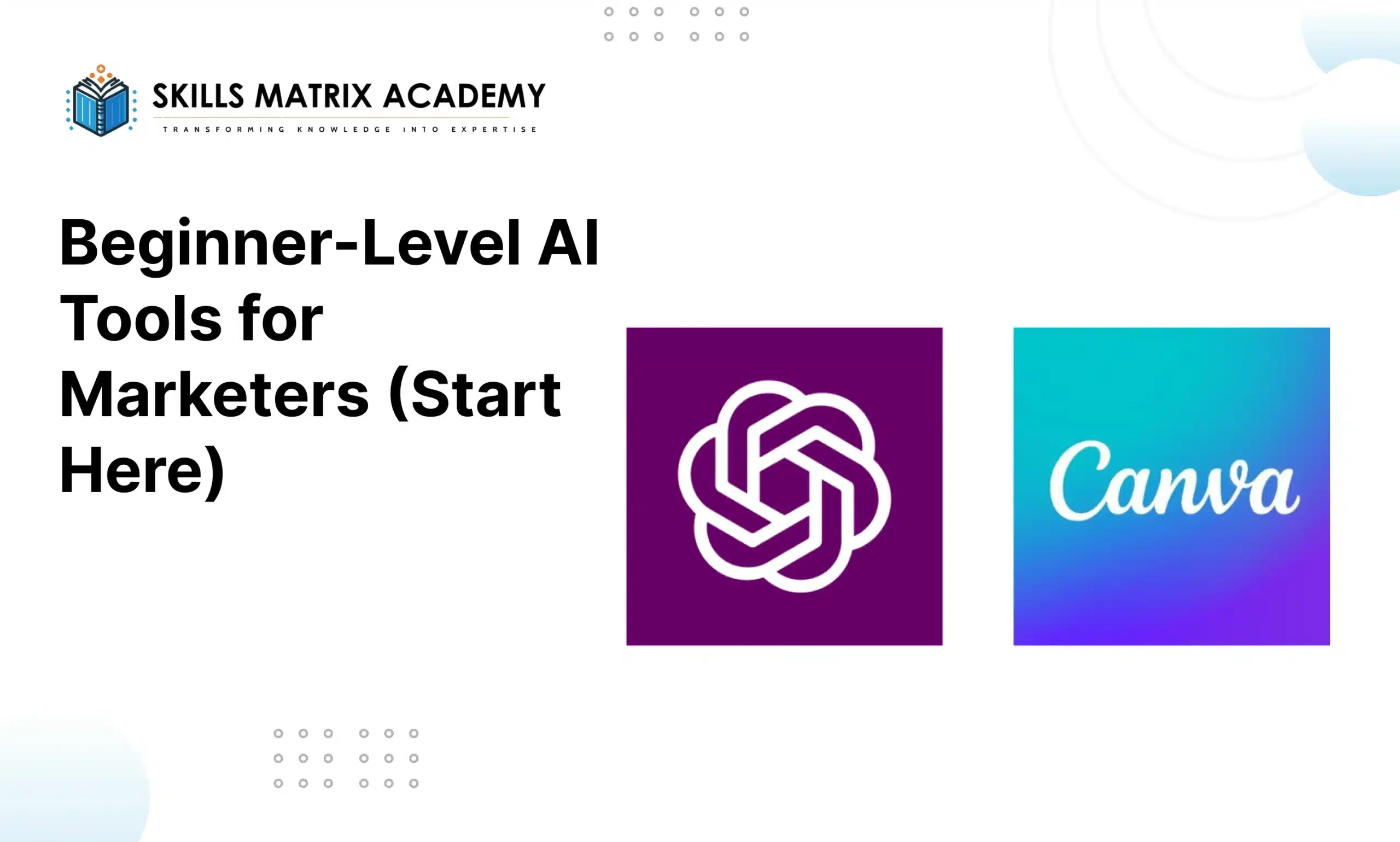
AI tools for beginner marketing don’t need to be complicated. These four tools are intuitive, affordable, and genuinely useful from day one.
1. ChatGPT — Your Always-On Marketing Thinking Partner
ChatGPT for marketing is the first tool most people discover, and for good reason. It’s brilliant at helping you draft blog outlines, brainstorm ad angles, write email sequences, and come up with social captions when your brain is completely blank at 11 PM. The secret is treating it like a smart intern, not a content factory. You still bring the brand voice, the strategy, and the judgment. ChatGPT brings the speed.
2. Canva AI — Design That Doesn’t Require a Design Degree
Most marketers are not designers. That’s exactly why Canva AI tools exist. With features like Magic Design and text-to-image generation, Canva lets you create professional-looking social posts, blog banners, and pitch decks without needing to understand a single design principle. This is a genuine superpower if you’re handling AI tools for social media marketing on your own.
3. Grammarly — Because First Impressions Are Written, Not Spoken
Grammarly for marketers does more than fix comma errors. It checks your tone, flags passive-voice overload, and helps your copy sound like a confident human wrote it—not a tired marketer or a robot. If you’re publishing blogs, sending client emails, or writing ad copy, having Grammarly running in the background is just smart hygiene.
4. Google Gemini AI — Research Without the Rabbit Hole
Google Gemini AI marketing use cases are growing fast. For marketers, it’s especially useful when you need to quickly understand a new topic, identify content angles, or get up to speed on an industry you know nothing about. It integrates seamlessly with Google’s ecosystem, making it useful for teams already living in Google Workspace.
Intermediate AI Tools for Marketers (Level Up Your Work)
Once you’re comfortable with the basics, these tools help you move from “creating content” to “creating content that actually performs.” This is where AI tools for content planning and optimization start to pay real dividends.
5. Surfer SEO — Write Content Google Actually Wants to Rank
There’s writing content, and then there’s writing content that ranks. The Surfer SEO tool sits squarely in the second category. It analyzes top-ranking pages for your target keyword and tells you exactly how to structure your article, which related terms to include, and how long your content should be. For anyone serious about AI tools for SEO, Surfer is non-negotiable.
6. Jasper AI — Copywriting That Converts
Jasper AI copywriting is built specifically for marketing output. Unlike general AI assistants, Jasper understands marketing frameworks — AIDA, PAS, FAB — and applies them to your content. It’s particularly strong for writing website copy, product descriptions, and ad headlines where every word has to earn its place. If you’re scaling content production, Jasper significantly reduces your production time.
7. Hootsuite & Buffer with AI — Smarter Social Without the Stress
Both Hootsuite AI features and Buffer AI social media capabilities have grown considerably. Beyond scheduling, they now suggest captions, recommend optimal posting times based on your audience behavior, and surface content ideas when your pipeline feels empty. For anyone managing multiple social accounts, this kind of AI-powered support is genuinely time-saving.
8. Pictory — Turn Your Blog Posts Into Video Content
Video isn’t just growing. It’s eating everything. The Pictory AI video tool lets you paste in a blog post or script and get a ready-to-share video in return. It pulls relevant stock footage, adds captions, and even lets you choose a voiceover. For content marketers who know they should be doing video but haven’t because “it’s too complicated,” Pictory removes that excuse entirely.
Pro-Level AI Tools for Advanced Marketers (Built for Scale)
These are the tools that separate good marketers from great ones. They’re more complex, require more context to use well, but deliver results that are genuinely difficult to achieve any other way.
9. Google Analytics 4 — Intelligence Beneath the Surface
Most people use Google Analytics 4 AI features to check pageviews and bounce rates. But GA4’s predictive metrics go much deeper. It can tell you which users are likely to convert in the next 7 days, which channels are actually driving revenue (not just traffic), and where your funnel is quietly leaking money. Mastering GA4 is foundational to real AI tools for data analysis and marketing.
10. Meta Ads AI & Google Ads AI — Let the Machines Optimize While You Strategize
Meta Ads AI and Google Ads AI are among the most powerful AI tools for ad optimization available today. Smart bidding in Google, Advantage+ targeting in Meta — these systems process signals at a scale no human can match. Indian D2C brands using Meta Advantage+ have reported cost-per-acquisition improvements of 20–35% compared to fully manual campaigns. The key insight: AI handles execution, but your strategy, creative, and offer still determine success.
11. HubSpot AI CRM — Marketing Automation That Actually Fits Together
HubSpot AI CRM is the closest thing to a single source of truth for growing businesses. It handles email marketing, AI tools for lead generation, contact scoring, and customer journey tracking — all in one place. For teams that have been juggling five different tools that don’t talk to each other, HubSpot feels like finally turning on the lights.
12. Zapier + AI — The Glue That Holds Your Marketing Stack Together
Zapier AI automation connects your tools so they actually work as a system. New lead comes in from a Facebook ad? Zapier adds them to HubSpot, sends a welcome email, and notifies your sales rep on Slack — automatically. This kind of AI workflow automation tool setup is what turns a collection of separate tools into a real marketing engine.
Common Mistakes to Avoid When Using AI Marketing Tools
Here’s something nobody talks about enough: using AI tools badly is worse than not using them at all. Bad AI output published at scale is still bad output — just a lot more of it, a lot faster.
The most common mistake is treating AI as a publisher instead of a collaborator. You still have to read what it produces. You still have to ask, “Does this sound like us? Is this actually true? Would a real person find this useful?” AI generates. You edit, approve, and take responsibility.
The second big mistake is abandoning your brand voice. AI tools for content writing are trained on the entire internet. Left unchecked, they produce content that sounds like everyone else’s content. Your job is to inject personality, specificity, and point of view into everything AI drafts for you.
And finally, don’t use AI to skip the marketing fundamentals. Knowing how to write a compelling hook, understanding how a funnel works, and knowing why someone buys — these things matter more than ever in an AI-assisted world, because AI amplifies your thinking. If your thinking is shallow, the output will be shallow at scale.
Human Skills You Still Need Alongside AI Tools
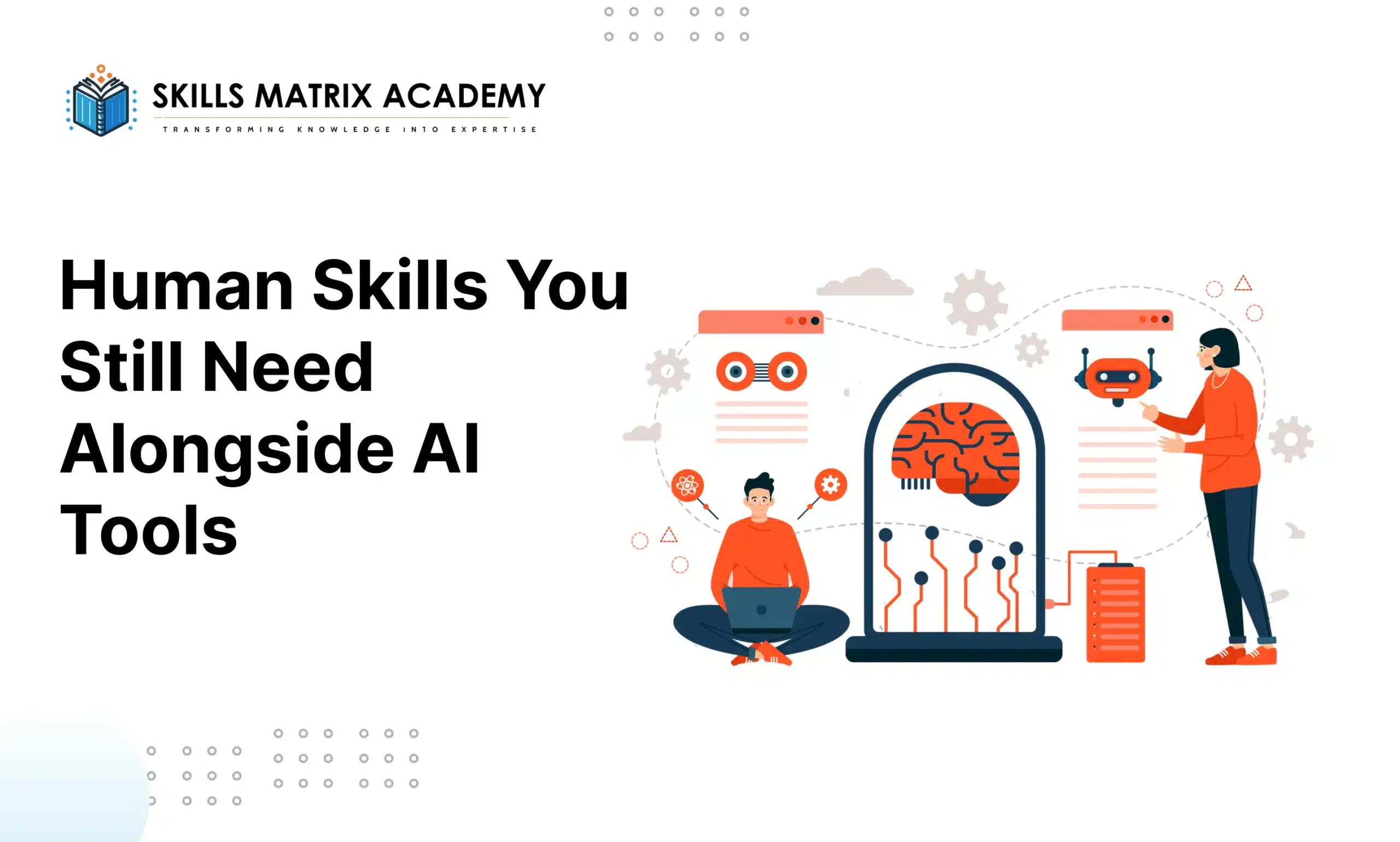
This is the part of the conversation that gets skipped in most “AI tools” articles, and it’s the most important part. Best AI tools for marketers will not make you successful on their own. They multiply what you already bring to the table.
If you want to use AI tools for digital marketers in India (or anywhere) effectively, you still need a solid foundation in copywriting, basic psychology of persuasion, funnel strategy, and data literacy. You need to understand why someone clicks on an ad, why an email subject line works, and why a landing page converts or doesn’t. AI will execute your thinking. The thinking has to be yours.
The marketers who are thriving right now are the ones who treated the arrival of AI as an invitation to go deeper on strategy, creativity, and relationships — rather than a reason to go shallow on everything and just let the machines run.
Frequently Asked Questions
What are the best AI tools for digital marketing in India?
For most Indian marketers and small business owners, starting with ChatGPT for content, Canva AI tools for design, and Meta Advantage+ for paid ads covers about 80% of daily marketing needs — and a significant portion of that stack is free or very low cost. As you grow, layer in Surfer SEO and HubSpot for content optimization and lead management.
Can AI replace digital marketers?
No. AI tools for marketing strategy handle execution — writing drafts, generating designs, optimizing bids. But they cannot replace strategic thinking, brand building, genuine client relationships, or the kind of creativity that comes from understanding human emotion. What’s actually happening is that marketers who use AI are replacing marketers who don’t.
How much does a good AI marketing tools stack cost per month?
Affordable AI marketing tools in India are very accessible. A basic stack using free tiers of ChatGPT, Canva, and Google tools costs nothing. A professional setup with ChatGPT Plus, Canva Pro, and a tool like SEMrush runs approximately ₹5,000–15,000 per month. That’s a fraction of what hiring an additional team member would cost.
Which AI tool is best for Facebook and Instagram ads?
Meta Ads AI, through the Advantage+ suite, is the most powerful AI tool for Facebook ads. It automates audience targeting, creative testing, and bidding decisions simultaneously. Many D2C brands in India have reported a 20–35% reduction in cost-per-acquisition compared to running campaigns manually.
Is ChatGPT actually good for marketing content?
Yes, with an important caveat. ChatGPT for marketing is excellent at producing strong first drafts quickly. But you must always edit for brand voice, factual accuracy, and emotional resonance before publishing. Think of it as a very fast, tireless writing assistant that still needs a human editor at the wheel.
Final Thoughts
By 2026, the AI tools list 2026 is no longer just a trend topic — it’s the new baseline for every marketing role. The question has never been whether to adopt these tools. The question is always which ones to start with, and how to combine them with the human skills that no algorithm can replicate.
Start simple. Practice consistently. And always remember: the tools are only as smart as the marketer using them.

Bharat Arora
12+ years as a web developer, Bharat has worked in the biggest IT companies in the world. He loves to share his experience in web development.

Bharat Arora
12+ years as a web developer, Bharat has worked in the biggest IT companies in the world. He loves to share his experience in web development.