Introduction
AI is everywhere on social media right now. It writes your captions. It edits your videos. It even tells you which hashtags will make you go viral. This rapid change raises a massive question for creators. Will artificial intelligence in social media eventually kill human creativity? The short answer is a loud “No.” However, that only holds true if you use these tools the right way. You need a strategy that keeps you in the driver’s seat while the machine handles the heavy lifting.
The secret is to treat AI as a talented helper rather than the hero of your story. When brands find the right rhythm, they see better engagement and deeper connections. In this guide, you will learn exactly how to master balancing AI and creativity in social media. We will look at how to keep your human touch while using high-tech tools to scale your reach. This is about working smarter, not just faster.
The Rise of AI in Social Media Marketing
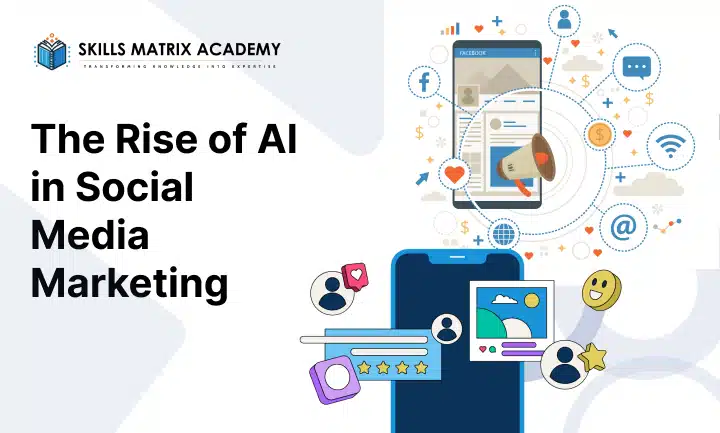
AI has quietly become the backbone of how we use the internet today. It is no longer a futuristic concept. It is the engine under the hood of every major platform. Most creators use AI content creation for social media without even realizing it. From the “For You” page on TikTok to the suggested posts on Instagram, algorithms are constantly making decisions. These systems analyze billions of data points in seconds to predict what you want to see next.
Current AI in social media marketing shows up in several key areas. First, we have content generation. AI helps people create catchy captions, stunning graphics, and even full video scripts. Then, there is social media content automation. Tools can now schedule your posts at the exact minute your audience is most active. They can even handle basic customer service by replying to common DMs or comments. This helps brands maintain a consistent presence without burning out their staff.
Finally, we see AI in performance prediction and personalization. These tools analyze which of your past posts did well and why. They look at colors, keywords, and timing. This AI-powered social media strategy helps you stop guessing and start growing. But while AI runs the engine, your creativity must still drive the car. If you let the machine steer, you might end up in a very boring place.
Where Human Creativity Still Wins
AI is incredibly powerful, but it has hard limits. There are things a human brain can do that a processor simply cannot replicate. The biggest win for humans is creative storytelling on social media. AI can write a grammatically perfect sentence, but it doesn’t “feel” anything. It hasn’t experienced heartbreak, joy, or the struggle of building a business. Humans tell stories that spark real emotion. This emotional spark is what builds a loyal community around your brand.
Another area where humans dominate is authentic social media marketing. Your unique brand voice and your personal values are your “moat.” They protect you from being replaced. Audiences have a “bot radar” that is getting sharper every day. They can tell when a post feels fake or robotic. If you lose your soul, you lose your followers. Your personality is the only thing that a machine cannot copy and paste.
Finally, we have cultural relevance and humor. Think about the last time a meme went viral. Those moments happen in a flash. Humans feel the “vibe” of a trend as it happens. AI, on the other hand, usually reacts after the fact. It looks at historical data. By the time an AI suggests a trend, the internet has often moved on. Human creativity in digital marketing relies on intuition and “gut feelings.” That instinct is your greatest competitive advantage in a crowded feed.
The Risk of Over-Relying on AI
If you lean too hard on automation, your brand will suffer. We call this AI content fatigue. This happens when a feed becomes a sea of “sameness.” If everyone uses the same AI prompts, everyone starts sounding the same. Your posts become generic and repetitive. When your content loses its edge, your audience starts to tune out. They stop liking, stop commenting, and eventually, they stop following.
Imagine a small business that decides to automate everything. They use AI for every caption and every image. At first, it seems great because they save hours of work every week. But after a month, their Instagram looks like a ghost town. The captions are technically fine, but they lack “punch.” There are no inside jokes. There is no raw, behind-the-scenes energy. The brand starts to feel soulless. This is the danger of letting social media automation vs creativity lean too far toward the machines.
When you over-use AI, you also risk damaging your brand voice in AI content. Most AI models are trained to be polite and neutral. While that is safe, it is also boring. Social media thrives on bold opinions and unique perspectives. If you let the AI do all the talking, you settle for “average.” In the world of social media, being average is the quickest way to become invisible.
How to Enhance Creativity with AI
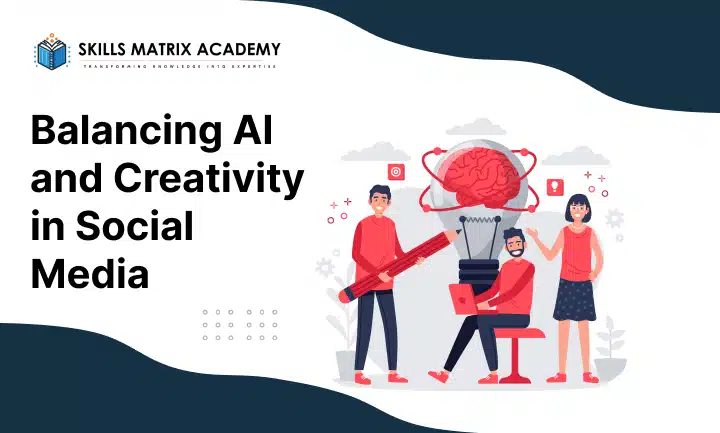
The goal is to find a balance where both sides win. You can use AI and human creativity together to build something better than either could do alone. One of the best ways to do this is by using AI for brainstorming. Let the AI generate twenty different post ideas or three different outlines for a video. It helps you move past the struggle of starting from nothing. AI can give you the initial spark, but you turn it into something powerful.
You should also use AI for captions and hashtags to save time on the basics. Let the tool draft a few options, then go in and edit them. Add your specific slang, your personal stories, and your unique call to action. This gives you the speed of a machine with the quality of a human. You are essentially using the AI as a rough-draft machine. You are the high-level editor who ensures the final product is actually worth reading.
Finally, use AI analytics for social media to make better decisions. AI is great at spotting patterns in data that humans might miss. It can tell you that your audience loves “how-to” videos but hates “lifestyle” photos. However, you should be the one to decide how to use that data. Don’t let the numbers dictate everything. Sometimes, a post that “fails” in the data still helps build your brand’s long-term reputation. Always make data-driven social media decisions with a human heart.
Best Practices for Balancing AI and Creativity in Social Media
Staying on track requires a clear set of rules. You should always define your brand voice before you ever open an AI tool. If you don’t know who you are, the AI certainly won’t either. Write down your tone, your favorite words, and the topics you refuse to talk about. This acts as a guardrail for any content you create. Here are some steps to keep your strategy healthy:
- Treat AI as a co-creator: Never think of it as a replacement for your brain. It is an assistant that works for you.
- The “Human Edit” is mandatory: Never copy and paste directly from an AI tool. Always change at least 30% of the text to match your style.
- Use AI for the “boring” stuff: Let it handle alt-text for images, basic video captions, or sorting through long lists of keywords.
- Stay focused on “human-first” content strategy: Always ask, “Would I enjoy reading this if I saw it in my own feed?”
- Audit your engagement: If your comments are dropping, it might be a sign that you are using too much AI and losing your spark.
By following these steps, you ensure that you are using artificial intelligence in social media to your advantage. You become more productive without losing the trust of your followers. It is all about maintaining that delicate balance between efficiency and empathy.
Tools That Help Maintain the Balance

You don’t need a hundred different apps to succeed. You just need a few “power tools” that fit your workflow. For writing, tools like ChatGPT or Claude are great for beating writer’s block. They can help you improve clarity and speed up your drafts. For design, tools like Canva now use AI personalization algorithms to help you layout graphics in seconds. These tools help you maintain brand consistency across all your platforms.
Video is another area where AI shines. New editing tools can automatically remove “umms” and “ahhs” from your speech. They can add stylized captions that make your videos more engaging for people watching on mute. This is a perfect example of AI-generated social media content that actually helps the creator. It removes the tedious parts of editing so you can focus on the creative parts of filming.
Lastly, look into AI tools for social media marketing that focus on analytics. Platforms like Buffer or Sprout Social use AI to tell you the best time to post. They help you understand audience behavior at a deep level. When you know what your audience wants, you can use your human creativity to give it to them in a way they never expected. Focus on the tools that give you back your time.
The Future: AI Power Meets Human Spirit
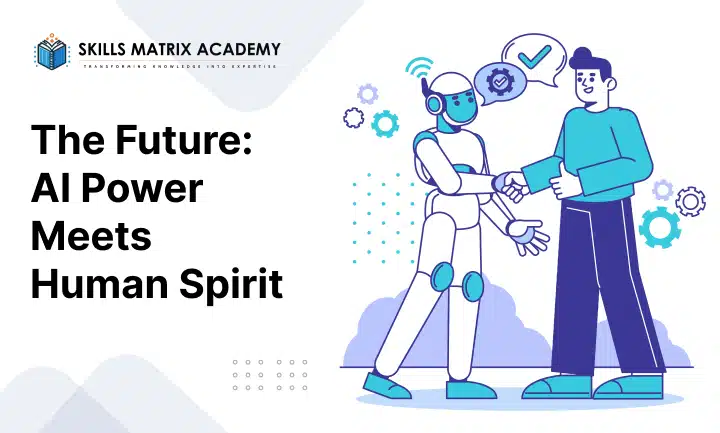
The future of social media marketing isn’t a battle between humans and robots. It is a partnership. The winners will be the creators who learn to speak the language of AI while keeping their human soul intact. Those who lean entirely on automation will eventually fade out because they offer nothing unique. But those who use AI and human creativity together will be unstoppable.
We are moving toward a world of social media engagement optimization where machines handle the distribution and humans handle the connection. This allows you to reach more people than ever before. But remember, reaching people is only half the battle. You also have to move them. You have to make them think, laugh, or take action. That part of the job will always belong to you.
As we look ahead, the ethical use of AI in marketing will also become a major topic. Be transparent with your audience. If you use AI to create a piece of art or a deep-dive report, it’s okay to mention it. Truth builds trust faster than perfection. Stay curious and keep experimenting with new tools. The landscape is changing fast, but the core of social media remains the same: people connecting with people.
Conclusion: Staying Human-First in a Digital World
Balancing AI and creativity in social media is the most important skill you can learn this year. AI is not your enemy; it is a tool that can make you faster, sharper, and more efficient. But it cannot replace the “you” in your content. Always prioritize a human-first content strategy. Use the data, use the automation, but never lose the heart of your brand.
When you use AI wisely, you spend less time on busy work and more time on big ideas. You can focus on authentic social media marketing that actually moves the needle for your business. So, start small. Use an AI tool to help with your next caption or to brainstorm a few video ideas. Then, add your own flair and see how your audience reacts.
Stay curious. Stay creative. Most importantly, stay human. That is the only way to truly win on social media today and in the years to come. The machines are here to help, but you are the one who makes the magic happen.
Here are five frequently asked questions to accompany the blog post. They are designed to be clear, helpful, and direct, maintaining the same conversational tone and SEO focus as the main content.
FAQ’s
- Can AI replace social media managers?
No, AI is a tool for the manager, not a replacement for them. While social media content automation can handle scheduling and basic replies, it cannot build a long-term strategy. A manager is needed to handle high-level tasks like community building, crisis management, and creative direction. AI can generate data, but a human must interpret that data to make sure it aligns with the brand’s mission.
2. Is AI-generated content safe for brands to use?
Yes, but only if there is a “human in the loop.” Using raw AI-generated social media content without editing can lead to factual errors or tone-deaf messaging. To keep your brand safe, you must fact-check every claim and ensure the style matches your established brand voice. Think of AI as a talented but inexperienced intern—it needs a senior editor to sign off on its work.
3. How can I avoid “AI content fatigue” in my feed?
The best way to avoid AI content fatigue is to prioritize personal stories and unique perspectives. AI tends to produce “average” content that sounds like everything else on the internet. You can break this cycle by adding “un-copyable” elements like behind-the-scenes photos, employee interviews, or specific customer success stories. Use AI for the structure, but use your own life for the substance.
4. Does using AI affect my engagement rates?
It depends on how you use it. If you use AI for captions and hashtags to improve your reach and consistency, your engagement will likely go up. However, if you let the AI take over entirely, your posts will lose their emotional punch, and engagement will drop. Audiences crave connection. If they feel like they are talking to a bot, they will stop talking back.
5. Should small creators invest in AI tools?
Absolutely. For small creators, balancing AI and creativity in social media is a game-changer. It allows a one-person team to produce content at the level of a large agency. By using AI to handle time-consuming tasks like video subtitling or keyword research, you free up more hours for the creative work that actually grows your brand. It’s about using smarter methods to keep your edge.

Bharat Arora
12+ years as a web developer, Bharat has worked in the biggest IT companies in the world. He loves to share his experience in web development.

Bharat Arora
12+ years as a web developer, Bharat has worked in the biggest IT companies in the world. He loves to share his experience in web development.