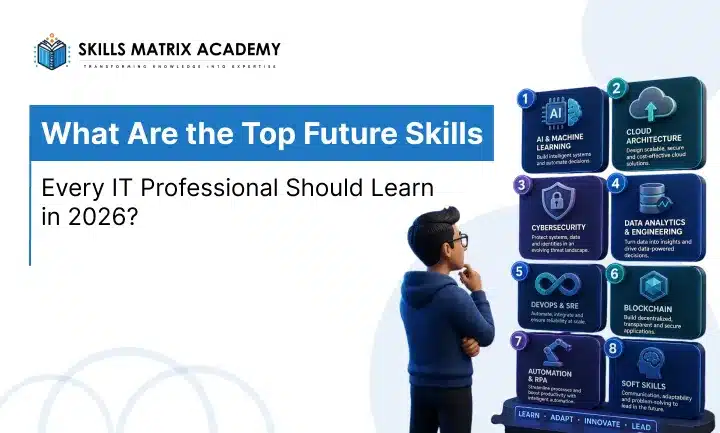
Technology is changing very fast. A few years ago, most IT jobs focused on fixing computers, managing servers, or building websites. Now things are different.
Today, companies want people who understand AI, cloud computing, cybersecurity, automation, and data. That is why technical skills are becoming more important every year.
But here’s the problem.
Many people know about modern tools. Very few know how to use them properly in real business work. And companies can see that gap. Businesses now want professionals who can solve problems, improve systems, protect data, and help teams work faster.
The good news?
You do not need to learn every new technology. You only need to focus on the right IT skills. The skills in this guide can help you stay valuable for many years. Let’s dive in.
Why Future IT Skills Matter
Technology now powers almost every business. Banks use AI to detect fraud. Hospitals now use cloud technology to store and manage patient data more securely.
Online stores use machine learning to recommend products. Even small companies use automation tools every day. That means businesses need people with high-demand IT skills.
But there’s a catch. Technology changes quickly. A tool that is popular today may become outdated tomorrow. That is why smart professionals focus on two things:
- Foundational skills
- Specialized technical skills
Foundational skills include:
- Communication
- Problem-solving
- Analytical thinking
- Continuous learning
Technical skills include:
- Programming
- Cybersecurity
- Cloud computing
- DevOps
- Machine learning
Both matter. Foundational skills help you adapt. Technical skills help you get hired. When you combine both, your career becomes stronger.
Essential Tech Skills Every IT Professional Needs Today
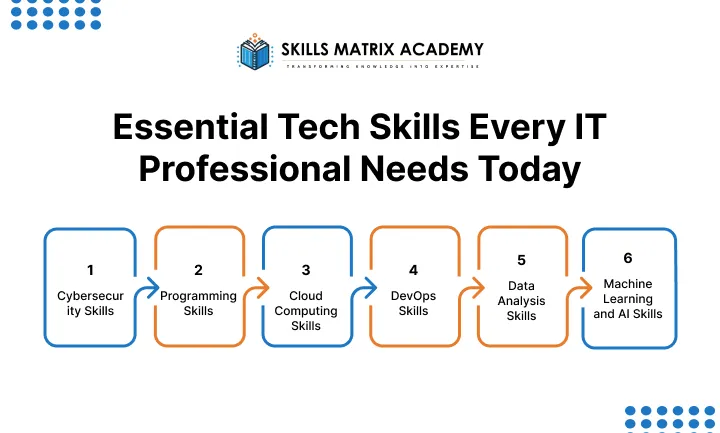
01. Cybersecurity Skills
Cybersecurity is one of the most essential IT skills today. Why? Cyberattacks are growing every year. Companies store customer data online. If hackers steal that data, businesses can lose money and trust. That is why cybersecurity skills are in huge demand.
Important cybersecurity skills include:
- Network security
- Ethical hacking
- Penetration testing
- Data encryption
- Threat analysis
- Risk mitigation
Companies also look for professionals who understand:
- LAN
- WAN
- SAN
- VPN systems
In simple terms:
Every IT professional should know basic security. Even developers and cloud engineers need security knowledge today. Security is no longer optional. It is part of every IT job.
02. Programming Skills
Programming is still one of the top future IT skills. Coding helps professionals:
- Build software
- Create websites
- Automate tasks
- Analyze data
- Develop apps
Popular programming languages include:
- Python
- JavaScript
- C++
- Kotlin
- R
Python programming is especially popular right now. Why? Because Python works well for:
- AI
- Automation
- Data analysis
- Machine learning
- Web development
But here’s the deal. Companies do not only want people who can write code. They want people who can solve problems using code. That is why projects matter.
For example, beginners can build:
- Small websites
- Chatbots
- Automation tools
- Data dashboards
Projects improve technical skills for resumes. They also help professionals stand out during interviews.
03. Cloud Computing Skills
Cloud computing is now everywhere. Most companies no longer depend fully on physical servers. Instead, they use cloud platforms.
Popular cloud platforms include:
- AWS
- Google Cloud
- Microsoft Azure
- Oracle Cloud
That is why cloud computing skills are among the most in-demand tech skills today.
Cloud professionals help companies:
- Store data safely
- Improve performance
- Reduce costs
- Scale systems faster
Important cloud-related jobs include:
- Cloud developer
- Cloud architect
- Cloud administrator
- DevOps engineer
Cloud computing also connects with:
- Networking
- Security
- Automation
- Data storage
The good news is this: Many cloud platforms offer free beginner training. You can start learning these skills without spending a lot of money.
04. DevOps Skills
DevOps is one of the fastest-growing technology skills. It connects software development with IT operations. In simple terms: DevOps helps teams build and release software faster. Companies love DevOps because it improves speed and reduces errors.
Important DevOps tools include:
- Docker
- Kubernetes
- Automation tools
- Continuous delivery systems
Professionals with DevOps skills also learn:
- Scripting languages
- Cloud operations
- System management
For example:
Instead of manually updating software every week, DevOps teams automate the process. This saves time and improves productivity. That is why DevOps engineers are in high demand.
05. Data Analysis Skills
Data is one of the biggest business assets today. Companies use data to:
- Understand customers
- Improve sales
- Track performance
- Find security threats
That is why data analysis skills are becoming essential. Important data skills include:
- SQL
- Statistics
- Python
- Database management
- Data visualization
Even cybersecurity teams use data analysis.
For example:
Security teams analyze login activity to detect suspicious behavior. Retail companies use customer data to understand buying behavior and improve sales.
Healthcare companies use data to improve patient care. Professionals who understand data create huge value for businesses.
06. Machine Learning and AI Skills
AI is changing the technology industry very fast. Many businesses now use AI tools every day. But most companies still need skilled professionals who know how to use AI properly. That creates huge opportunities.
Machine learning skills include:
- Deep learning
- Clustering
- AI algorithms
- Data modeling
Now, you do not need to become an AI scientist. Even basic AI technical skills can improve your career. For example, companies use AI for:
- Chatbots
- Customer support
- Fraud detection
- Automation
- Predictions
AI adoption will continue growing for many years. That is why AI skills are becoming future-ready digital skills.
Soft Skills Matter Too
Technical knowledge is important. But soft skills matter too. Many companies prefer professionals who can communicate clearly and solve problems quickly.
Communication Skills
Many IT professionals struggle to explain technical ideas in simple language. That becomes a problem during meetings and projects. Good communication skills help you:
- Work better with teams
- Explain problems clearly
- Build client trust
- Lead projects
For example:
Business owners care more about results than technical terms.
They want to know:
- Will this save money?
- Will this improve security?
- Will this increase productivity?
That is why communication skills are valuable.
Problem-Solving Skills
Every IT job involves solving problems. Professionals may need to:
- Fix bugs
- Improve systems
- Stop cyberattacks
- Reduce downtime
Strong problem-solving skills help professionals succeed in every technical role.
Continuous Learning
Technology never stops changing. That means IT professionals must continue learning. The best professionals:
- Take online IT courses
- Earn certifications
- Build projects
- Practice regularly
- Follow industry trends
Continuous learning creates long-term career growth.
How to Learn IT Skills Faster
Learning technical skills does not need to feel confusing. Here are simple ways to improve faster.
Focus on One Skill First
Do not try to learn everything together. Start with one area. For example:
- Cybersecurity
- Programming
- Cloud computing
- DevOps
- Data analysis
Once you feel confident, move to the next skill.
Build Real Projects
Projects help you learn faster than theory. For example, you can:
- Build a website
- Create a chatbot
- Analyze data
- Set up a cloud server
- Build an automation script
Projects improve your confidence and your resume.
Earn Certifications
Certifications help prove your skills. Popular certifications include:
- AWS certifications
- Azure certifications
- Google Cloud certifications
- Cybersecurity certifications
Many companies prefer certified professionals.
Join Boot Camps
Coding boot camps and cybersecurity boot camps offer practical training. These programs focus on real-world skills. That makes learning faster and easier.
Biggest Mistake IT Professionals Make
Many professionals try to learn every new technology. That creates confusion. Instead, focus on strong foundations first. Learn:
- Problem-solving
- Communication
- Technical basics
- Continuous learning habits
Then slowly build specialized technical skills. This approach creates better long-term career growth.
The Future of IT Careers
The future belongs to adaptable professionals. Companies want people who can:
- Learn new tools quickly
- Work with AI
- Manage cloud systems
- Protect business data
- Improve efficiency
- Solve problems
That is why future IT skills combine technical knowledge with human skills.
Professionals who improve both will stay valuable for many years.
Conclusion
Technology is evolving every day. That is why learning the right technical skills is so important. Cybersecurity, cloud computing, programming, DevOps, machine learning, and data analysis are some of the most valuable IT skills today.
But technical knowledge alone is not enough. Communication, problem-solving, and continuous learning also matter. Start small. Focus on one skill at a time.
Build projects. Practice consistently. The demand for future-ready IT skills and digital skills will continue to grow. And the professionals who start learning today will build stronger careers tomorrow.
FAQs
What are the most important future IT skills?
Cybersecurity, cloud computing, programming, DevOps, AI, and data analysis are some of the most important future IT skills.
Why are technical skills important?
Technical skills help professionals build, manage, secure, and improve technology systems.
Which programming language should beginners learn?
Python is one of the best choices for beginners because it is simple and widely used.
Are cloud computing skills worth learning?
Yes. Cloud computing skills are in very high demand across industries.
How can I improve my IT skills quickly?
Focus on projects, certifications, online learning, and regular practice.

Bharat Arora
12+ years as a web developer, Bharat has worked in the biggest IT companies in the world. He loves to share his experience in web development.


Bharat Arora
12+ years as a web developer, Bharat has worked in the biggest IT companies in the world. He loves to share his experience in web development.