Introduction
Let’s be honest. SEO has changed. A lot.
The old playbook of writing a blog post, throwing in some keywords, and waiting for Google to notice? That approach is fading fast. Search engines have grown sharper, the competition has gotten heavier, and the people using search expect more than ever before.
The good news is that the tools available to you have grown too.
AI SEO and programmatic SEO are changing the way websites get discovered and grow. If you understand how to use them, you will be well ahead of the majority of site owners still grinding away with outdated tactics. By the end of this guide, you will know what these strategies are, why they work, and how to put them into practice starting today.
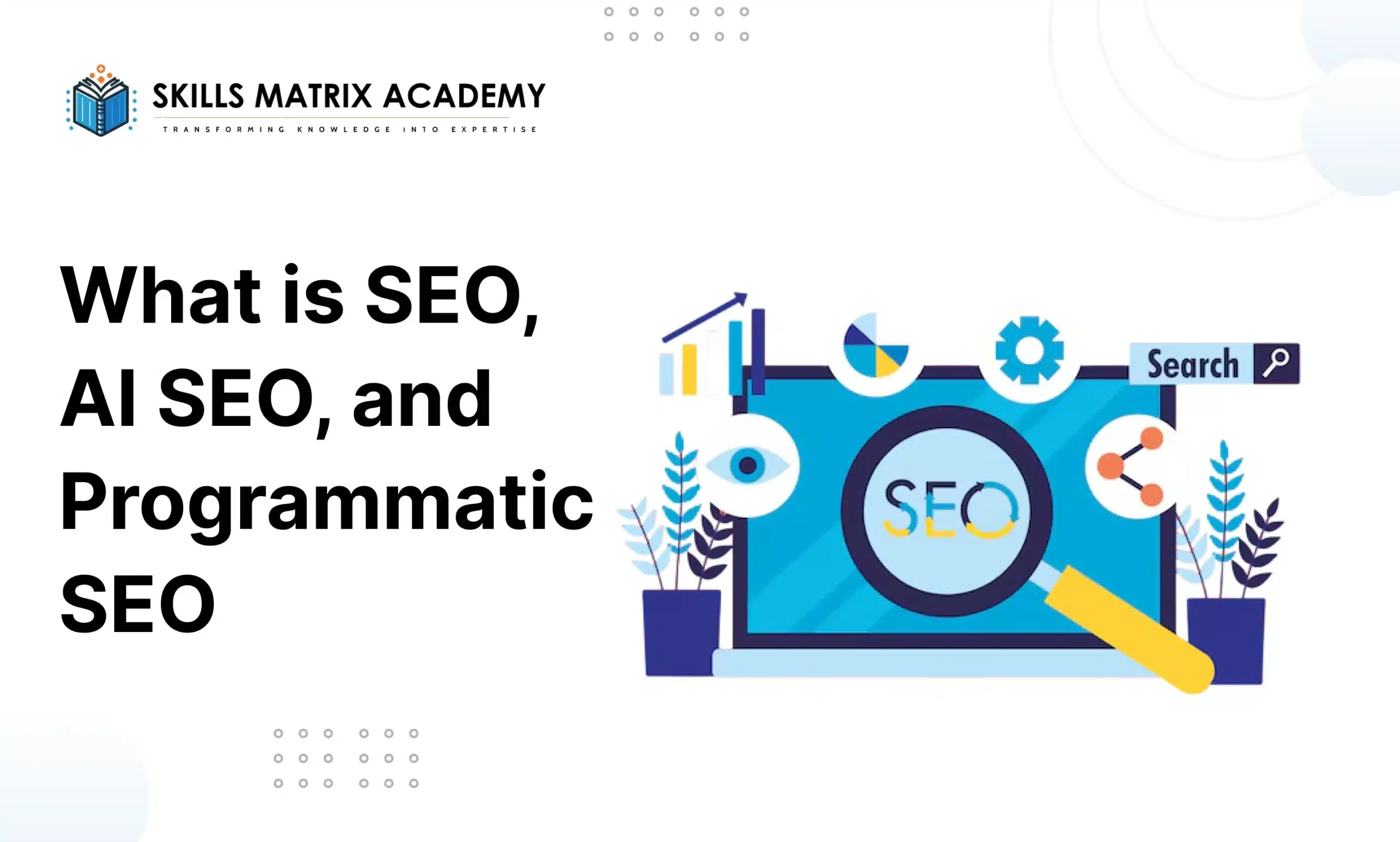
What is SEO, AI SEO, and Programmatic SEO
Before we jump into strategy, let us get the foundations right.
Traditional SEO
SEO, short for search engine optimization, is the practice of improving your website so that it appears higher in Google search results. The core elements include keyword research, on-page content, backlinks, and technical site health. Things like page speed, crawlability, and proper indexing all fall under this umbrella.
For a long time, this formula worked beautifully. You found the right keywords, wrote useful content, built some links, and the rankings followed. The problem is that the internet has grown into something enormous. There are now billions of pages fighting for the same attention, and the old approach simply does not cut through the noise the way it once did.
AI SEO
AI SEO is what happens when you bring artificial intelligence into the picture. Rather than manually sifting through keyword data or guessing what content your audience needs, AI tools can process enormous amounts of information quickly. They help you understand search intent at scale, sharpen your content structure, and surface opportunities that would take a human analyst days to find.
Think of it less as replacing your SEO thinking and more as giving that thinking a serious upgrade. The strategy still comes from you. AI just makes execution faster and more precise.
Programmatic SEO
Programmatic SEO is a method of building large numbers of targeted pages using templates and structured data, rather than writing every single page from scratch. The idea is to create a repeatable system that scales.
A travel website, for instance, might build individual pages for hundreds of city pairings like “things to do in Jaipur” or “flights from Delhi to Mumbai.” Each page targets a specific query, and the whole operation runs on a single well-designed template. That is programmatic SEO at work.
Why This is the Future of Search Growth
Here is a real question worth sitting with. When your competitors are doing everything you are doing, how do you actually pull ahead?
You build smarter. You build bigger. And you do it more efficiently.
Intent-Based Ranking
Google has become very good at figuring out not just what someone typed, but what they actually want from their search. That is search intent, and it matters more than most people realize. Someone searching “how seo works” is in learning mode. Someone searching “seo agency for small business” is in buying mode. These two people need completely different pages.
Content that does not match intent will not rank, regardless of how solid the technical seo optimization is underneath it. AI tools make it possible to decode intent at scale so that every page you create is actually answering the right question.
Content Scalability
This is where programmatic SEO starts to look genuinely exciting. Picture your nearest competitor publishing three blog posts every week by hand. Now picture your site producing three hundred well-structured, intent-matched pages in the same timeframe using a programmatic system. The math is simply not in their favor.
That said, volume without value is just clutter. Google is very good at identifying thin content, and it will not reward you for it. The goal is scale with substance.
Long-Tail Keyword Advantage
Long-tail keywords are longer, more specific search phrases. Something like “best ai seo tools for beginners” or “how to use ai in seo for ecommerce.” Each one draws a smaller audience individually, but that audience is far more focused and far more likely to take action.
When you combine programmatic SEO with a smart long-tail keyword strategy, you can target hundreds or even thousands of these phrases at once. That compounds into serious organic traffic over time.
Step-by-Step Strategy to Implement

Time to get into the practical side of things.
1. Intent-Based Keyword Research
Group your keywords by what the searcher is actually trying to accomplish.
Informational intent covers queries like “what is seo,” “how seo works,” and “seo for beginners.” These users want to understand something. Give them clear, educational content that walks them through the topic without overwhelming them.
Commercial intent covers queries like “best seo tools,” “surfer seo review,” and “semrush alternative.” These users are weighing their options. Comparison articles, detailed reviews, and feature breakdowns serve them well.
Transactional intent covers queries like “seo services near me,” “hire seo expert,” and “affordable seo services.” These users are ready to take action. They need landing pages with clear benefits and a direct path forward.
Match the content format to the intent, and you are already ahead of most of your competition.
2. Topic Cluster Strategy
Random blog posts do not build authority. Topic clusters do.
Start by choosing a broad subject as your pillar page. Something like seo strategy or technical seo. This becomes your flagship guide, covering the topic in depth. Then create a set of supporting articles around it covering narrower angles: keyword research basics, on-page best practices, link building fundamentals, seo metrics worth tracking, and so on.
Each supporting article links back to the pillar page. This signals to Google that your site has genuine authority across the entire subject area, not just one corner of it.
3. AI for Content Optimization
AI tools are genuinely useful at three stages of the content process.
Before writing, use AI to build out a thorough content outline. This helps you cover the angles that matter and prevents you from accidentally missing subtopics that your audience cares about.
During the planning phase, AI can analyze what the top-ranking pages on a given keyword are doing structurally. That gives you a data-informed framework to build from rather than guessing.
After your draft is done, AI tools can review it for readability gaps, internal linking opportunities, and missing semantic keywords. Tools like Surfer SEO and Clearscope are built specifically for this kind of content optimization work.
4. Programmatic SEO Execution
This is where you shift from one-off publishing to a repeatable system.
Build a page template with clearly defined variable slots. A simple structure might follow the pattern of “[Service Type] in [City] for [Audience Type].” Then feed that template with a structured data set covering your services, target locations, and audience segments.
Every combination produces a page targeting a unique query. When it works well, each page is genuinely useful to the person who lands on it. When it is done carelessly, Google sees it as low-quality filler and either ignores it or pushes it down entirely.
Quality control is not optional here. Every programmatic page needs to offer something real, not just swapped variables on a blank template.
5. UX Optimization
A lot of people treat UX as a separate concern from seo optimization. It is not. Google tracks how users behave on your pages. If people click through and immediately leave, that is a signal the page did not deliver.
Write in short paragraphs. Use headings generously so readers can scan and find what they need. Make sure your site loads fast, especially on mobile where most searches happen now. Structure your content so the most important information comes first.
When readers stay, scroll, and engage, Google takes notice. Good UX and good SEO are the same thing viewed from two angles.
Tools Required

AI Tools
ChatGPT or Claude work well for content research, ideation, and drafting starting points that you then shape and refine.
Surfer SEO offers real-time scoring and optimization guidance as you write, comparing your content against what is currently ranking.
Clearscope focuses on semantic keyword coverage, helping you make sure your content is linguistically aligned with what search engines expect for a given topic.
SEO Tools
Semrush covers keyword research, competitor analysis, backlink auditing, and full seo audit capabilities in one platform.
Ahrefs is particularly strong for backlink analysis and tracking organic traffic trends over time.
SE Ranking tools offer a solid budget-friendly alternative that covers most of the core functionality.
Google Search Console is free, essential, and directly connected to how Google sees your site. Use it from day one.
Automation and Programmatic Tools
Python combined with Google Sheets gives you a flexible, low-cost system for generating and managing page templates at scale.
Webflow and WordPress both support dynamic content generation and are well-suited to hosting programmatic pages.
Screaming Frog is the go-to for crawlability checks and technical seo audits, catching issues that could hold your rankings back.
Common Mistakes to Avoid
Publishing unedited AI content. AI output is a starting point, not a finished product. Every piece needs human review, editing, and a genuine perspective added before it goes live.
Ignoring search intent. Technically perfect content that answers the wrong question will not rank. Always define intent before you write a single word.
Scaling without quality controls. More pages are not automatically better. Ten thousand thin pages will damage your domain far more than five hundred genuinely helpful ones will build it.
Keyword overuse. Fitting your target keyword into every other sentence makes the content unreadable. Write for the person first. Keywords earn their place naturally when you do that.
Future Trends
The search landscape is not standing still, and neither should your strategy.
AI-driven search results are already changing what gets clicked. Google’s AI Overviews are placing synthesized answers at the top of results pages. Content that is structured clearly and answers questions directly is positioned to benefit most from this shift.
Voice search continues to grow as smart speakers and phone assistants become more embedded in daily life. Conversational, question-answering content performs better in voice contexts than keyword-dense, formal writing does.
Personalized search results are becoming more sophisticated. Google factors in location, browsing behavior, and past searches when deciding what to show each user. Content that is specific, local, and highly relevant to niche audiences will carry increasing weight.
Conclusion
Here is the bottom line. AI SEO and programmatic SEO are not concepts to bookmark and revisit later. They are working strategies reshaping how sites grow right now.
The core formula is not complicated. Understand what your audience is searching for and why. Create content that genuinely answers those questions. Use smart tools to optimize and scale that content intelligently. Never trade quality for quantity.
The sites that will lead in search rankings over the next several years are not the ones publishing the most. They are the ones building the best systems, driven by real user intent, supported by AI, and executed with care.
You do not have to overhaul everything at once. Pick a single keyword cluster. Build one solid topic pillar around it. Optimize it with the right tools. Then grow from there, one layer at a time.
The future of search growth is already underway. The real question is whether you are building toward it now or scrambling to catch up later.

Bharat Arora
12+ years as a web developer, Bharat has worked in the biggest IT companies in the world. He loves to share his experience in web development.


Bharat Arora
12+ years as a web developer, Bharat has worked in the biggest IT companies in the world. He loves to share his experience in web development.