Let’s be honest. The tech world moves fast. Every day, new frameworks and languages pop up. But underneath all that noise, one thing stays the same. That thing is Data Structures and Algorithms (DSA).
If you are a student, you might wonder: Is DSA important for placement? The short answer is yes. In fact, it is the most important skill you can have. Think of it as the engine of a car. You can have a shiny exterior, but without the engine, you aren’t going anywhere.
Why DSA Matters in Placements is a question every fresher asks. It matters because it shows how you think. It shows how you solve problems. Companies like Google and Amazon don’t just want someone who can type. They want someone who can think. When you optimise code using DSA, you save the company money. You make their apps faster. This is why recruiters love it.
Understanding DSA for Placement Success
What exactly are we talking about here? Let’s break it down simply. Data structures basics for beginners usually start with how we store information. Imagine a massive grocery store. If the milk is next to the hammers, you will never find anything. That is a bad data structure.
A good data structure is like a well-organised shelf. It puts things where they belong so you can find them fast. Algorithms basics for beginners are just the recipes. If the data structure is the ingredients, the algorithm is the set of steps to cook the meal.
So, why is DSA for placement success such a big deal in 2025?
1. Efficiency is King: Companies handle billions of data points. They need code that runs in milliseconds.
2. Logic over Syntax: Languages change. Logic doesn’t. If you know DSA fundamentals, you can pick up any new language in a week.
When you learn DSA online, you aren’t just memorising code. You are training your brain to see patterns. This is the importance of DSA for placements. It separates the “coders” from the “engineers.”
The Role of DSA in Technical Interviews
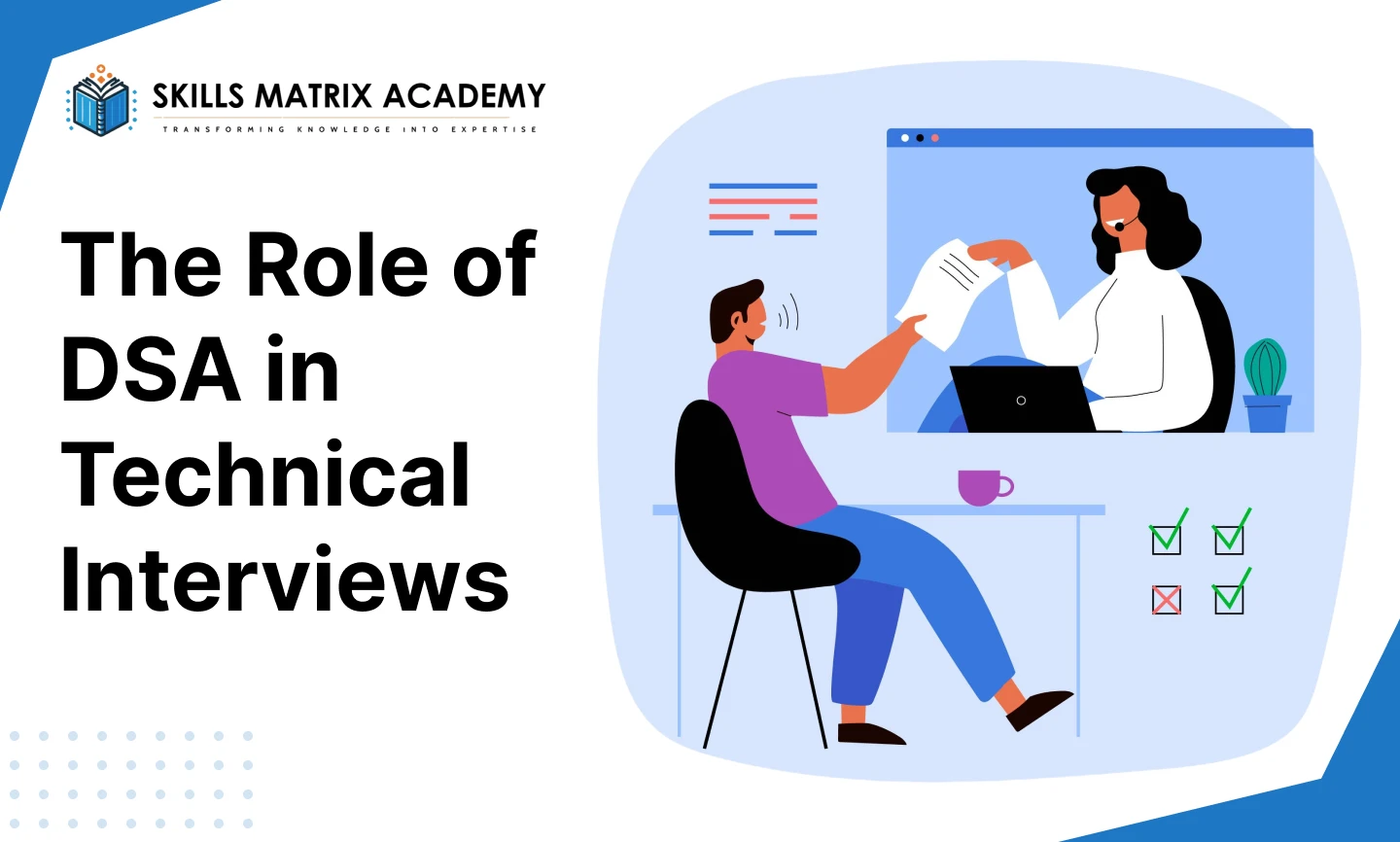
If you want a job at a product-based company, you will face a technical interview. This is where the role of DSA in technical interviews becomes very clear. You won’t just talk about your hobbies. You will solve puzzles.
Most DSA coding interview questions happen in three ways:
- Whiteboard Coding: You stand up and write code on a whiteboard. You have to talk while you write. It’s tough, but it shows your logic.
- Coding Challenges: You use DSA practice platforms like LeetCode or HackerRank. You have a time limit.
- Technical Discussions: The interviewer asks why you chose a specific tool. They want to hear about time and space complexity in DSA.
If you are looking for DSA for freshers, you must know the basics. You will likely see sorting algorithms interview questions. For example, how do you fix a messy list of names? You might also see questions on search algorithms in interviews. How do you find one name in a list of a million? Knowing the basics of graph algorithms is also a huge plus for social media jobs.
DSA Concepts Explained: The Building Blocks
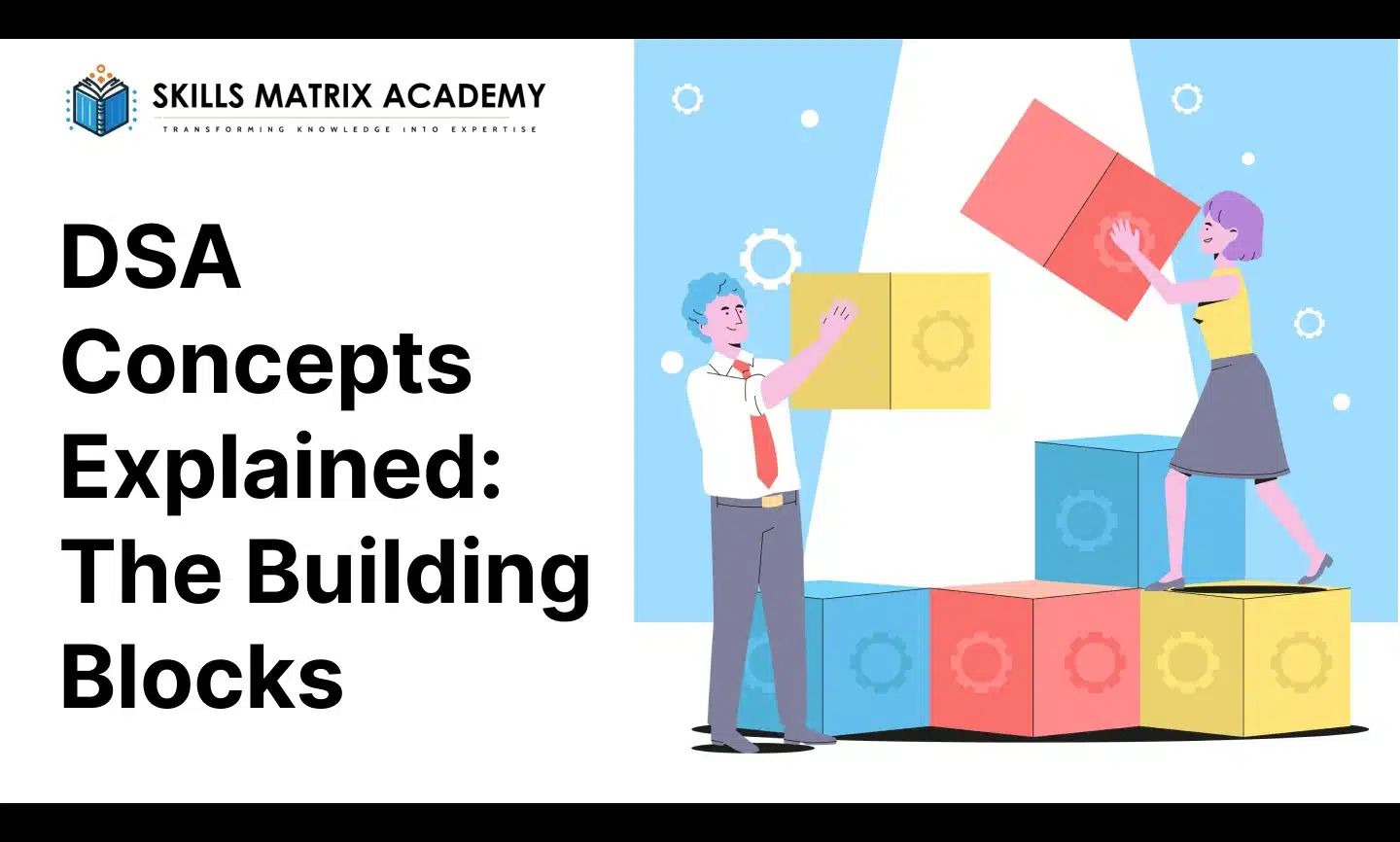
To truly master DSA, you need to know your tools. You can’t build a house with just one tool. You need a full toolkit. Most DSA concepts explained for beginners focus on these core items:
- Arrays: The simplest way to store a list of items.
- Linked Lists: Great for adding or removing items quickly.
- Stacks and Queues: Think of a stack of plates or a line at a bank.
- Trees and Graphs: These help with complex maps and hierarchies.
When you understand arrays, linked lists, stacks, queues, trees, and graphs, you can solve almost anything. This is the heart of DSA for coding interviews. If you know which tool to grab, you are already halfway to the job. This is the importance of DSA in action for placements.
Impact of DSA on Problem-Solving Abilities
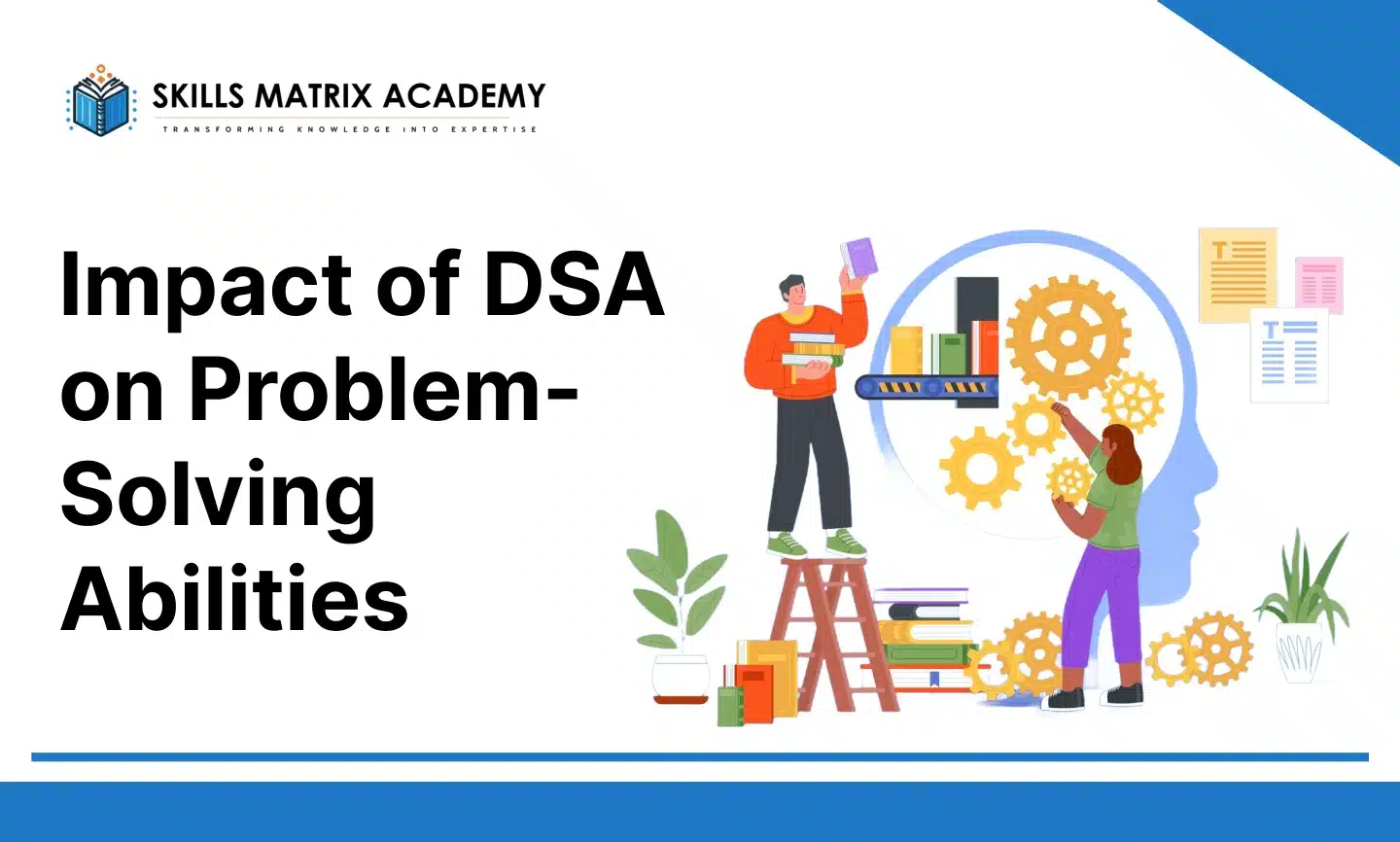
The best part about learning this stuff? It changes how you see the world. DSA benefits for programmers go way beyond just getting a job. It improves your DSA problem-solving skills in everyday life. You start to see the most efficient way to do everything.
Imagine a delivery company. They have 1,000 packages and 10 trucks. How do they find the shortest path? That is a graph problem. A DSA for software engineering job experts can solve that in seconds. By using the right data structures and algorithms, they save gas, time, and money.
This is why DSA for FAANG companies (Facebook, Amazon, Apple, Netflix, Google) is the standard. They deal with “Big Data.” Without DSA for big data, their systems would crash. When you improve coding skills with DSA, you become the person who prevents those crashes.
DSA and Industry Trends in 2025
The year 2025 is an exciting time for tech. We see DSA for artificial intelligence and machine learning everywhere. But here is a secret: AI is built on DSA. Neural networks are just complex graphs. Data processing is just sorting and searching.
The DSA’s importance in 2025 placements is higher than ever. Even as AI writes simple code, companies need humans to design the systems. They need people who understand DSA fundamentals to check the AI’s work.
If you look at the DSA salary in India, it is clear. A fresher who knows their stuff can earn between 4 and 8 lakhs. In top companies, it is much higher. The DSA demand in the IT industry is not slowing down. It is growing.
How to Start Your DSA Preparation

Are you ready to start? Great. But don’t just jump into the deep end. You need a DSA study plan. Following a DSA learning roadmap is the best way to avoid burnout.
First, find the best resources to learn DSA. You can take a DSA course for beginners on sites like Udemy or Coursera. If you prefer reading, look for DSA books and courses. “Grokking Algorithms” is a fantastic book for people who hate boring textbooks.
Here is a simple DSA preparation tips list:
1. Start with one language: Pick C++, Java, or Python. Stick with it.
2. Learn the “Why”: Don’t just copy code. Understand why a HashMap is faster than an Array.
3. Use Practice Platforms: Spend time preparing for DSA coding challenges. Practice DSA on LeetCode and HackerRank daily.
4. Study Complexity: Always ask, “How fast is this?” Learn about Big O notation.
Strategies for DSA Mastery
To truly master DSA, you need a routine. You can’t learn everything in just one weekend. It’s a marathon, not a sprint. Start with the basics of data structures for beginners. Spend a week just on Arrays. Then move to Linked Lists.
If you are looking for a DSA tutorial, look for ones that show real-world examples. It helps the info stick. Also, join a community. Talk to others about DSA for Google interview prep. Sharing your struggles makes them easier to handle.
Remember, the goal is DSA for placement success. You want to be so good that the interview feels like a chat with a friend. This comes from DSA strategies for placements that focus on consistency.
Conclusion: Why Learn DSA for Jobs?
By now, you should see why learn DSA is important for jobs. It is the foundation of your entire career. Whether you want to work in AI, Web Dev, or Game Design, these rules apply.
Is DSA important for placement? Absolutely. It is the gatekeeper. But once you pass the gate, these skills help you grow. You will write better code. You will get promoted faster. You will earn a higher DSA salary in India.
The importance of DSA for placements cannot be overstated. It is the language of the tech industry. If you speak it well, doors will open for you.
Frequently Asked Questions
1. Can I get a job without learning DSA?
Ans. You might find some roles, but can I get a job without DSA in a top company? Usually, no. Most high-paying roles require it. Even for full-stack, you need the basics to build fast apps.
2. Is DSA enough to get a job at Google?
Ans. DSA for Google interview success is huge. But you also need projects and system design knowledge. If you have a solid DSA learning roadmap and some experience, you have a great shot.
3. Is DSA in demand?
Ans. Yes! The demand for DSA in the IT industry is at an all-time high. Companies want people who can solve problems, not just people who can use a tool.

Bharat Arora
12+ years as a web developer, Bharat has worked in the biggest IT companies in the world. He loves to share his experience in web development.


Bharat Arora
12+ years as a web developer, Bharat has worked in the biggest IT companies in the world. He loves to share his experience in web development.