The last ten years changed everything for web publishing. Two massive fields exploded onto the scene: data science and web development. But what makes them different? More importantly, which one matters most for your business or your career?
Digital data is growing at a record pace. Because of this, organizations need a way to turn raw numbers into smart moves. This is where data science comes in. It helps leaders make data-driven decisions a reality rather than just guesswork. On the flip side, the world moved online. Businesses now need sleek, fast, and secure websites. That is the heart of web development.
Both fields are part of the broader digital transformation movement. Companies are spending billions on these tech careers because they provide real-world value. Whether you are looking at data science vs web development career paths or want to understand the tech, you are in the right place. Let’s dive into the basics of data science and the core of website development.
What is Data Science?
Let’s start with a simple definition of data science. It is a field that uses math and code to find hidden patterns in data. Think of it like solving online clues, like a digital detective. You take a pile of messy info and turn it into a clear map for the future.
The importance of data science grew because storage became cheap. Now, we have big data analysis tools that can process millions of records in seconds. To do this, you need specific data science skills. These include a mix of programming for data science, math, and business logic.
Most people start by learning the basics of data science. You need to know how to handle data modeling and data analytics. This isn’t just about staring at spreadsheets. It’s about using business intelligence to stay ahead of the curve. If you want to master what data science is, you have to look at its core parts.
The Core Data Science Components
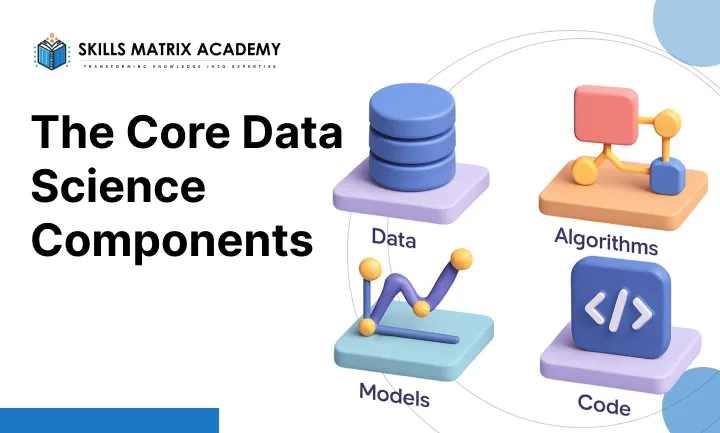
To be a pro, you need to master several data science components. First, there are statistics in data science. This helps you identify trends and ensure your results aren’t just a fluke. You use statistical models to summarize large amounts of information quickly.
Next, you have programming in data science. Most experts use Python for data science or R programming. These languages help you clean and process data. Then comes machine learning. This involves using machine learning algorithms to predict what might happen next based on the past.
You also need to understand data mining. This is the act of digging deep into datasets to find relationships. Finally, there is data visualization. This involves dashboard creation and making charts. It makes complex data science projects easy for everyone to understand at a glance.
The Benefits and Importance of Data Science

Why is there so much hype? Because the benefits of data science are huge. First, it leads to better decisions. Objective facts beat “gut feelings” every time. This gives companies a massive competitive advantage. They can see a trend before their rivals do.
It also increases efficiency. By using predictive analytics, a company can prevent problems before they start. This lowers costs and boosts productivity. Furthermore, it helps with new product development. By looking at user data, you can build things people actually want to buy.
Another big win is risk assessment. This is vital in fields like insurance or banking. You can predict failures or find fraud detection patterns instantly. Finally, it allows for personalization. This is why your Netflix or Amazon looks different from mine. It creates a better experience for every single user.
Real-World Data Science Applications
The list of data science applications is growing every day. One common use is in recommendation systems. These suggest the next song you should hear or the next shirt you should buy. Banks also use it for fraud detection to keep your money safe from hackers.
In the world of business, we see customer analytics and customer churn analysis. This helps companies keep their subscribers happy. We also see price optimization. This is how airlines adjust ticket prices in real time. Even algorithmic trading in finance relies heavily on these models.
- Fraud detection in banking and identity verification.
- Recommendation systems for Netflix, YouTube, and Amazon.
- Predictive maintenance for factory equipment and airplanes.
- Customer analytics to stop users from canceling subscriptions.
- Price optimization for dynamic flight and hotel pricing.
What is Web Development?
Now, let’s look at the meaning of web development. Simply put, it is the work involved in building and maintaining websites. It covers everything from a simple text page to complex web applications like Facebook or Gmail.
The importance of web development cannot be overstated. If a business isn’t online, it basically doesn’t exist. This field requires a wide range of web development skills. You need to know about web design, server management, and network security configuration.
A web developer’s role involves more than just writing code. It’s about creating a smooth UI UX design. You want the user to have a great time on the site. This involves front-end development, back-end development, and often full-stack development.
The Core Web Development Technologies
Every website is built on a few core web development technologies. First, we have HTML (HyperText Markup Language). This is the site’s skeleton. It structures the content so browsers can read it. It uses tags for headings, lists, and links.
Then, there is CSS (Cascading Style Sheets). If HTML is the skeleton, CSS is the skin and clothes. It controls the fonts, colors, and layout. Responsive web design is essential to ensure your site looks good on a phone and a desktop.
Finally, we have JavaScript. This adds the “brain” to the site. It handles client-side scripting and interactive websites. It powers features such as sliders, pop-up menus, and form validation. Without it, the web would be very boring and static.
Data Science vs Web Development: Comparing the Roles
To understand what a typical day looks like in these tech fields, let’s explore how data scientists and web developers apply their knowledge. Both roles involve structured tasks and creative problem-solving, but their goals are very different. While one builds the house, the other studies who lives in it and why.
Data Scientist: Architect of Insights
A data scientist’s role is to convert digital whispers into strategic dialogue. They are the detectives of the tech world. Their day typically revolves around several key stages of the data lifecycle to help with data-driven decision-making.
- Collecting and cleaning data: They mine complex datasets across multiple systems using data mining and big data analysis.
- Applying statistical tools: Through iterative analysis, they surface commercial patterns or operational efficiencies using statistics in data science.
- Designing machine learning models: They implement machine learning algorithms that predict customer behavior or identify operational risks.
- Translating findings: They turn raw findings into digestible stories through dashboard creation and compelling data visualization.
Data science projects often involve developing prediction models for retail demand forecasting. They also optimize clinical trial data frameworks for key stakeholders. Their work is the backbone of business intelligence in any modern company.
Web Developer: Digital Blueprint Engineer
Conversely, web developers prioritize functional craftsmanship in their daily tasks. They are the builders who ensure the internet actually works for the user. A web developer’s role is about keeping the tech stack healthy and the user experience seamless.
- Prototyping User Interfaces: They build user-first UIs and ensure responsive web design across all devices, grounded in UX principles.
- Building secure systems: They create secure payment gateways and robust content management systems through back-end development and database management.
- Conducting audits: They perform accessibility audits and penetration testing to ensure site integrity by following web security practices.
- Maintaining the site: They implement incremental feature updates and bug fixes within agile development sprint cycles to support ongoing website maintenance.
From multilingual e-commerce platforms to progressive web applications, developers maintain the operational heartbeat of a business. They use HTML, CSS, and JavaScript to ensure a stable, fast platform that supports online business growth.
Career Pathways: Data Scientist vs Web Developer
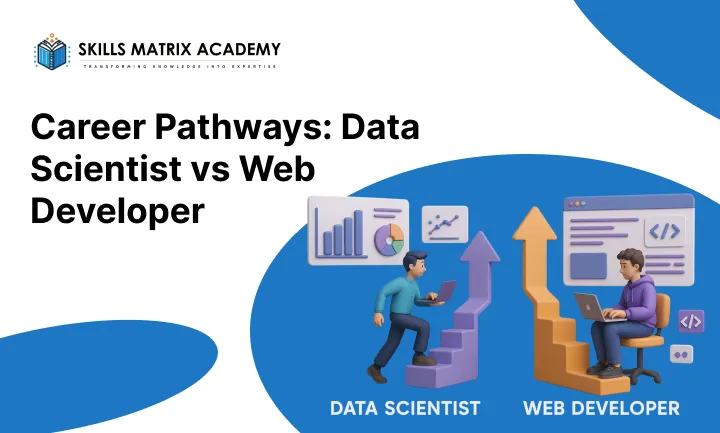
The career pathways data science vs web development show two very different journeys. Both fields are growing fast. Both offer strong IT career growth and exciting digital career opportunities. But the way you enter and grow in each field is not the same.
A data science career path usually starts with strong academic knowledge. You need a good base in math, statistics, and programming. On the other hand, a web development career path emphasizes practical skills. You can learn by doing and building real projects.
This is why the data science vs web development career comparison matters. It helps you choose the right path based on your strengths and goals.
Data Scientist Path
The data scientist career is more academic and research-driven. Most professionals follow a structured data science roadmap.
To enter this field, you need a data science degree in computer science, statistics, or mathematics. Many roles also require advanced education, such as a master’s or a PhD. These programs cover data science education requirements, including machine learning, data mining, and predictive analytics.
You also need hands-on experience with Python for data science, R, and other data science tools.
Key Learning Areas in Data Science
- Statistics and data analysis
- Machine learning algorithms
- Data visualization and dashboards
- Programming and data handling
- Real-world data science projects
The skills required for a data scientist include analytical thinking and problem-solving. You also need to turn data into insights that help businesses grow.
The demand for data science jobs is high. However, competition is also strong. That’s why building a strong data science portfolio is very important.
Web Developer Path
The web developer career is more flexible and skill-based. You don’t always need a formal web development degree. Many developers learn through a coding bootcamp or self-study.
The web development learning path focuses on building websites and applications. You learn by creating real web development projects and improving your coding skills.
Core Skills in Web Development
- HTML, CSS, JavaScript career basics
- Front-end developer career skills
- Back-end developer career knowledge
- Full-stack developer career understanding
- Experience with web development tools
The skills required for a web developer also include UI/UX understanding and performance optimization. You need to build fast, responsive, and secure websites.
A strong portfolio for a web developer helps you get entry-level web developer jobs quickly. Many developers also work as freelancing web developers, which adds flexibility.
Career in Data Science vs Web Development: Choosing Your Path
Choosing between a data science and a web development career depends on your background and interests.
1. Foundational Education
To build a data scientist career, you need:
- Strong academic background
- A data science degree
- Advanced knowledge in AI and analytics
- Certifications like a data science certification
In contrast, web development education requirements are more flexible. You can learn through:
- Online courses
- Web development certification programs
- Hands-on practice and projects
This makes the web development career path easier to enter than the data science career path.
2. Career Ladders
Both fields offer clear growth paths.
Data Science Career Path
- Entry-Level: Junior data analyst role
- Mid-Level: Machine learning engineer career
- Senior-Level: AI specialist or leadership roles
Web Development Career Path
- Entry-Level: Junior web developer role
- Mid-Level: Full-stack developer career
- Senior-Level: Technical architect or director
These roles highlight strong tech career options in both fields. The future of data science and web development careers both looks bright.
3. Salary Comparison
The data scientist vs. web developer salary gap depends on skills and experience.
In India:
- Data science salary in India starts around ₹6 LPA and can go up to ₹10+ LPA
- Web developer salary in India starts around ₹3.75 LPA and can reach ₹12–14 LPA
The data science vs web development salary comparison shows that data science pays more at the start. But web development offers quicker entry and faster earning opportunities through freelancing.
Both careers fall into high-paying IT jobs with long-term growth potential.
4. Market Outlook
Data science is growing rapidly thanks to AI and analytics. Companies rely on data for decision-making. This increases data science job growth and demand for skilled professionals.
At the same time, demand for web development remains strong. Businesses need websites, apps, and platforms. This drives steady web development job growth.
The demand for data scientists is high in analytics-driven industries. Demand for web developers spans all sectors. Both support digital transformation and business growth.
Which is Easier, Data Science or Web Development?
The answer depends on your skills and interests.
Why Web Development is Easier
- You can learn without a formal degree
- Build projects and showcase skills quickly
- Easier to get entry-level web developer jobs
- Freelancing options are widely available
Why Data Science is Flexible
- Focus on analysis and logic
- Strong demand in analytics roles
- Opportunities in AI and machine learning careers
- High salary potential
- Flexible data science learning path
The question of whether data science or web development is easier depends on what you enjoy more.
Final Conclusion
The career pathways, data science vs web development, both offer amazing opportunities. The question of whether data science or web development is better depends on your goals.
Choose a data science career path if you enjoy data, analytics, and AI. Choose a web development career path if you enjoy coding and building websites.
Both careers offer strong growth, stability, and future scope. Focus on building skills, working on projects, and staying up to date. That’s the key to success in any programming career.

Bharat Arora
12+ years as a web developer, Bharat has worked in the biggest IT companies in the world. He loves to share his experience in web development.


Bharat Arora
12+ years as a web developer, Bharat has worked in the biggest IT companies in the world. He loves to share his experience in web development.