Want to beat your rivals on social media? You need a plan. Most brands post and pray. But smart marketers use a social media competitor analysis to see exactly what works. This process helps you find gaps in your strategy. It helps you stay ahead of the competition.
A social media competitive analysis isn’t just about spying. It’s about growth. We will break down the entire process for you today. We will share our favorite social media analytics tools. Plus, we have a free competitive analysis template to help you start like a pro.
What Is Social Media Competitive Analysis?
A social media competitive analysis is a deep dive into your market. You compare your performance against your rivals. You look at your social media strategy and paid social media analysis. You even look at their visual style. This helps you keep your content performance analysis at its best.
Doing this research lets you refine your tactics. It helps you find content strategy gaps. You can also find new inspiration for your posts. You should do this quarterly competitor analysis to stay fresh. It is also wise to do one before a new social media campaign analysis. Even if you feel confident, don’t leave your results to chance. Use a digital marketing competitor analysis to be certain.
How to Use the Free Competitive Analysis Template
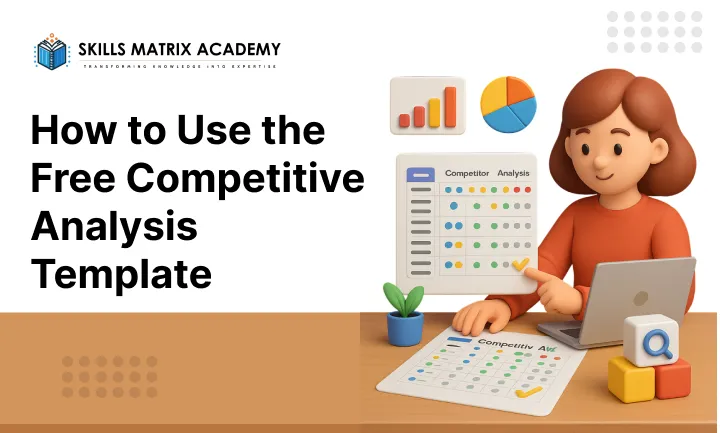
A social media competitive analysis template makes data easy to read. Our free competitive analysis template covers everything you need. It includes a keyword landscape analysis to see what terms people search for. It also features a competitive landscape analysis for brand summaries. You can track your brand’s competitive advantage and target markets.
The template includes a social analysis for every major platform. We have tabs for an Instagram competitor analysis and a TikTok competitor analysis. You will also find sections for Facebook competitor analysis and YouTube competitor analysis. Make sure you also include LinkedIn competitor analysis, X competitor analysis, and Pinterest competitor analysis in your strategy. Finally, use the ‘Recommendations’ tab to turn data into action.
Steps to Use the Competitor Tracking Spreadsheet
1. Rename your file: Call it something like “Competitive Analysis June 2026.”
2. Review the tabs: Familiarize yourself with the instructions before you start.
3. Start with Keywords: Use the keyword landscape analysis tab first.
4. Identify Rivals: Pick your top 3–5 rivals for the competitive landscape analysis.
5. Dig into Metrics: Use the social analysis tab for competitor performance metrics.
6. Summarize Insights: Put your next steps in the Recommendations tab.
7.nShare and Revisit: Check your competitor tracking spreadsheet every quarter.
You can customize this competitor SWOT template to fit your goals. You may care most about social media growth tracking. Or you could focus on influencer partnerships. Tailoring the categories helps you hone in on what matters. This ensures your online competitor research stays relevant to your brand.
The Benefits of Competitor Analysis on Social Media
A competitor analysis on social media gives you a clear picture of the market. It clearly shows your current position. You learn what your target market expects from brands. It also shows you how to differentiate your business. This makes your social media marketing strategy much stronger.
Running a social media insights report helps you discover new ideas. You can find new formats and storytelling styles to test. You can also catch your audience at their peak. A social media benchmarking study shows when users are most active. You can compare engagement rate analysis and market share analysis with total confidence.
Why You Need Social Media Competition Research

- Benchmark Performance: Compare follower counts and social media share of voice.
- Understand Pain Points: See what frustrates customers on rival pages.
- Fix Your Tone: Learn what brand voice actually lands on each channel.
- Find Gaps: See what your rivals are missing so you can fill that hole.
- Track Trends: Use social media monitoring to stay ahead of industry shifts.
You can run a one-off social media audit. However, most pros prefer a quarterly competitor analysis. This hybrid approach keeps your digital marketing and competitive research up to date. It ensures you never fall behind the curve.
Step-by-Step Guide to Running a Social Media Competitor Analysis
Ready to start? You can run a social media competitor analysis in four main steps. You find your rivals, gather data, and run a social media SWOT analysis. Here’s a simple guide to help you do it the right way.
Step 1: Find Your Competitors
First, you must identify your competitive keyword research. You likely know a few keywords already. But you should go deeper. If you run a boutique hotel, your rivals aren’t just “big hotels.” There are other boutique spots. Use Google Keyword Planner and Google Search Console to find these.
Plug your website into these social media analytics tools. You will see a list of relevant terms. You will also see the search volume and competition level. This builds the base of your SEO competitor research. Next, search your top keywords on Google. Look for brands on page one. Look for those running paid social media analysis ads. These are your active rivals.
You also need to check the social media search ranking. Ranking on Google is not the same as ranking on TikTok. Search your keywords on Instagram and YouTube. Note which brands appear in Reels or “For You” feeds. Use Meta Business Suite Insights and TikTok Analytics to see who your audience follows. Finally, narrow your list to 3–5 direct rivals for your social media performance comparison.
Step 2: Gather Your Intel
Now, see what they are actually doing. Visit each profile on your list. Use your social media competitive analysis template to record data. Look for their follower count and growth speed. Check their engagement rate analysis on recent posts. See which hashtags they use most often with a hashtag analysis.
Manual research works, but social media analytics tools are faster. Use Instagram Creator Insights to see deep metrics. Check their social media share of voice to see how much they dominate the conversation. Note if they focus on videos, newsletters, or live streams. This data helps you build a solid competitor benchmarking report.
Step 3: Conduct a Social Media SWOT Analysis
Now it is time for a social media SWOT analysis. This helps you turn raw data into a real social media strategy analysis. Use a competitor SWOT template to organize your thoughts. You will look at four key areas: Strengths, Weaknesses, Opportunities, and Threats.
- Strengths: List where your numbers are higher. This is your brand’s competitive advantage.
- Weaknesses: Note where you lag. These are areas for your next social media audit.
- Opportunities: Find the gaps. Does a rival ignore TikTok? That is your chance to shine.
- Threats: Look for outside forces. Is it a new startup growing fast? That is a threat.
Be specific with your social media data analysis. You might have more followers on LinkedIn but lower growth on Instagram. That is normal. Use these distinctions to sharpen your social media marketing strategy. It replaces guesswork with clear insights.
Step 4: Set Up Ongoing Social Media Monitoring
A social media competitor analysis is not a one-time task. It must be part of your workflow. You need a steady stream of data to stay relevant. This is where social media monitoring comes in. Keep an eye on what rivals post daily. Watch how their audience reacts in the comments.
Spotting opportunities early is the key to winning. If you see a rival’s post failing, learn from it. If a new trend pops up, jump on it first. Put these notes in your competitor tracking spreadsheet. This makes your next quarterly competitor analysis much easier. It ensures your social media industry analysis is always fresh.
Top Social Media Competitor Analysis Tools for 2026
Do you want to beat your competition on social media? You cannot do it alone. You need the right social media competitor analysis tools to get the job done. Many marketers guess what their rivals are doing. Smart marketers use data. A social media competitive analysis tool gives you the “secret sauce” of your rivals. It shows you their wins and their fails.
Choosing the best social media competitor analysis tools is a game-changer. It saves you hours of manual work. You can stop digging through profiles one by one. Instead, you get a clear competitor performance comparison in seconds. We have rounded up the top options to help you stay ahead. These social media analytics tools will sharpen your strategy immediately.
1. Hootsuite Analytics
Hootsuite Analytics is a powerhouse for social media competitor analysis tools. It gives you a real-time look at your rivals. You can track how you stack up on Instagram, Facebook, and X. The Hootsuite competitor analysis feature lets you track up to 20 profiles per network. This is perfect for follower growth analysis without the headache.
You can benchmark your engagement and content mix easily. It surfaces patterns that actually move the needle in your niche. You can see top-performing posts and do a trending hashtag analysis. It even shows you the types of content your audience loves most. Because it lives inside Hootsuite, you can take action fast. You can plan and publish your next post right after seeing the data. This makes it one of the most efficient social media management tools available.
2. Synapview
Are you ready to go beyond basic social stats? Synapview is an app that expands your reach. It is a great social media competitive analysis tool for deep dives. You can use it for Reddit competitor monitoring and blog competitor monitoring. This helps you see what people say in niche communities.
Most social media monitoring tools only look at the big platforms. Synapview competitor monitoring looks at the whole web. It helps you track specific hashtags across multiple sites. This gives you a complete competitive landscape analysis tool experience. You can find out what competitors are doing on forums and personal blogs. It is the best way to catch trends before they go mainstream on social.
3. Mentionlytics
Mentionlytics is an essential social media monitoring tool. It is perfect for conducting a deep social media competitive analysis. You can discover everything said about your brand or your rivals. It tracks X, Instagram, Facebook, and YouTube. It also monitors Pinterest and web sources like news sites.
The best part is the Mentionlytics sentiment analysis feature. This sentiment analysis tool shows you “how” people are talking. Is the vibe positive or negative? This helps you refine your messaging to match the mood. It also works as a brand mention tracking tool for your own company. You get a full online reputation monitoring suite in one place. It is a top-tier digital marketing competitor analysis tool for serious brands.
4. Sprout Social
Sprout Social is a very popular social media management tool. It offers a robust Sprout Social competitor analysis suite. You can track and measure growth across rival accounts easily. It lets you check their stats against yours in a clean social media reporting tools format. You can see who is winning the race for attention.
This tool also features a word cloud solution. It surfaces trending topics and keywords from your industry. This is great for competitor hashtag analysis and social listening tools. You can see which conversations are heating up. Sprout Social makes social media competitive benchmarking feel simple. It provides the competitive social media insights you need to grow your reach.
Social Media Competitive Analysis FAQs
What are the 4 Ps of competitor analysis?
The 4 Ps of competitor analysis stand for Product, Price, Place, and Promotion. This is a classic framework for any social media competitor research. You look at what rivals offer (Product) and what they charge (Price). You also see where they sell (Place) and how they market (Promotion). A product price place promotion analysis keeps your brand grounded. It ensures you stack up well across all marketing areas.
How Can You Run a Social Media SWOT Analysis Step by Step?
Start by listing your brand’s strengths and weaknesses. A social media SWOT analysis needs to be honest. Maybe you have high engagement but low posting frequency. Next, look for opportunities and threats. An untapped platform is an opportunity. A fast-growing rival is a threat. Use social media growth tracking tools to get your data. This makes your social media trend analysis much more accurate.
How Can You Find Your Competitors on Social Media?
Use a mix of different tactics. Start with a Google search for your category. Use hashtag monitoring tools on Instagram or TikTok. See which brands show up in big conversations. You can also use social listening tools to find hidden rivals. LinkedIn often suggests similar accounts when you follow a competitor. These are great leads for your monthly competitor analysis.
How often should I conduct a competitive analysis?
You should do a quarterly competitive analysis at a minimum. Social media moves very fast. Checking in every few months keeps you current. If you are in a fast-paced industry, try a monthly competitor analysis. This gives you a much sharper edge during big campaigns. Consistent content performance tracking ensures you never lose your lead.

Bharat Arora
12+ years as a web developer, Bharat has worked in the biggest IT companies in the world. He loves to share his experience in web development.


Bharat Arora
12+ years as a web developer, Bharat has worked in the biggest IT companies in the world. He loves to share his experience in web development.