Introduction
The cloud job market is shifting fast. Really fast. What worked five years ago won’t guarantee you a stable tech career today. Companies are moving aggressively toward cloud-native systems and automation. If you want to stay ahead, you need to know where the money is going.
Here is the cold, hard truth for 2026. Kubernetes is no longer a “nice-to-have” skill. It is the baseline. Basic cloud skills are everywhere now. To stand out, you need to be an expert in enterprise-ready platforms. This is exactly why Red Hat OpenShift has become the gold standard for high-paying tech roles.
Red Hat OpenShift 2026 is not just another tool in your belt. It is a career-proof platform used by global giants to run their most critical apps. If you want stability and growth, an OpenShift career is a very smart bet. In this guide, I will show you why this platform is exploding and how you can master it.
What Is Red Hat OpenShift? (The Simple Truth)
Let’s keep this simple. Red Hat OpenShift is an enterprise Kubernetes platform. It helps big companies build, deploy, and manage containerized apps securely. Think of it as the professional version of the cloud. It takes the raw power of containers and makes them ready for the biggest banks and hospitals in the world.
To understand it better, think of a car. Kubernetes is the engine. It is powerful, but you can’t drive an engine to work. You need a chassis, seats, a dashboard, and safety features. Red Hat OpenShift is the fully loaded enterprise vehicle. It provides the secure Kubernetes platform that businesses actually need to stay safe.
When we look at OpenShift vs Kubernetes, the difference is clear. Kubernetes is open-source orchestration that requires a lot of manual setup. You have to handle your own security and maintenance. OpenShift simplifies operations. It comes with built-in automation and is fully supported by Red Hat. This makes it the preferred enterprise container platform for serious businesses.
Why Enterprises Choose OpenShift
Most big companies don’t want to build everything from scratch. They want a cloud native application platform that just works. OpenShift is built on Kubernetes but enhanced with Red Hat enterprise Linux containers. This gives it a layer of trust that DIY systems just can’t match.
For a business, using OpenShift reduces risk. It provides a consistent experience across the hybrid cloud Kubernetes landscape. Whether a company is on AWS, Azure, or their own servers, the platform stays the same. For you, this means your OpenShift skills are valuable no matter where you work.
Why OpenShift Demand Is Exploding in 2026
The demand for an OpenShift administrator is reaching new heights. Why? Because the biggest industries in the world are doubling down on it. Banking, healthcare, and telecom companies cannot afford even a second of downtime. They need a container orchestration platform that is bulletproof.
These companies handle sensitive data every day. They need a secure Kubernetes platform to stay compliant with strict laws. OpenShift delivers this with built-in DevSecOps with OpenShift workflows. It makes security a part of the process instead of an afterthought. This is a massive selling point in 2026.
The Power of Multi-Cloud Management
Modern infrastructure is messy. Most big companies don’t just use one cloud. They use several. This is where multi-cloud Kubernetes management becomes a nightmare without the right tools. OpenShift works the same way on every major provider. It gives companies the flexibility they crave.
Because OpenShift is so flexible, it has become one of the top enterprise DevOps tools. It allows developers to push code faster without worrying about the underlying hardware. When a company can move faster and stay secure, they win. And they need a skilled OpenShift DevOps engineer to make that happen.
Top OpenShift Career Opportunities in 2026
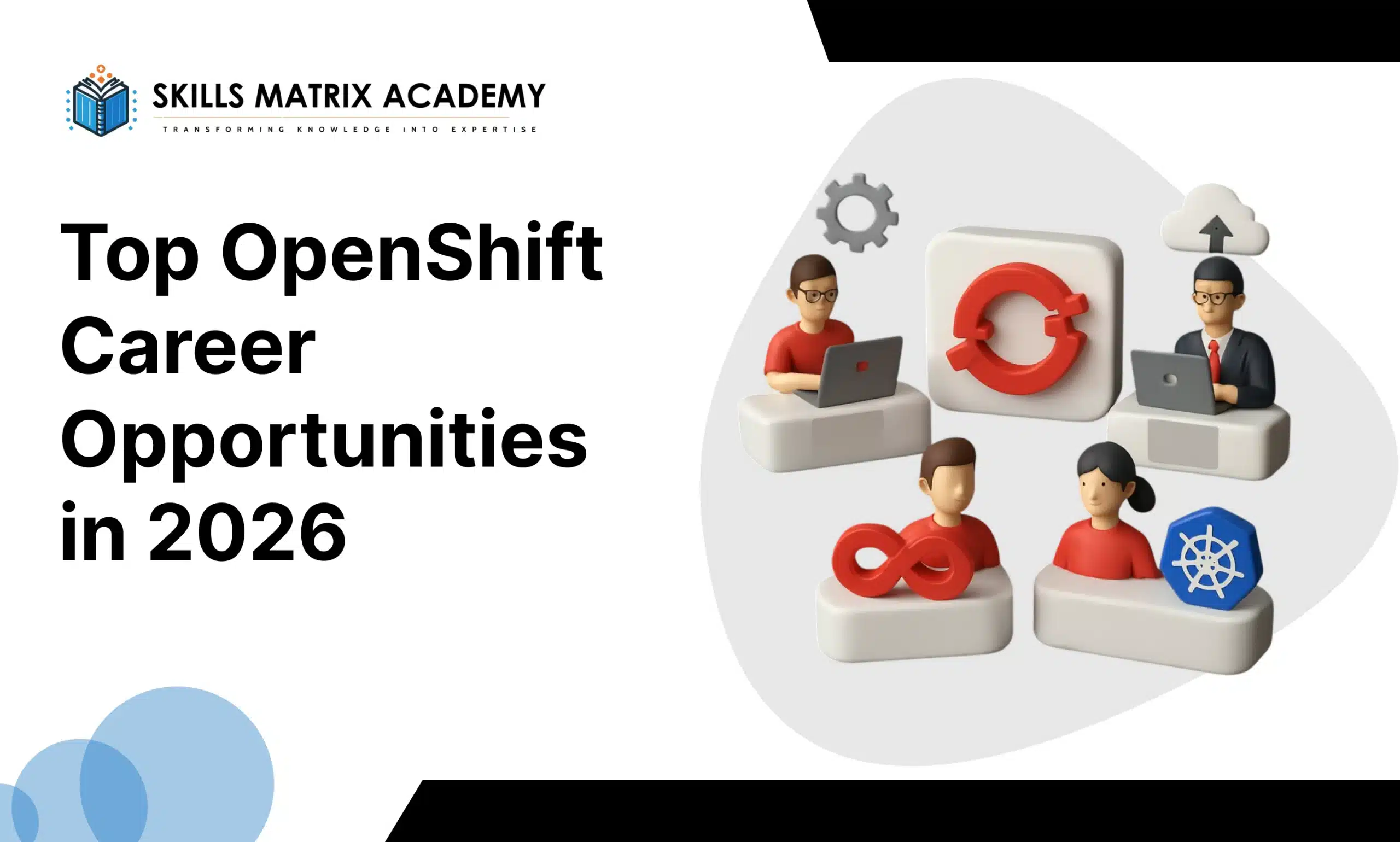
If you decide to pursue an OpenShift career, you aren’t just looking for a job. You are building a long-term path. These roles are not short-term trends. They are the backbone of modern IT strategy. Companies are hiring for several key positions right now.
- OpenShift Administrator: You are the captain of the ship. You manage the cluster, handle updates, and ensure everything stays online.
- Cloud Platform Engineer: You build the systems that other developers use. You focus on the cloud platform engineer skills that make the entire company more efficient.
- DevOps Engineer: You bridge the gap between code and infrastructure. You use enterprise DevOps tools to automate the life cycle of an application.
- Site Reliability Engineer (SRE): You use site reliability engineering tools to keep platforms fast and reliable.
- Kubernetes OpenShift Platform Consultant: You help different companies move their old apps into the modern world.
These OpenShift jobs offer incredible stability. While other tech roles might come and go, the people who run the core infrastructure are always the last to leave. It is a high-demand, high-reward path.
The Ultimate Red Hat OpenShift Certification Path
How do you prove you know your stuff? You get certified. A Red Hat OpenShift certification is a badge of honor in the industry. It tells recruiters that you have hands-on experience, not just book knowledge. Red Hat exams are famous for being practical and tough.
The first step is usually Red Hat OpenShift training. You want to start with the Red Hat OpenShift Administration I course. This is perfect for people who are new to the platform. It teaches you the basics of how to navigate the web console and manage simple containerized apps.
Moving Up the Ladder
Once you have the basics down, you can move to the Red Hat Certified Specialist in OpenShift Administration. This is the sweet spot for most professionals. It proves you can handle real-world problems in a production environment. Most OpenShift career opportunities become available once you have this credential.
For those who want to reach the top, the Red Hat Certified Architect (RHCA) is the final goal. This is for senior engineers who want to lead teams. It requires passing multiple exams, but the payoff is huge. It puts you in the top 1% of cloud professionals globally.
Skills You Need for a Red Hat OpenShift Career
You can’t just learn one tool and stop. To be a great OpenShift DevOps engineer, you need a well-rounded skill set. Think of OpenShift as the center of a web. There are several other technologies you should master to be truly “enterprise-ready.”
First, you must understand Kubernetes for enterprises. You need to know how pods, services, and deployments work at a deep level. Second, you need strong Linux skills. Since OpenShift runs on Red Hat enterprise Linux containers, knowing the command line is a must.
Essential Tech Stack for 2026
- CI/CD Pipelines: You should know tools like Jenkins or GitHub Actions. Automation is the heart of DevOps.
- Git & Version Control: This is how modern teams manage their code. You can’t work in a professional environment without it.
- DevSecOps Basics: Security is everyone’s job now. Learning how to secure a container orchestration platform is vital.
- Shell Scripting: Being able to write a simple script to automate a task will save you hundreds of hours.
When you combine these with your OpenShift skills, you become a triple threat. You aren’t just a person who clicks buttons. You are an engineer who understands how to build a cloud native application platform from the ground up.
OpenShift Salary 2026: What Can You Earn?
Let’s talk about money. An OpenShift career pays very well. Because these skills are specialized, companies are willing to pay a premium. In 2026, the OpenShift salary 2026 trends show a clear advantage over general cloud roles.
On average, Red Hat OpenShift professionals earn 20% to 35% more than general DevOps engineers. This is because you are handling enterprise-grade security and compliance. You aren’t just running a small app; you are running a platform that might process millions of dollars in transactions.
Globally, salaries for an OpenShift administrator range from $90,000 to over $150,000 per year. In India, senior roles often see packages from ₹12 LPA to over ₹30 LPA. The return on investment for Red Hat OpenShift training is incredibly high. It is one of the fastest ways to jump into a higher income bracket.
How to Start Your Red Hat OpenShift Journey Today
Don’t let the complexity scare you. You can start learning Red Hat OpenShift 2026 right now. The best way to learn is by doing. You can find free labs and sandboxes on the Red Hat website. These allow you to play with a real cluster without spending a dime.
Start by mastering the basics of Linux and containers. Once you feel comfortable, move into Kubernetes OpenShift platform fundamentals. Try to deploy a simple website. Then, try to make it scale. Then, try to secure it. This hands-on practice is worth more than a thousand hours of watching videos.
Your OpenShift certification path should be a marathon, not a sprint. Take your time to understand why things work. When you fix a broken cluster in a lab, you are gaining the exact skills that employers pay for. This is how you build a real OpenShift career.
Why OpenShift Is a Future-Safe Choice
The tech industry is crowded with tools that shine briefly and then disappear. But Red Hat OpenShift is different. It is backed by IBM and Red Hat, two of the biggest names in computing. It isn’t going anywhere. It is built for the long haul.
As AI and Machine Learning grow, they need a place to run. OpenShift is already becoming the preferred platform for running AI workloads at scale. It provides the heavy lifting that these advanced apps require. By learning this platform now, you are positioning yourself for the next decade of tech.
Final Thoughts on Red Hat OpenShift 2026
Is it worth it? Absolutely. If you want a skill that stays relevant, pays well, and is trusted by the world’s biggest companies, this is it. Red Hat OpenShift bridges the gap between raw technology and business value.
Whether you are a seasoned pro or just starting out, the OpenShift career opportunities are too big to ignore. It is time to stop playing with basic tools and start mastering the enterprise Kubernetes platform of the future. Your career will thank you.
FAQ’s
FAQ 1: Is Red Hat OpenShift worth learning in 2026?
Yes. Red Hat OpenShift remains one of the most in-demand enterprise Kubernetes platforms in 2026. Large organizations rely on it for secure, scalable, and compliant workloads. This creates strong demand for professionals with real OpenShift skills and certifications.
FAQ 2: Do I need Kubernetes knowledge before learning OpenShift?
Basic Kubernetes knowledge is helpful but not mandatory. OpenShift is built on Kubernetes and simplifies many complex tasks. Learning Kubernetes fundamentals first makes it easier to understand how OpenShift works in enterprise environments.
FAQ 3: What jobs can I get with Red Hat OpenShift skills?
Professionals with OpenShift expertise commonly work as OpenShift administrators, DevOps engineers, cloud platform engineers, SREs, and Kubernetes consultants. These roles offer long-term stability and strong growth potential.
FAQ 4: How long does it take to become job-ready in OpenShift?
With consistent learning and hands-on practice, most professionals become job-ready within 4 to 6 months. Building real projects, using OpenShift labs, and preparing for certification significantly speed up the process.
FAQ 5: Which Red Hat OpenShift certification should I start with?
If you are new, start with Red Hat OpenShift Administration I. Working professionals should target the Red Hat Certified Specialist in OpenShift Administration. Senior engineers can aim for RHCA to move into leadership roles.

Bharat Arora
12+ years as a web developer, Bharat has worked in the biggest IT companies in the world. He loves to share his experience in web development.


Bharat Arora
12+ years as a web developer, Bharat has worked in the biggest IT companies in the world. He loves to share his experience in web development.