1. Introduction: Why Google Ads Costs Matter in 2026
Google Ads is more competitive than it has ever been. More businesses are bidding on the same keywords, and AI-driven automation now controls most auctions. This shift has made pricing more dynamic and less predictable than before.
Because of this, many businesses are asking how much does Google Ads cost in 2026 and whether it is still worth the investment. The answer matters because ad spend directly affects profit margins, growth speed, and scalability. A poorly planned budget can burn money quickly, while a smart strategy can generate consistent leads and sales.
In 2026, success with Google Ads depends less on high bids and more on relevance, intent, and user experience. Google now rewards advertisers who understand user behavior and deliver value at every step.
This guide explains the real Google Ads cost in 2026, what affects pricing, and how much different businesses should budget. You will also learn how to reduce costs without hurting performance, so you can make confident decisions before investing.
2. How Google Ads Pricing Works (Quick Overview)
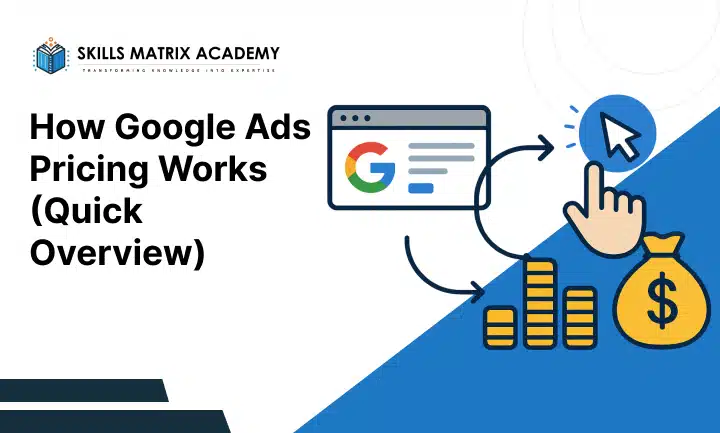
Google Ads does not charge a fixed fee to advertise. Instead, advertisers pay when users interact with ads. The most common model is pay per click advertising, where you are charged only when someone clicks your ad.
There is no single cost of Google Ads because the platform runs on a real-time auction system. Every time a user searches, advertisers compete based on bid amount, ad quality, and relevance. This means two advertisers can target the same keyword and pay very different prices.
Google also offers multiple pricing models depending on campaign goals and formats. These options give flexibility but also create cost differences across industries and locations.
Main Google Ads pricing models include:
- CPC (Cost Per Click): You’re charged only when a user clicks on your advertisement.
- CPM (Cost Per 1,000 Impressions): You pay each time your ad is shown 1,000 times.
- CPA (Cost Per Acquisition): You pay for completed actions
Understanding this structure is essential for managing PPC advertising costs in 2026.
3. Average Google Ads Costs in 2026
The average Google Ads cost varies widely based on competition, keyword intent, and targeting. There is no universal price, but realistic ranges help with planning.
In low-competition niches, costs remain manageable. In high-demand industries, prices have increased due to aggressive bidding and automation.
Average Google Ads cost per click in 2026:
- Low-competition industries: $0.50 – $2.50
- Medium-competition industries: $2 – $6
- High-competition industries: $5 – $25+
Search ads generally cost more than display ads because they target users who are actively looking to buy. Display ads are cheaper but focus more on brand awareness.
Monthly budgets also vary by business size and growth goals. Small businesses usually start with focused budgets, while larger brands invest heavily in scaling.
Typical Google Ads monthly budget ranges:
- Small businesses: $500 – $3,000
- Medium businesses: $3,000 – $15,000
- Enterprise brands: $20,000+
Industry plays a major role in pricing. Some niches consistently cost more due to strong competition and high customer value.
Google Ads cost by industry (average ranges):
- Legal services: $10 – $50 per click
- Finance and insurance: $8 – $40 per click
- E-commerce: $0.50 – $5 per click
- Local services: $2 – $15 per click
- SaaS: $3 – $20 per click
These ranges are not guarantees. Strong ad relevance and landing page quality can reduce costs significantly.
4. What Factors Affect Google Ads Cost in 2026
Several factors influence how much advertisers pay in 2026. Budget alone does not determine success.
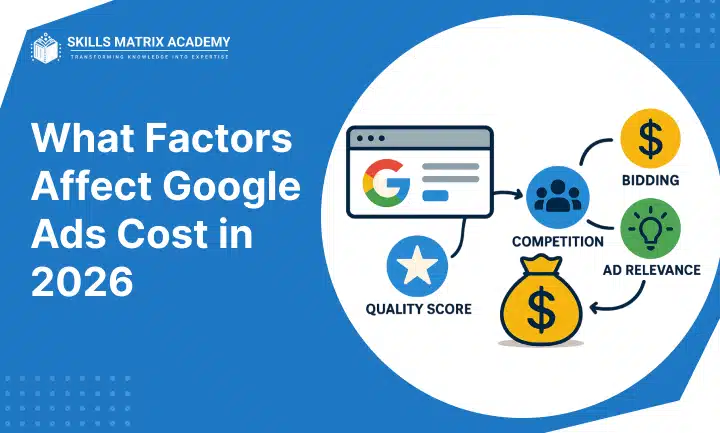
Industry competition has the biggest impact. More advertisers bidding on the same keywords increases prices. Keyword intent also matters. Buyer-focused keywords cost more than informational ones.
Google evaluates ads using multiple signals to determine pricing and placement. Advertisers who deliver better experiences often pay less per click.
Key factors that affect Google Ads cost include:
- Quality Score Google Ads
- Ad relevance and click-through rate
- Landing page speed and usability
- Location and device targeting
- Keyword competition
- AI bidding Google Ads strategies
In 2026, relevance and experience matter more than bid size.
5. Google Ads Cost by Campaign Type
Different campaign types come with different pricing expectations.
Search ads are usually the most expensive because they target users with high purchase intent. They work best for lead generation and direct sales.
Display ads are cheaper and focus on reach rather than immediate conversions. Shopping ads are popular with e-commerce brands and usually offer strong ROI when product feeds are optimized.
YouTube ads charge based on views or impressions and are effective for storytelling and brand awareness. Performance Max campaigns use AI to distribute ads across all Google channels, offering scale but less control.
Typical cost ranges by campaign type:
- Search ads: $1 – $25+ per click
- Display ads: $0.20 – $2 per click
- Shopping ads: $0.30 – $5 per click
- YouTube ads:
- CPV: $0.05 – $0.30
- CPM: $4 – $15
- Performance Max: Costs vary widely
6. Is Google Ads More Expensive in 2026?
Yes, Google Ads is more expensive than in previous years. However, higher costs do not always mean worse results.
Automation and AI bidding have increased competition, but they have also improved targeting accuracy. Many advertisers now pay more per click but receive higher-quality leads.
The real difference in 2026 is efficiency. Businesses that understand the Google Ads auction system and optimize continuously often see strong returns despite rising costs.
7. How Much Should You Budget for Google Ads in 2026?
Your budget should align with your goals and business stage. Testing budgets work best for beginners, while scaling brands require consistent investment.
Small daily budgets are enough to learn and optimize. Larger budgets allow faster growth and data collection.
Recommended daily Google Ads budgets:
- Beginners: $10–$20 per day
- Growing businesses: $50–$150 per day
- Scaling brands: $200+ per day
A simple budgeting formula helps with planning:
Monthly Budget = Target Conversions × Average CPA
Always leave room for testing and optimization.
8. How to Reduce Google Ads Costs Without Losing Results
Lowering costs does not mean lowering bids blindly. Smart optimization delivers better results with less spend.
Improving quality and relevance often reduces CPC while maintaining performance.
Effective cost-reduction strategies include:
- Improving Quality Score
- Adding negative keywords
- Targeting high-intent keywords
- Optimizing landing page speed and clarity
- Using smart bidding carefully
Small improvements often lead to meaningful savings.
9. Google Ads vs Other Advertising Platforms in 2026
Google Ads captures existing demand, while social platforms create demand. This difference affects both cost and results.
Google Ads generally delivers stronger conversion intent. Meta and TikTok often offer cheaper clicks but lower purchase readiness. SEO provides long-term traffic but takes time to scale.
Most businesses benefit from combining paid ads with organic strategies.
10. Common Google Ads Cost Myths (2026 Edition)
Many misconceptions still exist around Google Ads pricing.
Some believe Google Ads is always too expensive, while others think higher budgets guarantee success. In reality, strategy and optimization matter far more than spend.
AI bidding does not automatically increase costs. When set up correctly, it often improves efficiency.
11. Conclusion: Is Google Ads Worth the Cost in 2026?
Google Ads is still worth the investment in 2026 when used correctly. It is not cheap traffic, but it is high-intent traffic that can drive measurable results.
Businesses that track conversions, optimize regularly, and focus on relevance can achieve strong ROI despite rising costs. Google Ads works best for companies willing to test, learn, and refine their approach over time.
If you expect instant results without optimization, Google Ads may feel expensive. But when managed strategically, understanding how much does Google Ads cost in 2026 becomes less important than understanding what it returns.
Used wisely, Google Ads remains one of the most powerful growth channels available.
12. FAQs: Google Ads Cost in 2026
How much does Google Ads cost in 2026?
The cost of Google Ads in 2026 depends on your industry, competition, and targeting. Most businesses pay between $0.50 and $25+ per click. Low-competition niches stay affordable, while legal, finance, and SaaS industries cost more. Google Ads pricing in 2026 is flexible, not fixed.
What is the average Google Ads cost per click in 2026?
The average Google Ads cost per click varies by intent and market. Informational keywords cost less. Buyer-intent keywords cost more. In 2026, most advertisers see CPCs between $1 and $6, while high-competition keywords can exceed $20 per click.
What is a good Google Ads budget for small businesses?
A realistic Google Ads budget for small businesses ranges from $500 to $3,000 per month. This allows enough data to test keywords, ads, and landing pages. Smaller budgets still work when campaigns focus on high-intent searches and local targeting.
Is Google Ads more expensive in 2026 than before?
Yes, Google Ads cost in 2026 is higher than in previous years. Competition has increased, and AI bidding is now standard. However, higher costs do not always reduce ROI. Better targeting and smarter automation often deliver higher-quality traffic.
Can I run Google Ads with ₹500 or $10 per day?
Yes, you can run Google Ads with ₹500 or $10 per day, but results will be limited. This budget works best for testing or local campaigns. Focus on a narrow keyword set with clear intent. Avoid broad targeting at this level.

Bharat Arora
12+ years as a web developer, Bharat has worked in the biggest IT companies in the world. He loves to share his experience in web development.


Bharat Arora
12+ years as a web developer, Bharat has worked in the biggest IT companies in the world. He loves to share his experience in web development.