In today’s fast digital world, knowing your audience is more critical than ever. People interact with brands in many ways— through websites, apps, social media, email, offline stores, and ads.
Counting clicks or views is not enough. To reach the right people and improve results, brands need audience measurement.
Audience measurement helps businesses understand:
- Who their audience is
- How they behave
- How they interact with content or ads
What Is Audience Measurement?
Audience measurement is the process of tracking and understanding the people who interact with your brand.
It gives more than just numbers. It tells you:
- Who your audience is: Age, gender, location, interests
- How they engage: Clicks, shares, comments, time spent
- What works in campaigns: Purchases, sign-ups, downloads
You can measure audiences across:
- Digital channels: Websites, apps, social media, emails
- Broadcast media: TV, radio, streaming platforms
- Offline channels: Stores, events, or billboards
Why Audience Measurement Is Important
Audience measurement is one of the most crucial parts of modern marketing. It allows brands to understand their customers, make smarter decisions, and improve the effectiveness of campaigns. Without measuring your audience, marketing becomes guesswork. You may spend money on campaigns that don’t work, target the wrong people, or miss opportunities to connect with your customers.
Here’s why audience measurement matters and how it benefits your business:
1. Track Campaign Success
Audience measurement shows you which campaigns are working and which are not. By tracking key metrics like clicks, engagement, or conversions, you can see exactly how your audience responds to your marketing efforts.
For example, if you run a social media ad campaign and notice that it gets thousands of impressions but very few clicks or conversions, audience measurement tells you that the campaign may need adjustment. This saves both time and money because you can focus on campaigns that bring real results.
2. Spend Marketing Budget Wisely
Marketing budgets are often limited, so it’s important to invest in channels and campaigns that give the best return. Audience measurement helps you understand which platforms, ads, or campaigns perform well.
For instance, if your data shows that email campaigns generate more conversions than social media ads, you can reallocate your budget to focus on what actually works. This ensures every dollar counts and reduces wasted spend.
3. Know Your Audience
Understanding your audience is essential for marketing success. Audience measurement tells you who your customers are, what they like, and how they behave.
This includes information like age, gender, location, interests, and buying habits. By knowing these details, brands can create content, messages, and campaigns that resonate with their target audience. For example, if data shows that most of your audience prefers video content over blogs, you can focus on creating more videos.
4. Personalize Experiences
One key benefit of audience measurement is that it helps you deliver a personalized experience to each customer. When you understand what your audience likes and how they behave, you can provide the right message to the right person at the right moment.
Personalized marketing increases engagement, builds trust, and encourages repeat purchases. For example, e-commerce brands often use audience data to show product recommendations based on previous purchases or browsing history.
5. Make Decisions With Data
Audience measurement allows brands to make decisions based on facts rather than assumptions. Instead of guessing what content or ads might work, you can rely on real data to plan campaigns and strategies.
This means businesses can optimize every part of the marketing process, from ad targeting to content creation, ensuring better results and higher ROI.
6. Show ROI to Stakeholders
Finally, audience measurement helps demonstrate the value of marketing efforts. You can show stakeholders which campaigns drove results, how many people were reached, how engaged they were, and how many conversions occurred.
This data is essential for justifying marketing budgets and demonstrating campaign impact. Without measurement, it isn’t easy to prove whether your marketing strategy is effective.
Types of Audiences
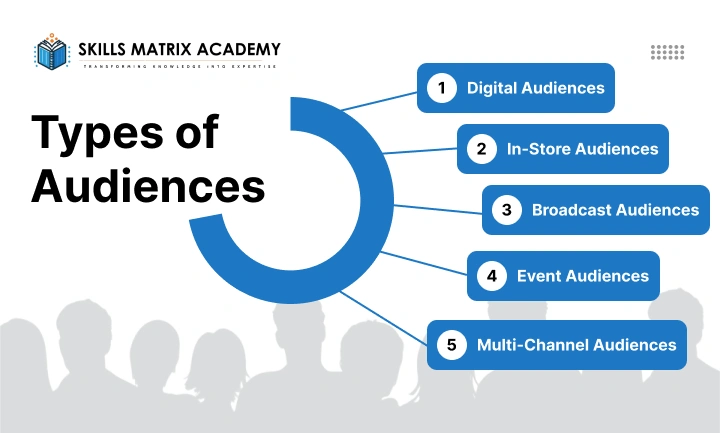
Different audiences behave differently, and understanding these types helps businesses accurately measure engagement and develop effective marketing strategies.
1. Digital Audiences
Digital audiences are people who interact with your brand online — through websites, apps, social media, or digital ads. These audiences can be measured using metrics like website traffic, click-through rates, and conversions.
For example, tracking website traffic can help you identify which pages users visit the most, how long they stay, and where they drop off. This helps improve your online experience and content strategy.
2. In-Store Audiences
Not all engagement happens online. Physical store visitors are also an important audience. AI cameras and sensors can track foot traffic, dwell time, and interactions with products or displays.
For example, a store might notice that most visitors spend time at certain shelves but ignore others. This insight can guide product placement, store layout, and in-store marketing.
3. Broadcast Audiences
TV, radio, or streaming viewers make up broadcast audiences. Ratings, viewership data, and interaction metrics show which ads or shows reach the largest audience.
For example, if your target audience watches a particular TV show, placing ads during that show will likely increase exposure and engagement.
4. Event Audiences
Events, trade shows, or brand activations attract people who engage directly with your brand. Audience measurement tools like registrations, check-ins, surveys, or booth activity tracking help understand attendance, participation, and interest levels.
This data helps brands improve event strategies and measure ROI from offline campaigns.
5. Multi-Channel Audiences
Many users interact with brands across multiple channels — online and offline. Measuring this type of audience requires combining digital and offline data to get a full picture of customer behavior.
For example, a customer may see a social media ad, visit your website, and then buy a product in-store. Multi-channel measurement helps track the entire customer journey, so you know which channels contribute most to sales.
Key Metrics to Measure Audience
To measure and understand your audience effectively, focus on these metrics:
- Reach: How many individual people saw your content.
- Impressions: How many different people viewed your content.
- Engagement: Clicks, likes, shares, comments, and time spent
- Behavior: Pages per session, session duration, bounce rate
- Conversions: Purchases, sign-ups, downloads, or other actions
- Demographics & Interests: Include age, gender, location, hobbies, and preferences.
Example: Imagine your website gets 10,000 visitors in one month. Of these, 8,000 are unique users — this is your reach. If only 500 users make a purchase, this is your conversion metric. By analyzing engagement and behavior, you can identify areas to improve — like website navigation, product pages, or call-to-actions.
Tracking these metrics over time allows brands to optimize campaigns, target the right audience, and improve ROI.
How to Measure Audience Engagement
Engagement measures how actively people interact.
- Viewership Metrics: Who sees your content and how often
- Interaction Metrics: Likes, shares, comments, clicks
- Time-Spent Metrics: Average time spent on pages or content
- Conversion Metrics: Purchases, downloads, sign-ups
Tools for Accurate Measurement
AI and machine learning spot behavior patterns and predict user engagement.
- Computer Vision: Track in-store behavior in real-time
- Unified Platforms: Combine online and offline data for a full audience view
Key Components of Audience Measurement Strategies
Having a good strategy is important to measure your audience accurately. Without a plan, data can be confusing or misleading. A clear strategy helps you understand your audience and make better marketing decisions.
Here are the main components:
1. Use First-Party Data
First-party data comes directly from your audience. Examples include:
- Website visits
- App activity
- CRM information
This data is accurate and reliable. It also follows privacy rules because users provide the information themselves.
Example: Tracking which products a customer clicks on your website helps you show similar products they might like.
2. Connect Data Across Devices
People use many devices — phones, laptops, tablets, and TVs. Connecting data across devices gives a complete picture of the customer journey.
Example: A customer sees your ad on a phone, searches on a laptop, and buys in-store. Connecting this data shows the full path to conversion.
3. Integrate Online and Offline Data
Many businesses have both online and offline presence. Combining data from websites, social media, physical stores, or events gives a full view of audience behavior.
Example: Someone clicks your email, visits your store, and makes a purchase. Integrating these touchpoints shows which campaigns really work.
4. Follow Privacy Laws
Data privacy is important. Follow privacy laws like GDPR and CCPA.
- Always get consent from users
- Use anonymized data when possible
Following privacy laws builds trust and keeps your data collection legal.
5. Measure Across Channels
Track how your audience behaves on:
- Social media
- Websites
- Emails
- TV ads
- Offline campaigns
This shows which channels give the best results.
Example: If social media gets more engagement but email drives more purchases, focus your efforts on email for conversions.
6. Track Deep Engagement
Clicks are not enough. Measure how people really interact:
- Time spent on a page
- Video completions
- Repeat visits
- Interactions with interactive content
Example: If most people watch your video to the end, it shows strong interest.
7. Test and Optimize
Audience measurement is not a one-time task. Use:
- Use A/B testing to compare two versions of ads or pages.
- Use cohort analysis to follow user groups over time.
- Iterative improvements to continuously optimize campaigns
Example: Test two landing pages. Use the one that converts better. Repeat to improve results.
Challenges in Audience Measurement
Even with a strategy, there are challenges:
- Privacy laws: Can make data tracking more challenging.
- Platform Differences: Metrics vary between platforms
- Attribution: Hard to know which touchpoint caused the sale
- Data Quality: Bots, duplicates, or fake interactions can affect results
Emerging Trends in Audience Measurement
Audience measurement is evolving. New trends help businesses understand their audience better:
- AI and machine learning: Predict audience behavior and automatically improve campaigns.
- Real-Time Analytics: Track campaigns live and make quick adjustments
- In-Store Analytics: Sensors and AI measure offline engagement
- Unified Identity Platforms: Track audience behavior across devices and channels for a full view
A strong audience measurement strategy combines accurate data, cross-channel tracking, privacy compliance, and ongoing optimization. By following these steps and using new technologies, businesses can understand their audience, improve engagement, and increase ROI.
Practical Tips for Businesses
- Segment Audiences: Group by behavior, interests, and demographics
- Focus on Key Metrics: Engagement, conversions, and ROI
- Use Multiple Tools: Analytics, CRM, social media, offline data
- Test & Improve: By making small changes based on data.
- Respect Privacy: Always get user consent and follow laws
- Report Clearly: Dashboards make insights easy to understand
Benefits of Audience Measurement
- Higher ROI: Focus on campaigns that work
- Better Customer Experience: Deliver relevant and personalized content
- Data-Driven Decisions: Make informed marketing choices
- Stronger Loyalty: Engage audiences effectively
- Optimized Marketing Spend: Reduce waste and invest smartly
Example: A retail brand learns which age group prefers online shopping. Targeted ads for this group increase sales and reduce wasted ad spend.
Conclusion
Audience measurement is no longer optional. It is key to marketing success. By understanding your audience and tracking engagement, brands can:
- Make smarter, data-driven decisions
- Deliver personalized campaigns
- Optimize budgets and improve ROI
- Grow business and customer loyalty
Start measuring your audience today. Use the right tools, track key metrics, and turn insights into campaigns that connect with your audience and drive results.

Bharat Arora
12+ years as a web developer, Bharat has worked in the biggest IT companies in the world. He loves to share his experience in web development.


Bharat Arora
12+ years as a web developer, Bharat has worked in the biggest IT companies in the world. He loves to share his experience in web development.