ChatGPT has hundreds of millions of users. Google AI Mode is now open to everyone. And AI search engines are no longer experiments.
They are becoming the default way people find information online. If you want to stay visible, you must adapt. That means AI search optimization, not just traditional SEO.
This guide shows you how to optimize content for AI search step by step. The goal is simple. Get featured in AI answers, increase AI search visibility, and turn that exposure into traffic and customers.
What Is AI Search and How Does It Work?
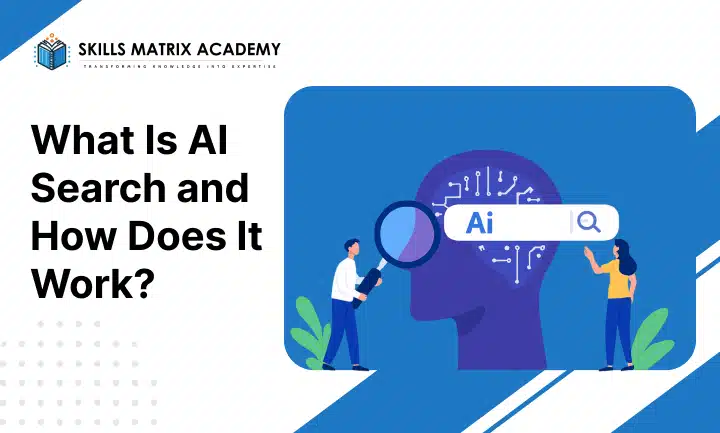
AI search engines use large language models, or LLMs, to answer questions. They do not show ten blue links.
Instead, they scan trusted sources across the web. Then they generate one clear, complete answer. This is how generative AI search works today.
Platforms like Google AI Overviews, Google AI Mode, ChatGPT Search, and Perplexity analyze massive data sets in real time. They pull context, meaning, and relevance together. Then they respond in a conversational format.
This shift changes everything about SEO beyond Google rankings.
How to Perform an AI Search Content Audit
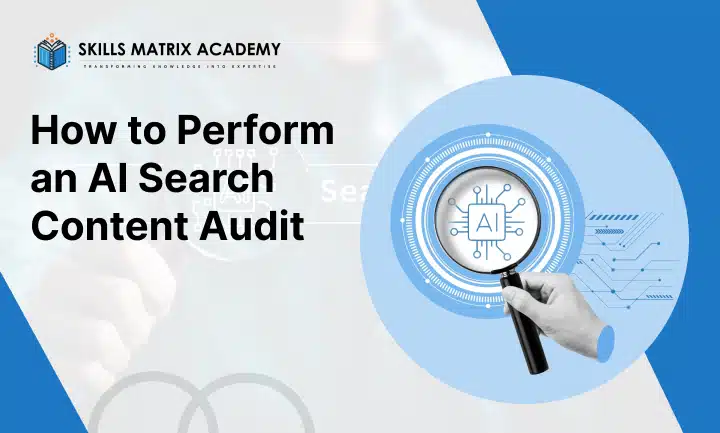
To show up in AI-driven search results like Google AI Overviews, regular SEO is not enough. You need AI search optimization for better AI content visibility.
Even if you already do content audits, it’s time to update them for an AI search content audit. Look for gaps and improve your AI SEO skills. This helps your content get noticed and increases AI discovery optimization.
Use the AI Content Audit Framework, which focuses on four key areas. First, check the technical SEO to make your site easier for AI to read. Second, improve the quality of AI-generated content—keep it clear, helpful, and accurate. Third, add authority signals to help AI build trust and credibility. Fourth, track AI competitive intelligence to see how others perform in AI SEO strategy.
Following this approach boosts AI-powered search optimization, AI visibility optimization, and prepares your site for next-generation SEO. It is also helpful if you are learning from an SEO course or a digital marketing course to understand AI content optimization.
Why optimize content for AI?
1. Traditional Rankings No Longer Guarantee Visibility
Ranking on page one is no longer enough. With AI-powered search engines, users may never see your link. They see an AI-generated answer instead.
This is why AI SEO and AI discovery optimization matter more than ever. More users now rely on AI-driven search for fast answers. As a result, content strategies must evolve.
A Smartly Marketing study found that 90% of businesses are concerned about declining visibility due to AI-generated responses and LLMs. A 2025 Semrush report predicts AI search will surpass traditional search by early 2028.
This marks the future of SEO.
2. The Rise of Zero-Click Search
Zero-click search happens when users get answers without clicking any link. This trend is growing fast. SparkToro reports that nearly 60% of mobile Google searches end without a click.
Users want instant answers. They do not wish to take extra steps. This impacts AI search traffic and organic clicks. Fewer clicks can reduce traditional rankings. But the bigger risk is losing visibility altogether.
That is why zero-click search optimization is now essential.
3. Where AI Search Engines Get Their Answers
AI systems pull data from many sources. Top citations often come from:
- Wikipedia
- YouTube
They also trust major publishers like Reuters, Apple, and Healthline. If your brand is not cited, you lose authority. To win, you must focus on AI content optimization and authority signals for AI SEO.
Being a cited source improves AI answer optimization and long-term trust.
4. The SEO Funnel Has Changed
The old SEO funnel was simple.
Rank high.
Get clicks.
Convert visitors.
That model no longer tells the whole story. AI search engines follow a different process. They move from query to synthesis to answer.
On Google, this appears as “AI Overviews” at the top of the results. With tools like ChatGPT, the answer seems to come instantly. Users often never leave the interface. This breaks the traditional funnel.
Now, AI visibility strategy matters more than click-through rates.
5. User Behavior Has Shifted to Conversations
Traditional search focused on four intents.
- Informational
- Navigational
- Commercial
- Transactional
AI-driven search goes further. It understands multi-intent and complex queries. Semrush found that only 30% of ChatGPT prompts match classic search intent. The other 70% are unique, lengthy, and conversational.
For example, users no longer ask, “Best project management tools.”
They ask, “Which tool works best for a remote team of 10 with a $50 monthly budget?”
This is where conversational search optimization and semantic SEO for AI shine.
AI understands context, meaning, and preferences. It personalizes answers using prior interactions. Users are no longer searching. They are having conversations.
6. Why E-E-A-T Matters More Than Ever
E-E-A-T for AI search is critical. That means Experience, Expertise, Authoritativeness, and Trustworthiness.
Google AI Overviews and Perplexity heavily favor credible sources.
Helpful content wins.
Accurate content wins.
Expert-led content wins.
Strong AI search ranking factors now include:
- Clear author credentials
- Real-world experience
- Reliable citations
- Consistent accuracy
Without these, AI content discoverability suffers.
How to optimize your content for AI visibility
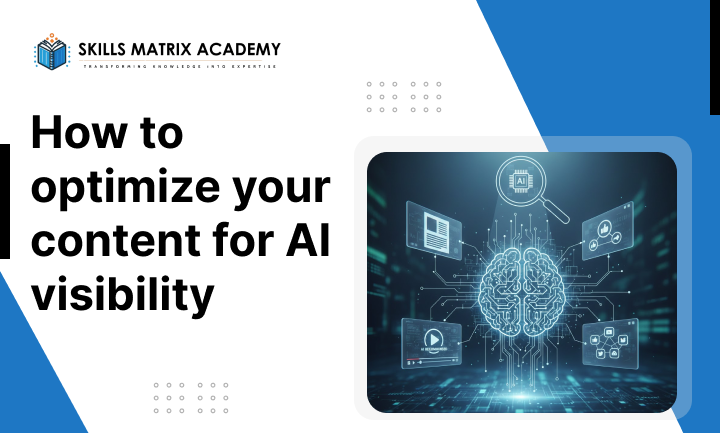
AI search is now a regular part of how people find information online. Tools like Google AI Overviews, ChatGPT Search, and Perplexity are used every day. These tools decide which content people see first.
Because of this, ranking on Google alone is no longer enough. Your content must also be easy for AI to read and trust. This process is called AI visibility optimization.
If the content is confusing or outdated, AI will ignore it. This affects blogs, service pages, and learning content like an seo course or a digital marketing course. SEO for AI is about making content clear for machines and helpful for humans.
1. Think topics, not keywords.
Traditional SEO focused on keywords. AI search works more intelligently. AI understands meaning and intent, not just exact words. That is why a well-based SEO strategy works better today.
Instead of writing for one keyword, focus on the whole topic. Explain it clearly—cover related questions. Share useful details. When you do this, AI sees your content as complete and valuable.
This helps build topical authority SEO. It also improves AI search visibility because AI prefers content that solves the whole problem.
User intent matters here. Some users want quick answers. Others wish to take clear steps or comparisons. When your content matches these needs, AI connects it to the right searches.
Natural writing also helps. AI and voice search prefer conversational language. People now search in complete sentences. This supports conversational SEO and improves voice search optimization.
1. Build semantic relationships
AI does not read content line by line. It connects ideas across the page. This is called semantic SEO for AI. Large language models look for relationships between topics.
You can help AI by clearly linking ideas in your content. When one idea flows into the next, AI better understands the meaning. This improves content optimization for LLMs.
Content clusters work very well here. One main page explains the core topic. Supporting pages explain related ideas. Together, they show depth and expertise. This strengthens the AI SEO strategy and supports AI discovery optimization.
Simple transitions also matter. Precise phrases improve flow. If content sounds natural when read aloud, it usually performs better in AI-driven search optimization.
Examples of semantic cues include:
- Navigational cues (“Next, let’s explore…”)
- Summary cues (“In short…”)
- Comparison cues (“Unlike traditional marketing…”)
- Example cues (“For instance…”)
- Warning cues (“Be cautious of…”)
- Definition cues (“This means…”)
3. Ensure content is citation-worthy
AI search engines do more than rank pages. They also cite sources. Visibility now depends on whether AI trusts your content. This makes AI citation optimization very important.
Your content must be accurate and up to date. Old facts or broken links reduce trust. AI prefers content that stays fresh and reliable.
Original insights help a lot. Unique data, expert opinions, and real examples add value. A clear structure also helps AI extract information easily. This increases the chance of being cited.
This supports SEO for citation-worthy content and builds trust across AI-powered search optimization platforms.
4. Prioritize E-E-A-T
E-E-A-T is very important for AI search. It represents Experience, Expertise, Authoritativeness, and Trustworthiness. Strong E-E-A-T for AI search improves visibility and credibility.
Good content should show real knowledge. Avoid repeating what already exists online. Add expert insights and practical examples to show authority.
Clear answers also help. AI prefers short and direct explanations. Regular updates matter too, especially in SEO and digital marketing.
This is critical when promoting services or a digital marketing course. Author details, credentials, and update dates strengthen authority signals for AI SEO.
5. Make pages AI-readable with structured data.
Even good content can fail if AI cannot read it correctly. Structured data helps solve this problem. It makes content easier for machines to understand. This is why structured data for AI matters.
When content is machine-readable, AI can match it to the right searches. Without it, your content may never appear in AI answers.
Structured data supports AI content structuring, improves AI indexing optimization, and increases discoverability.
6. Structure your content logically.
AI reads content the same way people scan a page. It looks for order and clarity. A good structure improves both the user experience and AI-readability.
Clear headings explain each section. Each section should focus on one idea. This makes it easier for AI to extract useful information. Simple structure improves AI search ranking factors and keeps readers engaged.
7. Add schema markup everywhere.
Schema markup gives AI extra context. It explains what the content is about and who created it. This improves schema markup for AI SEO.
Article, author, organization, FAQ, and course schema all help AI correctly classify content. Course schema is especially helpful for an seo course or a digital marketing course.
Schema also improves AI crawlability, SEO, and AI visibility.
8. Utilize different content formats.
AI prefers content that is easy to scan. Long and heavy text slows understanding. Simple formats improve AI-friendly content.
Step-by-step explanations help with how-to searches. Definitions help AI explain terms. Real examples build trust and clarity. These formats support an AI search content strategy.
They also help human readers understand faster.
9. Leverage multimedia and voice search.
AI search now includes images and videos. This makes multimodal SEO important. Images and screenshots explain steps clearly. Videos help with tutorials. AI often reads video transcripts to find answers.
Natural language also supports spoken searches. Question-style writing improves voice search SEO and AI responses.
10. Adjust backlink strategy
Backlinks still matter for AI. AI sees them as trust signals. Links from strong websites increase credibility and support an AI backlink strategy.
Quality matters more than quantity. AI can detect spam links. Trusted links improve AI trust signals and citations.
11. Optimize technical elements
Technical SEO helps AI access your content. Without it, visibility drops. AI crawlability SEO depends on a strong technical setup.
AI bots must be allowed to crawl your site. Pages should load quickly and work well on mobile devices. HTTPS security builds trust.
Good technical health supports AI search engine optimization, improves AI search marketing, and protects long-term visibility.
How to Track Your Performance in AI Results
Before AI, marketers mainly looked at organic traffic, keyword rankings, and click-through rates (CTR). These still matter, but AI-driven search adds new ways to measure performance. Now, you need AI performance tracking to see how your content shows up in AI-generated results.
Why AI Metrics Are Important
AI systems often provide answers directly to users. People may not visit your website, but your content is still being seen.
This shift requires AI visibility tracking, AI search analytics, and AI-driven search metrics. These metrics show how often your content appears in AI results, gets cited, or builds trust online. Students in an SEO course or digital marketing course are taught these skills to stay ahead.
Key AI Performance Metrics to Track
- AI Visibility Score measures how often your brand or website shows up in AI-generated results. It helps with tracking AI results.
- AI Citation Frequency tracks how often AI systems reference your content. Frequent citations strengthen AI authority signals and AI trust metrics.
- Entity Mention Velocity monitors how often your brand, products, or authors appear online. It supports entity mention tracking and brand mentions in AI.
- Zero-Click Search Value shows exposure without clicks. This is important for zero-click visibility, zero-click SEO metrics, and overall AI brand exposure.
- Cross-Platform AI Presence evaluates how visible your brand is across multiple AI systems, including Google Gemini, ChatGPT, Perplexity, and Microsoft Copilot.
While analytics platforms are still catching up to this new reality, Track AI Traffic in Google Analytics 4 (GA4) by identifying referral traffic from AI systems.
- Log in to GA4 → Reports → Acquisition → Traffic acquisition.
- Click Add filter (+) and choose Session source/medium.
- Select Matches regex and add your AI traffic pattern.
This shows sessions from generative AI engines. You can track AI answer performance, AI search impressions, and AI content exposure.
Continue to Stay Visible in AI Results
To stay visible in AI results, your content must be human-first and AI-friendly. Make it helpful, clear, and structured. Both people and AI should be able to understand it easily.
Perform regular content audits. Check that your pages are up to date, accurate, and technically optimized. Use SEO for AI strategies, such as building semantic links, adding schema markup for AI SEO, and creating AI-readable content. This makes your content citation-worthy and easy for AI to process.
Follow E-E-A-T best practices. Add expert insights, verified data, and clear, structured sections. Strong E-E-A-T signals improve AI search visibility, AI content citations, and AI content structuring.
Measure success using a mix of traditional SEO metrics and AI visibility signals. Track AI search analytics, AI content exposure, and AI answer visibility. Check performance across platforms like Google AI Mode, ChatGPT SEO, and Perplexity SEO.
AI-driven search is evolving fast. Stay updated on trends and adjust your strategies. Taking an SEO course or digital marketing course can help you master these skills. This prepares you for next-generation SEO and keeps your content visible to both humans and AI.
Frequently Asked Questions About AI Search Optimization
How Do I Optimize Content for AI Search Engines?
Use clear question-based headers (H2s and H3s). Write short answers of 40–60 words. Add semantic HTML, expert quotes, structured data, and original visuals. Tools like On-Page SEO Checker help fix issues that block AI content optimization. Taking an SEO course or digital marketing course also enables you to learn AI content structuring and AI search content strategy.
Do Featured Snippets Help with AI Search?
Yes. Content made for featured snippets is more likely to appear in AI answers. Use clear headers, step-by-step lists, and short definitions. This improves AI answer visibility on Google AI Overviews, ChatGPT, and Perplexity.
How Do I Know If AI Is Citing My Content?
Use Semrush AI Visibility Toolkit to track AI content citations and AI reference tracking. Set alerts to see mentions across AI platforms.
Why Isn’t My Content Showing Up in AI Answers?
Common reasons: missing structure, no author bylines, outdated content, long paragraphs, or blocked pages. Run audits with the On-Page SEO Checker to improve AI search performance and visibility.

Bharat Arora
12+ years as a web developer, Bharat has worked in the biggest IT companies in the world. He loves to share his experience in web development.


Bharat Arora
12+ years as a web developer, Bharat has worked in the biggest IT companies in the world. He loves to share his experience in web development.