Healthcare organizations today are swimming in data. Every click, appointment, and prescription creates a digital footprint. You might think this wealth of information makes marketing easy. In reality, things usually play out differently. This is the healthcare data dilemma. Marketers are under massive pressure to deliver personalized experiences that actually help patients. At the same time, they must navigate a minefield of privacy laws and complex technical barriers.
Many leaders thought a Healthcare CDP (Customer Data Platform) would be the magic bullet. The promise was simple: bring all your data together and marketing success will follow. But as the dust settles, we are seeing a different reality. Centralizing data is just the first step. It does not automatically lead to better healthcare marketing outcomes. Having a library full of books doesn’t make you an expert if you never open them.
In this guide, we will look at why a Customer Data Platform in healthcare is a great foundation but a poor finished product. We will explore how to bridge the gap between “having data” and “using data” to drive real patient engagement. If you want your healthcare martech stack to actually perform, you need to look beyond the database.
1. Introduction: The Healthcare Data Paradox

The healthcare data dilemma starts with a strange contradiction. Healthcare organizations collect massive volumes of patient and consumer data every single day. Yet, most of this data sits unused in dark corners of the server. Marketers face intense pressure to deliver personalized, compliant experiences that feel human. Patients expect their doctors and hospitals to know them. When a message feels generic, it feels cold.
A Healthcare CDP promises clarity in this chaos. It offers a way to see the “whole patient” across different systems. However, even with this clarity, healthcare marketing outcomes often remain difficult to achieve. The data is ready, but the results never arrive. This is the paradox: more data has not yet led to better engagement. To win, we have to look at what happens after the data is collected.
2. Key Takeaways
Before we dive deep, let’s look at the core facts. First, a Healthcare CDP is essential for patient data unification. Without insight, personalization has no real impact. However, unified profiles do not equal engagement. You can have a perfect view of a patient and still send them the wrong message at the wrong time. This is why many organizations feel stuck despite heavy tech investments.
- CDPs are essential for unifying healthcare data but cannot deliver outcomes on their own.
- Centralized data does not automatically translate into actionable insights or engagement.
- Marketing success depends on activation, orchestration, and intelligence—not just collection.
- Healthcare regulations demand consent-first, privacy-driven personalization strategies.
- Integrated martech ecosystems consistently outperform standalone CDP implementations.
- Business outcomes should guide technology decisions, not just platform adoption.
3. The Rise of CDPs in Healthcare Marketing
3.1 What Is a Customer Data Platform (CDP)?
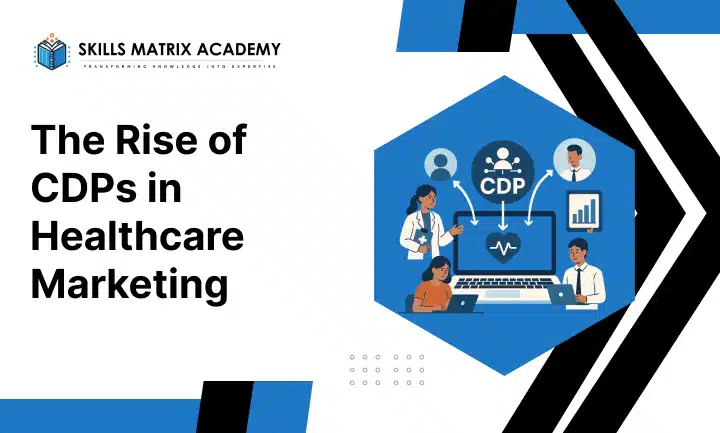
So, what exactly is a Customer Data Platform in healthcare? Think of it as a central hub. It pulls data from Electronic Health Records (EHRs), CRMs, mobile apps, and website visits. It takes these scattered fragments and stitches them into a single, unified patient profile. In a world where data is often stuck in “silos,” this sounds like a dream come true for a marketer. It becomes the organization’s central and most trusted data layer.
3.2 Why Healthcare Organizations Adopted CDPs
Healthcare groups adopted these platforms for a few big reasons. First, the data was too fragmented. One system knew about a patient’s surgery, while another knew about their newsletter subscription. This made it impossible to see the full picture. Second, patients now expect omnichannel healthcare marketing. They want their experience on an app to match their experience in the clinic.
Lastly, the regulatory environment is getting tougher. Managing consent across five different systems is a nightmare. A Healthcare CDP offers a way to manage these privacy preferences in one spot. It helps with HIPAA-compliant marketing by ensuring that data is handled securely. It promises a foundation for a modern healthcare customer data strategy. But as many find out, a foundation is not a house.
4. The Reality Check: Where CDPs Fall Short
4.1 Data Unification Does Not Equal Intelligence
Here is the hard truth: data unification does not equal intelligence. Just because you have all your data in one bucket doesn’t mean you know what to do with it. Most CDPs are great at storage but weak at “thinking.” They often lack the predictive analytics in healthcare needed to guess what a patient needs next. Without that insight, your marketing remains reactive instead of proactive. Unified profiles lack the behavioral depth to drive real change.
4.2 Activation and Execution Challenges
Another major hurdle is the healthcare data activation gap. Many CDPs are like a Ferrari with no tires. They have a powerful engine, but they can’t go anywhere without third-party tools. You still need separate systems to send emails, run ads, or update a website. This leads to a heavy reliance on extra tools for every campaign. Complex integrations across clinical and marketing systems can slow everything down.
4.3 Healthcare-Specific Constraints
We also have to talk about healthcare-specific constraints. Unlike retail, healthcare deals with life-and-death stakes and strict HIPAA rules. EHR and CDP integration is notoriously difficult. Data often arrives with “latency,” meaning it’s hours or days old. In a world that demands real-time healthcare personalization, old data is almost as bad as no data. Furthermore, internal silos between IT, data, and marketing teams often block progress.
5. Why Marketing Outcomes Require More Than a CDP
5.1 The Gap Between Data and Experience
The gap between data and experience is where most healthcare marketing outcomes go to die. Data without patient journey orchestration leads to generic, boring messaging. Imagine getting a “Join our gym” email two days after you had knee surgery. The data was there, but the timing and context were missing. That is a failure of orchestration. Personalization fails without the right context and the right timing.
5.2 Capabilities CDPs Cannot Deliver Alone
There are several capabilities that a standalone Healthcare CDP simply cannot deliver on its own. It might store the data, but it can’t always “act” on it effectively. To solve the healthcare data dilemma, you need a “brain” on top of your database. You need a way to turn those unified profiles into real-time healthcare personalization.
- AI-driven analytics and predictions to find hidden patterns.
- Real-time journey orchestration to change messages instantly.
- Consent-aware personalization that respects patient privacy at every step.
- Channel-level optimization to send the right message to the right device.
6. The Integrated Stack Healthcare Marketers Actually Need

6.1 CDP + Marketing Automation
To win, you need an integrated healthcare martech stack. This starts with your CDP, but it must connect to marketing automation for healthcare. This allows you to turn a data point (like a missed screening) into an automated, helpful reminder. It converts static profiles into triggered, relevant journeys. Instead of just “having” the data, you are finally “using” the data to help the patient.
6.2 CDP + AI & Advanced Analytics
Next, you must add AI-driven healthcare marketing into the mix. AI can look at thousands of profiles to find patterns humans miss. It can identify which patients are at high risk for chronic issues or missed appointments. This allows you to move toward predictive analytics in healthcare. It identifies intent and suggests the “next-best action” for every individual patient.
6.3 CDP + Experience & Engagement Platforms
Finally, connect your CDP to your experience platforms. Whether it is your patient portal or your mobile app, the experience must be consistent. This ensures that every interaction is relevant across all digital channels. When your systems talk to each other, the patient feels seen and valued. This is how you achieve true omnichannel healthcare marketing and build long-term trust.
7. Real-World Use Cases Where CDPs Alone Fall Short
Let’s look at patient acquisition and onboarding. A Healthcare CDP can tell you who visited your site. But it takes an integrated stack to guide them from a “symptom search” to a booked appointment. Without activation, that data just sits there while the patient goes to a competitor. You need patient journey orchestration to make the onboarding process smooth and welcoming.
Think about chronic care engagement or preventive care. A patient with diabetes needs more than just a monthly newsletter. They need a healthcare customer data strategy that triggers a text when they haven’t logged their blood sugar. Member retention also requires more than just a database. It requires healthcare data orchestration to spot unhappy members before they leave. A CDP alone cannot send these reminders or identify these risks in real-time.
8. What Needs to Be Improved
To solve the healthcare data dilemma, we need to change our focus. We need stronger healthcare data activation layers to turn insights into actions. We also need better healthcare data interoperability. Systems should “plug and play” so that data flows freely between the EHR, the CDP, and the marketing tools.
- Built-in AI and predictive intelligence for smarter decisions.
- Real-time orchestration across all marketing and clinical channels.
- Consent-first personalization frameworks that prioritize privacy.
- Better alignment between marketing, IT, data, and compliance teams.
- Outcome-based measurement instead of tool-centric KPIs.
9. The Future of Healthcare Marketing Technology
The future of healthcare marketing technology belongs to “composable” ecosystems. This means you can swap out different tools as your needs change. You won’t be locked into one giant, slow platform. Instead, you will have a flexible stack that can adapt to new laws. We will see more AI-powered personalization with “privacy by design” at its core.
Real-time, outcome-driven engagement strategies will become the standard. If a patient is looking for a doctor at 2:00 AM, your system should be ready to help them immediately. The focus will shift from “collecting data” to “delivering value.” This is the only way to stay ahead of the healthcare data dilemma and meet rising patient expectations.
10. Conclusion: CDPs Are Necessary—but Not Sufficient
In the end, a Healthcare CDP provides the foundation, but not the full solution. It solves the problem of “where is my data?” But it doesn’t show what comes next. Overcoming the healthcare data dilemma demands a more complete and strategic plan. You must think bigger. You need a strategy that combines data, AI, and human-centered design.
True healthcare marketing outcomes come from integrated, intelligent healthcare martech stacks. They come from a healthcare customer data strategy that puts the patient first. When you move beyond just “managing data” and start “orchestrating experiences,” everything changes. Your marketing becomes a service that patients actually appreciate. A Customer Data Platform in healthcare is a great start, but it’s the intelligence you build on top of it that truly matters.
Would you like me to help you draft a specific healthcare data activation plan for your next patient engagement campaign?
Frequently Asked Questions (FAQs)
1. What is a healthcare data dilemma?
The healthcare data dilemma refers to the gap between the large amount of patient data organizations collect and their ability to turn that data into meaningful marketing outcomes. Many healthcare providers have access to data, but struggle with activation, personalization, and real-time engagement.
2. What is a Healthcare CDP?
A Healthcare CDP (Customer Data Platform in healthcare) is a system that collects, unifies, and manages patient data from multiple sources such as EHRs, CRMs, websites, and apps. Its main goal is patient data unification and improved healthcare data management.
3. Why can’t CDPs alone deliver healthcare marketing outcomes?
CDPs focus mainly on data collection and unification. They lack advanced capabilities like real-time personalization, AI-driven insights, and journey orchestration. Without marketing automation, analytics, and engagement tools, healthcare marketing outcomes remain limited.
4. What are the main limitations of CDPs in healthcare?
Common CDP limitations in healthcare include:
- Limited real-time data activation
- Weak predictive analytics in healthcare
- Dependency on third-party marketing tools
- Complex EHR and CDP integration
- Challenges with consent-driven and HIPAA-compliant marketing
5. How does healthcare personalization differ from other industries?
Healthcare personalization must follow strict privacy and compliance rules. Unlike retail, healthcare marketers must prioritize consent, data security, and trust. This makes privacy-first marketing strategies and accurate patient context essential.

Bharat Arora
12+ years as a web developer, Bharat has worked in the biggest IT companies in the world. He loves to share his experience in web development.


Bharat Arora
12+ years as a web developer, Bharat has worked in the biggest IT companies in the world. He loves to share his experience in web development.