AI in the Classroom is changing how students learn and how teachers teach. It makes learning faster, easier, and more effective. Today, many teachers use artificial intelligence in education to help students learn better, stay focused, and think more clearly.
But an important question remains: How can colleges use AI safely? And why should students learn to use it instead of avoiding it?
The answer is simple. When AI is used correctly, learning becomes stronger, not weaker. AI supports learning, and teachers should guide students on how to use it responsibly.
How AI Supports Teaching and Learning
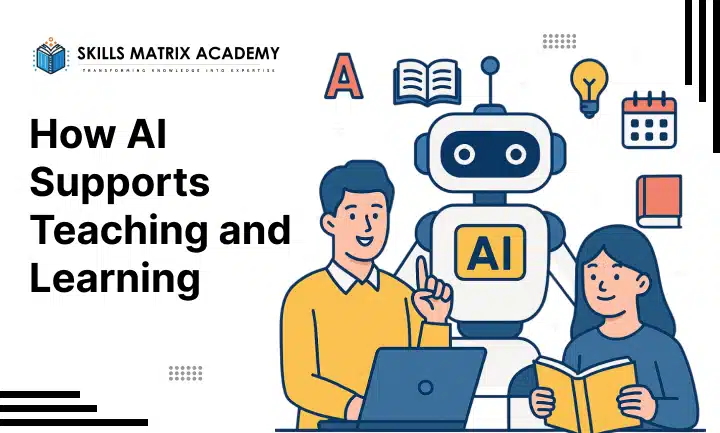
AI in colleges and universities is making education easier, faster, and more meaningful.AI can read large amounts of text, find patterns, and give useful feedback. This allows teachers to focus more on students instead of routine work.
Students also benefit.They can learn at their own pace, revise easily, and ask questions without fear. As digital learning tools grow in India, AI is becoming a regular part of classrooms.
Why Students Should Use AI Tools
AI gives students a safe space to practice, explore ideas, and improve skills. It boosts personalized learning, increases student engagement, and turns lessons into interactive learning experiences.
With AI-powered tools and adaptive learning, classrooms are moving toward modern education. And when colleges focus on safe AI in education, everyone benefits — students, teachers, and the entire learning environment.
Why Should Universities & Colleges Embrace AI?
Artificial Intelligence is becoming one of the most potent forces shaping modern education. From personalized learning paths to smarter assessments and better accessibility, AI is quietly changing how students learn and how educators teach. However, many colleges still hesitate because AI feels complex, fast-changing, and raises ethical concerns.
But here’s the truth:
Students are already using AI. The real question is whether colleges will guide them or leave them without direction.
When educators embrace AI in the Classroom, they don’t replace learning — they enhance it. AI acts as a support tool. It improves efficiency, boosts creativity, enhances learning, and prepares students for AI-driven careers.
1. Help Students Use AI Tools Effectively
Most students know AI tools exist, but very few know how to use them properly. That’s where institutions come in.
Understanding “what AI is” is helpful, but the real value lies in using AI to solve real problems, complete tasks, and improve work quality.
Most Common AI Tools Students Should Master
- ChatGPT (writing, ideas, explanations, summaries)
- Google Gemini (media generation, research support)
- Microsoft Copilot (productivity and Office integration)
- Anthropic Claude (long content, research, thinking)
How Students Can Use AI
- Generate ideas for assignments
- Improve grammar, vocabulary, and clarity
- Conduct quick research and topic exploration
- Draft essays, outlines, reports, or presentations
- Create content for design, marketing, or projects
How Educators Can Use AI
Educators benefit just as much:
- Create lesson plans
- Prepare quizzes and activities
- Translate content
- Provide explanations for complex topics
- Use AI for classroom simulations or roleplay
When universities embrace AI in the Classroom, both students and teachers become more productive, creative, and effective.
2. Teach Students Best Practices for AI Prompting
AI is only as good as the prompts you give it.
Teaching prompts means teaching students how to communicate clearly with AI.
Best Prompting Practices Students Must Learn
1. Start with a clear goal: What do you want the AI to do? Summarize? Explain? Rewrite? Analyze?
2. Give enough context : The more context you share, the stronger and more accurate the output becomes.
3. Provide examples or input material : Such as notes, references, or rough drafts.
4. Define the desired output: Format: list, paragraph, outline, essay, report, etc.
5. Teach high-performing prompts : Educators should create a “prompt library” with:
- prompts for research
- prompts for writing
- prompts for revision
- prompts for creativity
- prompts for job preparation
Good prompting = good results.
This prepares students for workplaces where using AI is an essential skill.
3. AI as a Learning Partner — Not a Replacement
AI is not meant to replace teachers. It supports learning by making it more personalized, faster, and engaging.
Here’s how colleges can practically use AI to enhance the learning experience:
Personalized Learning
Tools like Century Tech and Knewton track student progress and create personalized learning paths.
This helps:
- struggling students improve
- Advanced students go further
- Teachers save time on individual assessments
Spark Discussions & Creative Thinking
Tools like ChatGPT, Midjourney, and DALL·E can:
- generate ideas
- produce examples
- create visuals
- stimulate debates
A single AI-generated scenario can spark entire classroom conversations.
Instant Feedback
Tools like Brisk Teaching, Turnitin help:
- detect plagiarism
- check grammar
- improve clarity
- analyze citations
This lets students learn faster without waiting for manual feedback.
Automate Educator Tasks
Teachers spend hours on repetitive tasks. AI tools help:
- generate quizzes
- grade basic assignments
- create study materials
- prepare rubrics
Tools like MagicSchool AI, Gradescope, and Quizizz significantly reduce workload.
Assess Student Engagement
Analytics tools show:
- Who is struggling
- where the class is stuck
- How performance changes over time
This helps educators intervene more quickly and effectively.
In short:
AI makes classrooms more innovative, more interactive, and more supportive — without removing the human touch.
4. Using AI for Assignments, Revision & Research
AI doesn’t help only inside the Classroom. Students can use it during self-study, revision, and project work.
How Students Use AI for Their Studies
- Create schedules:
Tools: Notebook LM, StudyFetch, Mindgrasp
AI creates personal study calendars based on deadlines.
- Organize notes:
Tools: Notion AI, Otter.ai, Taskade
AI structures notes into easy summaries.
- Explore topics deeply:
Tools: ChatGPT, Semantic Scholar, Research Rabbit
Great for research, concept linking, and doubt solving.
- Draft outlines & first drafts:
AI can provide structure. Students add original ideas.
- Edit & polish:
Tools: Grammarly, Hemingway
AI checks grammar, tone, clarity, and plagiarism.
- Practice for exams:
Notebook LM generates question banks from notes. AI becomes a personalized study buddy.
When colleges embrace AI in the Classroom, students become more confident and self-directed learners.
5. Boosting Creativity & Imagination Through AI
AI unlocks creativity — something that traditional education often struggles with.
Creative Use Cases
- Image & Video Generation
Tools: Midjourney, Gemini, Copilot
Students can easily create visuals, posters, and presentations.
- Data Visualizations
Tools: Zoho Analytics, Julius AI
Turn boring datasets into attractive charts or infographics.
- AI Photo Editing
Tools: Adobe Photoshop AI features
Students learn modern digital creation skills.
Harvard research shows that comparing ideas with AI helps students think deeper and become more creative. AI doesn’t kill creativity — it amplifies it.
7. Using AI for Job Hunting & Career Growth
AI is now a career accelerator. Students who learn AI early have a massive advantage.
Best AI Tools for Job Search
- Resume building:
Rezi, Resume.io, Teal, Kickresume
JobScan matches resumes with job descriptions.
- Job matching:
Talentprise, Kickresume Pyjama Jobs
These tools scan skills and recommend suitable openings.
- Cover letter writing:
ChatGPT, Notebook LM, CoverDoc.ai
Students can generate tailored cover letters in minutes.
- AI job seeker coaches:
LinkedIn’s AI job coach
It analyzes profiles, suggests improvements, and drafts recruiter messages.
- Interview practice:
InterviewAI, Huru, Interview Warmup AI asks interview questions and gives feedback. 46% of job seekers say AI tools helped them get more interviews.
Colleges that embrace AI in the Classroom give their students a real edge in the job market.
7. AI for Accessibility & Inclusivity
Technology makes education more inclusive — and AI takes this further.
Important Accessibility Tools
- Text-to-speech: Natural Reader, ReadSpeaker
- Speech-to-text: Otter.ai, Google Voice Typing
- Predictive text: Grammarly, Gboard
- Captions: Zoom auto-captions, YouTube captions
- Translations: Google Translate, Microsoft Translator
- Alternative formats: Blackboard Ally, SensusAccess
- Adaptive learning: DreamBox, Smart Sparrow
AI helps students with:
- learning disabilities
- visual challenges
- speech difficulties
- language barriers
Education becomes fair, equal, and accessible for all.
8. Teaching AI Ethics & Responsible Use
As students start using AI, they must learn to use it responsibly.
Key Topics Educators Must Cover
- Copyright & licensing
- Plagiarism risks
- Checking for hallucinations
- Recognizing bias
- Understanding privacy policies
- GDPR compliance
- Transparency in using AI
- Environmental impact of AI training
Students must understand:
AI is powerful, but human judgment is essential.
Conclusion: Building Future-Ready Classrooms with AI
When universities embrace AI in the Classroom with a clear purpose, they unlock powerful opportunities to improve how students learn.Small changes in AI literacy, personalization, automation, and assessment can turn traditional classrooms into future-ready learning spaces.
8 Ways Universities & Colleges Can Embrace AI in the Classroom
AI should never be used “just because.” Instead, colleges must use it through AI-enhanced pedagogy that supports teachers and boosts AI-enabled student engagement. This approach helps educators use AI teaching tools and AI tools for teachers to simplify tasks while keeping learning human and meaningful.
A smart strategy also focuses on outcomes. This includes AI for assessment redesign, streamlined grading, AI-powered student assessment, and tracking progress with AI-driven learning strategies. These upgrades push AI for student success and fuel strong academic innovation.
Ethics matter as much as innovation. Colleges must use AI responsibly, ethically, and sustainably. These choices help reduce AI’s climate impact and connect directly to how AI influences global climate change.
When colleges prioritize thoughtful AI adoption, they build next-gen learning environments that prepare students for tomorrow’s world. This includes stronger AI integration in colleges and better workforce readiness with AI.
In the end, AI is only a tool. It’s powerful, yes. But its real impact emerges when educators use it to create AI for meaningful learning, build more intelligent systems, and lead bold higher education innovation—supported by practical classroom automation tools, efficient AI in curriculum development, and measurable AI for academic improvement, all advancing a stronger future of learning with AI.

Bharat Arora
12+ years as a web developer, Bharat has worked in the biggest IT companies in the world. He loves to share his experience in web development.

Bharat Arora
12+ years as a web developer, Bharat has worked in the biggest IT companies in the world. He loves to share his experience in web development.